
Content Menu
● The Fascinating Origins of the Bobblehead
● Step 1: Planning and Concept Development
● Step 2: The Sculpting of the Prototype
● Step 3: Mold Production and Material Preparation
● Step 4: Casting — Bringing the Bobblehead to Life
● Step 5: The Assembly of the Bobble Mechanism
● Step 6: Surface Finishing and Priming
● Step 7: Painting and Detailing
● Step 8: Quality Inspection and Testing
● Step 9: Packaging for Presentation
● Step 10: Marketing, Distribution, and Collector Culture
● Material Science Behind Bobblehead Durability
● Integrating Art and Industry
● The Environmental Revolution in Bobblehead Production
● Custom-Made Bobbleheads: The Personal Touch
● The Enduring Appeal of the Bobblehead
● FAQ
>> 1. What is the main material used in Bobblehead production?
>> 2. How long does it take to make one Bobblehead?
>> 3. Are Bobbleheads still hand-painted?
>> 4. Can consumers design their own Bobbleheads?
>> 5. How should I care for my Bobblehead?
A Bobblehead is charming, quirky, and instantly recognizable — a miniature work of art that captures a person or character's personality with a simple nod of the head. From famous baseball players to movie stars or customized personal designs, Bobbleheads have become beloved collectibles that symbolize both fandom and craftsmanship.
But few people realize the complexity behind their creation. Behind each Bobblehead's expressive face and gentle wobble lies an intricate combination of creativity, engineering, and craftsmanship. The process requires multiple stages — from concept sketching and material selection to mold production, hand-painting, and packaging.
This article explores the complete journey of how a Bobblehead comes to life, offering an in-depth, behind-the-scenes look at one of the world's most enduring collectible phenomena.

The story of the Bobblehead begins long before the modern sports figurine. The earliest examples can be traced back to 18th-century China and Europe, where aristocrats owned ceramic “nodding-head” figures representing animals, emperors, or religious icons.
By the early 20th century, the idea crossed into Western pop culture. The first sports-related Bobbleheads appeared in the 1960s, depicting Major League Baseball players. Since then, these wobbling statues have evolved from simple novelty toys into prized collector's items.
Today, Bobbleheads are not only sold commercially but also given away during promotional events, used as corporate gifts, and even designed as custom-made miniature sculptures. They merge emotion, art, and marketing in a single figurine that nods approval from any shelf or desk.
Every Bobblehead starts as a concept — someone decides who or what the figurine will represent. It might be a sports hero, a celebrity, or a fan's own likeness.
Artists research facial characteristics, body pose, clothing, and signature traits. They visualize how the Bobblehead's oversized head and expressive design can capture the essence of the subject while maintaining balance and charm.
In modern factories, this stage uses computer graphics programs to create digital sketches and 3D models. Clients review and approve concept art before moving on to the next step.
The sculpting phase transforms a two-dimensional idea into a tangible three-dimensional form. Skilled modelers sculpt the prototype — the original Bobblehead figure that serves as the blueprint for all future copies.
Early sculptors used clay or wax, carefully shaping the head, body, and base by hand. Today, artists often combine manual craftsmanship with 3D printing and CNC carving, allowing for sharper details and faster production.
The head's size and movement point are carefully calculated, ensuring it can bob naturally once assembled. Facial features are refined to preserve resemblance, personality, and proportion — a delicate art that defines the final collectible's charm.
Once the prototype is approved, the next step is creating multiple production molds. These molds allow high-volume casting while keeping every Bobblehead identical.
A silicone or rubber mixture is poured over the prototype to form a two-part mold. When removed, the mold forms a perfect cavity capturing all fine details of the original sculpture. This mold will be used hundreds or thousands of times to recreate the same Bobblehead design.
Mold engineers must ensure consistent air pressure, cavity thickness, and durability to maintain smooth shapes and crisp features through multiple casting cycles.
Casting is where the figurine takes physical form. The most common manufacturing materials are polyresin, PVC, and ABS plastic — each offering different benefits:
- Polyresin: Gives detailed and durable results, preferred for collectible Bobbleheads.
- PVC: Offers flexibility and affordability for large promotional runs.
- ABS Plastic: Provides impact resistance and a glossy finish.
Liquid material is poured or injected into prepared molds, then either baked or air-dried to solidify. Once cured, the Bobblehead pieces (head, body, base) are extracted, trimmed, and sanded to remove imperfections.
The spring mechanism defines the Bobblehead's identity — that delightful motion when the head nods in response to even gentle movement.
A small steel spring connects the head to the torso. Engineers adjust the length, weight balance, and resistance so the head can pivot smoothly without falling off or wobbling uncontrollably.
This precision engineering ensures stability, longevity, and fluid motion. The mechanism must be strong enough to survive handling yet light enough to allow free, rhythmic movement — the perfect “bobble.”
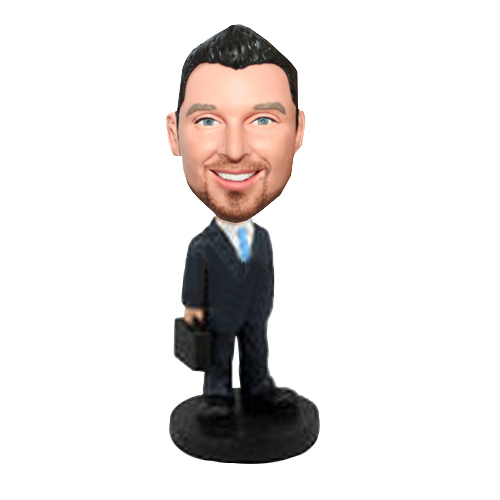
After curing and assembly, the Bobblehead's raw surface undergoes intensive sanding, filing, and cleaning. Any seams or rough textures are removed by hand.
The figure is then coated with a primer, a thin base layer that ensures paint adheres evenly and resists fading. The primer gives the surface a smooth, matte texture — the ideal foundation for vibrant, lasting color.
In high-quality factories, automated spray booths complement careful hand work, guaranteeing consistent primer coverage even on complex designs.
This stage represents the artistic heart of Bobblehead production. Every Bobblehead is hand-painted by skilled artisans, making each one slightly unique.
Painters use multiple fine brushes and airbrushes to apply colors for:
- Skin tones, hair, and facial details
- Uniforms and accessories
- Logos and lettering
- Metallic or glossy highlights
For premium editions, additional techniques such as UV-resistant coatings, air-gradient blending, and gloss varnishes are used to enhance durability and realism. Applying these layers brings the Bobblehead's character to life.
Even with advanced technology, human inspection remains critical. Each Bobblehead is examined for:
- Paint accuracy and alignment
- Spring function — ensuring the head nods correctly
- Balanced weight and stability
- Structural durability and chip resistance
Inspectors randomly test batches before approval. Minor defects are repaired; only perfect pieces reach the packaging stage.
This rigorous process embodies the dedication behind every successful Bobblehead product.
Because Bobbleheads are both display pieces and collector investments, packaging protects and adds value.
Each figure is nestled in foam inserts or molded stands to prevent breakage, then boxed with logos, serial numbers, and event information. Custom-designed packaging increases appeal — often featuring the team, brand, or character represented.
Fans often keep boxes intact as part of the collectible's identity. A Bobblehead with its original packaging can retain higher value over time.
Once production is complete, Bobbleheads move through distribution networks to reach global fans. Sports teams order hundreds of thousands as giveaway promotions, while retailers sell licensed or limited runs.
Corporate clients often commission branded Bobbleheads for company anniversaries or product launches. Meanwhile, individuals can order fully customized designs for weddings, birthdays, or personal milestones.
Bobblehead collecting has grown into a passionate subculture. Dedicated fans trade, display, and even insure their collections. Some rare Bobbleheads — like limited baseball editions — are worth hundreds or even thousands of dollars.
The resilience and fine detailing of Bobbleheads come from using the right materials — a balance between aesthetics and performance.
Polyresin, in particular, provides an excellent medium due to:
- Smooth texture suitable for detailed engraving.
- Durability that withstands temperature and humidity changes.
- Easy paint adhesion.
Our company's expertise in abrasives and refractory material production ensures a deep understanding of these material qualities — strength under stress, high-finish surfaces, and color retention. Such attention to manufacturing science ensures every Bobblehead remains visually appealing and enduring.
What makes Bobbleheads so special isn't merely their appearance but the skill blend that creates them. Manufacturing Bobbleheads perfectly combines artistic creativity and industrial precision — sculptors, painters, mold engineers, and quality controllers all work in sync.
Each nodding figure becomes a symbol of teamwork, reflecting both the creator's imagination and the precision standards of advanced production techniques. This union of artistry and technology captures what modern manufacturing can achieve — transforming simple resin into lasting joy.
The manufacturing industry is steadily adopting eco-friendly changes, and Bobblehead producers are no exception. Sustainability efforts now include:
- Switching to recyclable packaging materials.
- Using non-toxic, water-based paints to reduce environmental impact.
- Implementing energy-efficient ovens and waste-reduction systems in casting and drying facilities.
Environmentally conscious production aligns with the global demand for responsible industry practices. These efforts ensure that the Bobblehead industry continues to thrive without sacrificing environmental integrity.
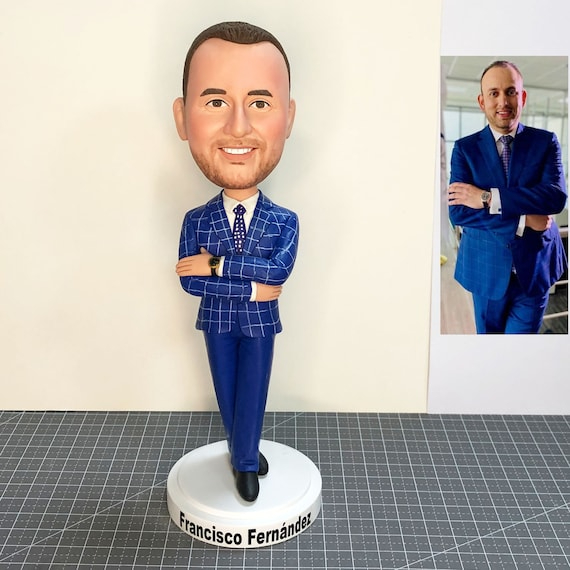
Modern customers love personalization. Thanks to accessible digital design tools, almost anyone can order a custom Bobblehead that mirrors their face, body, outfit, and even posture.
Custom Bobbleheads are popular as:
- Corporate gifts for employee appreciation.
- Wedding cake toppers with bride and groom likenesses.
- Birthday or graduation souvenirs.
This level of customization showcases how far Bobblehead innovation has come — turning a once mass-produced novelty into a personalized artform bridging emotion and manufacturing excellence.
Why do people love Bobbleheads so much? Possibly because they blend humor, artistry, and nostalgia in one delightful object. Their playful motion captures friendliness, while their miniature scale makes them accessible collectibles for fans of all ages.
From a manufacturing perspective, every bobbing head represents the hard work of dozens of professionals. From an artistic point of view, it represents personality and timeless charm. The Bobblehead is proof that even small creations can carry big character.
The making of a Bobblehead is a collaboration between human imagination and technical precision. From sketching the design, casting the mold, refining each curve, painting minute details, and assembling the delicate spring mechanism, every step brings artistry and engineering together.
Behind every nodding figurine is a story — of a craftsman's steady hand, an engineer's precision, and a fan's joy. Whether used for sports promotions, personal gifts, or collectibles, Bobbleheads remind us how manufacturing can transform creativity into something both lasting and fun.
Their continued popularity proves one thing beyond doubt: the Bobblehead isn't just made — it's crafted with passion.
Most Bobbleheads use polyresin for its durability, fine surface detail, and ability to hold vivid paint finishes.
Depending on design complexity, full production — from concept drawing to packaging — typically takes 4 to 6 weeks.
Yes. Even with advanced techniques, hand-painting remains essential for achieving detailed color gradients and individual character.
Absolutely. Many manufacturers offer custom Bobbleheads using uploaded photos and design preferences for personalized production.
Keep it indoors, away from direct sunlight or high humidity, and clean gently with a soft cloth to preserve paint and motion quality.


