
Views: 222 Author: Mia Publish Time: 2025-12-11 Origin: Site
Content Menu
● Retail Price vs Manufacturing Cost
● Core Cost Components of a Bobblehead
● Design and Modeling for a Bobblehead
● MoldMaking and Its Financial Impact
● Materials: Resin, PU, Polymer Clay, and 3DPrint Resins
● Labor: Sculpting, Casting, Painting, and Assembly
● Packaging and Quality Control
● How Quantity Changes the Cost Per Bobblehead
● FactoryLevel Bobblehead Costs and Wholesale Models
● NonProduction Costs: Overhead and Startup
● Translating Manufacturing Cost into Retail Bobblehead Price
● Strategies to Control the Cost of Making Bobbleheads
● FAQ
>> 1. How much does it really cost to make a single Bobblehead?
>> 2. Why does the perunit Bobblehead cost drop so much in bulk orders?
>> 3. Is 3D printing cheaper than traditional casting for Bobbleheads?
>> 4. How important is packaging in the overall cost of a Bobblehead?
>> 5. What is the best way for a brand to optimize Bobblehead production cost?
Understanding how much it really costs to make a Bobblehead is essential for brands, resellers, and anyone considering launching Bobblehead projects at scale. While a finished custom Bobblehead might retail for 70–120 dollars, the underlying manufacturing cost per Bobblehead can be dramatically lower once molds and design work are spread across multiple units.

Retail price for a Bobblehead includes far more than plastic or resin; it bundles design, proofing, marketing, customer service, and profit. Manufacturing cost focuses only on what it takes to physically create each Bobblehead: materials, labor, molds, and packaging.
A single fully custom Bobblehead might sell for around 79–120 dollars, but at volume the real perunit manufacturing cost can fall into the singledigit dollar range. This gap explains why companies can use Bobbleheads as mass promotional items while still keeping budgets under control.
To understand how much it costs to make a Bobblehead, it helps to break production into several major cost buckets:
- Product design and 3D modeling or hand sculpting of the Bobblehead.
- Master sculpt and mold making for heads, bodies, and bases.
- Casting using resin, PU, or other materials.
- Hand painting and detailing of the Bobblehead.
- Assembly of heads, springs, and bodies.
- Packaging (inserts, gift box, outer carton).
Overheads such as rent, equipment, and management are not tied to a single Bobblehead, but they still need to be recovered through pricing.
Every Bobblehead begins as a design, either digitally or by hand. For custom Bobbleheads, artists must study photos and build a likeness that still fits the stylized, bighead Bobblehead format. This step is timeintensive, especially when complex hairstyles, facial features, or specific expressions are requested.
In some workshops, highend 3D scanners and sculpting software are used to generate a base Bobblehead model, which can then be edited by designers. The cost of these systems is high, but once in place they can be used for thousands of Bobblehead projects, reducing the effective design expense per unit as volume grows.
Molds are one of the largest upfront investments in Bobblehead production. For cast resin or PU parts, a durable silicone or metal mold must be produced for each key component, such as the Bobblehead head and body.
If a mold costs several hundred dollars to create, that entire cost is effectively loaded onto the first Bobblehead. When only one Bobblehead is made, the “true” production cost is extremely high. When 100 or 200 Bobbleheads are made from the same mold, the mold cost per Bobblehead becomes just a few dollars, which is why bulk Bobblehead orders are so much cheaper per unit.
The choice of material also affects the cost to make a Bobblehead. Common options include:
- Polyresin, widely used for detailed Bobbleheads and trophies.
- PU (polyurethane) casting resins for durable Bobblehead parts.
- Polymer clay for handsculpted, lowvolume Bobblehead figures.
- Photopolymer resins for 3Dprinted Bobblehead heads and bodies.
Resin and PU offer good detail and can be cast relatively quickly once molds are made. Polymer clay Bobbleheads tend to have higher labor cost because each figure is shaped and finished by hand. Fullcolor 3Dprinted Bobbleheads shift some cost into highprecision printers and consumables, which suits prototypes or smallbatch Bobbleheads but must be carefully costed at scale.
Production of a Bobblehead is labordriven. The stages include:
- Sculptors or digital artists creating the Bobblehead model.
- Technicians pouring resin or PU into molds and demolding parts.
- Workers sanding, trimming, and preparing pieces.
- Painters adding skin tones, facial features, clothing colors, and logos.
- Assemblers attaching the Bobblehead head with a spring to the body, checking motion, and mounting on a base.
For a PU Bobblehead head, for example, perunit costs often assign a few dollars to casting and a few dollars to painting once the mold is paid for. That means that, after molds and designs are amortized, direct production cost for each additional Bobblehead is dominated by labor and paint, not tooling.

Once a Bobblehead is assembled, it must pass inspection and be safely packed. Quality control teams check whether the Bobblehead head moves correctly, the paint lines are clean, and there are no cracks or bubbles in the casting. Failed Bobbleheads may need rework, which adds implicit cost.
Packaging for Bobbleheads includes protective inserts or foam, printed gift boxes, and shipping cartons. Simple plain boxes lower cost but reduce shelf appeal; custom printed Bobblehead boxes create a stronger brand experience but require design, plates, and higher material spending, especially for smaller runs.
One of the most important truths about Bobblehead manufacturing is that quantity changes everything. If the silicone mold for a Bobblehead head costs 350 dollars and casting and painting cost 8 dollars per head, the math looks very different at different volumes:
- At 1 Bobblehead: 350 + 8 = 358 dollars of pure production cost for that head.
- At 100 Bobbleheads: 350/100 + 8 ≈ 11.5 dollars per head.
- At 200 Bobbleheads: 350/200 + 8 ≈ 9.75 dollars per head.
When you add bodies, bases, and packaging, the total manufacturing cost per complete Bobblehead headandbody set may still be under 15–20 dollars at these volumes, even though the Bobblehead retail price for a single unit could be much higher.
At true factory scale, with minimum orders of 250 or more Bobbleheads, perunit costs can fall further. Factories optimize:
- Mold designs for long life.
- Casting processes so many Bobbleheads are poured at once.
- Painting lines where teams paint dozens of Bobbleheads in stages.
- Standardized packaging and master carton layouts.
Some factorydirect offers for promotional Bobbleheads demonstrate that with 250unit minimums and simple designs, manufacturing cost per Bobblehead can reach just a few dollars. Wholesale buyers then add logistics, profit, and, in some cases, further branding or repacking before the Bobblehead reaches the final customer.
Manufacturing cost is only one side of the equation. To make Bobbleheads sustainably over time, a company must factor in:
- Workshop or factory rent.
- Utilities (power for lighting, compressors, curing ovens, and 3D printers).
- Software and hardware for design and modeling.
- Salaries for managers, admin staff, sales staff, and customer service.
- Marketing activities and online platforms used to sell Bobbleheads.
Startups in the Bobblehead business often invest in equipment, molds, demo samples, and marketing campaigns long before full capacity is reached. Until order volume stabilizes, the overhead carried by each Bobblehead sold can be quite high.
To set final Bobblehead prices, producers combine their calculated manufacturing cost per unit with overhead and target margin. For example, if it costs 8–15 dollars to make each Bobblehead at a given volume, a company might choose a 59–120 dollar retail range per Bobblehead depending on brand positioning, complexity, proofing rounds, and service level.
Higherend Bobblehead brands that emphasize handsculpting, frequent proofs, and very accurate likenesses generally have more labor per Bobblehead and higher customerservice costs. These companies may price their Bobbleheads at the upper end of the market, even if basic material cost is similar to that of lowerpriced competitors.
To keep the cost to make a Bobblehead under control, brands and organizers can:
- Choose one versatile Bobblehead design and reuse it across multiple promotions.
- Keep figures within standard Bobblehead sizes and avoid oversized, heavy bases.
- Limit details that are difficult or timeconsuming to paint repeatedly.
- Align order quantities with realistic demand so molds and setup work are fully utilized.
Incorporating these strategies enables a balance between Bobblehead quality, artistic impact, and longterm profitability.
The cost to make a Bobblehead is a blend of fixed and variable elements: design, molds, materials, labor, packaging, and overhead. For oneoff projects, the first Bobblehead effectively carries a large mold and design cost, making its “true” production cost very high. When 50, 100, or 250 Bobbleheads share the same molds and concept, the effective manufacturing cost per Bobblehead can fall sharply, often into the singledigit dollar range.
This dynamic explains why retail custom Bobbleheads appear expensive when ordered one at a time but become highly economical for bulk promotions. By understanding how each production step affects Bobblehead cost, and by planning designs and quantities intelligently, businesses and individuals can create Bobblehead projects that are visually impressive, economically efficient, and sustainable over the long term.
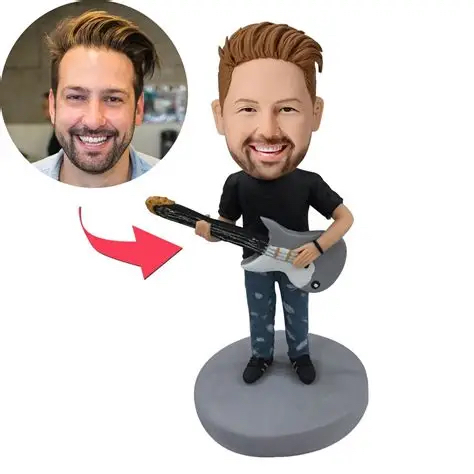
When you factor in molds, design, casting, painting, and packaging, the real cost of the very first Bobblehead in a project can be several hundred dollars because it absorbs all the tooling and setup. This is why single, highdetail Bobbleheads feel expensive compared with massproduced figures.
Fixed costs like sculpting and mold making do not change much whether you cast 1 or 200 Bobbleheads. As you produce more Bobbleheads from the same molds, those fixed costs are divided across many units, so the manufacturing cost per Bobblehead decreases sharply and approaches just the variable costs of materials and labor.
For very low volumes or prototypes, 3Dprinted Bobbleheads can be competitive because they avoid molds and allow fast design changes. For larger volumes, traditional casting usually becomes cheaper per Bobblehead, because once molds exist, each additional cast part is inexpensive compared with printing multiple highresolution resin parts.
Packaging is more important than many people realize. Protective foam, custom printed boxes, and sturdy cartons all add cost per Bobblehead, particularly for premium gifts and retail products. Reducing packaging complexity can save money, but it must be balanced against the need to protect Bobbleheads during transport and present them attractively.
The best way is to start with a clearly defined Bobblehead concept that can be reused or adapted for multiple recipients, order a quantity that fully leverages mold and design investments, keep sizes and details within practical limits, and coordinate production timelines to avoid rush surcharges. This approach allows the brand to benefit from economies of scale while still delivering distinctive Bobblehead items.


