
Views: 222 Author: Mia Publish Time: 2025-12-24 Origin: Site
Content Menu
● Why Your Bobblehead Collection Needs A Display Case
● Planning Your Bobblehead Display Case
>> Clarify Purpose, Space, And Capacity
>> Choose Glass Or Acrylic For Bobblehead Protection
● Materials And Tools For A Simple Bobblehead Display Case
>> Basic Tools
● StepByStep: How To Build A Bobblehead Display Case
>> Step 1: Design And Sketch The Bobblehead Layout
>> Step 2: Build The Wooden Frame
>> Step 3: Install Shelves For Bobbleheads
>> Step 4: Fit The Acrylic Or Glass Front
● Styling Ideas For A Bobblehead Display Case
>> Color, Backgrounds, And Mirrors
● Maintenance Tips For Your Bobblehead Display Case
● FAQ
>> 1. What is the best material for a Bobblehead display case?
>> 2. How do I keep dust out of my Bobblehead display case?
>> 3. Do LED lights damage Bobbleheads over time?
>> 4. Should I build or buy a Bobblehead display case?
>> 5. How many Bobbleheads can I safely place on one shelf?
Building a dedicated Bobblehead display case is one of the most effective ways to protect a Bobblehead collection from dust, sunlight, and accidental damage while making every Bobblehead more visually impressive. A welldesigned Bobblehead display case also helps organize a growing Bobblehead collection so each Bobblehead can be seen clearly instead of being lost in a cluttered shelf.

A loose Bobblehead collection spread across random shelves quickly collects dust, fades under sunlight, and is vulnerable to bumps or falls. A proper Bobblehead display case creates a controlled minienvironment that keeps each Bobblehead cleaner, safer, and easier to appreciate every day.
- A sealed glass or acrylic Bobblehead display case significantly reduces dust settling on the Bobblehead surfaces and springs.
- A structured Bobblehead layout inside a display case prevents figures from wobbling into each other or toppling over if the shelf is bumped.
- With good lighting, a Bobblehead display case turns your Bobblehead collection into a focal point of the room instead of a messy corner.
A Bobblehead display case also reflects the seriousness of the collection. When Bobbleheads are arranged in a clean, enclosed case rather than scattered around, visitors immediately understand that each Bobblehead has meaning and value. The display case becomes part of the story of how you collect, protect, and enjoy Bobblehead figures.
Before cutting any material, define what kind of Bobblehead display case you want to build and where it will live. Good planning ensures the Bobblehead display remains practical for years, even as your Bobblehead collection grows.
- Decide whether the Bobblehead display case will be wallmounted, freestanding, or desktop; each option changes size, weight, and mounting hardware.
- Count how many Bobblehead pieces you want to display now, then add extra capacity for at least 20–30% more future Bobbleheads so you do not run out of space too quickly.
- Measure available wall or floor space and sketch a rough Bobblehead display footprint to verify that doors, windows, and walkways will not be blocked.
When planning, also think about who will use the space. If children or pets are in the home, a higher wallmounted Bobblehead display case may be safer than a low, freestanding cabinet. If the display is for an office or showroom, a taller, more formal Bobblehead cabinet might be more suitable.
Most DIY Bobblehead display cases use either glass or clear acrylic panels for the front and sides. Each material changes how the Bobblehead display performs in terms of safety, weight, and clarity.
- Glass offers excellent scratch resistance and a premium, museumstyle look for Bobblehead displays, but it is heavier and can shatter if struck.
- Acrylic (plexiglass) is lighter and less likely to shatter, which is ideal for wallmounted Bobblehead display cases or homes with children.
- UVprotected acrylic or glass helps prevent Bobblehead paint from fading over time, especially for brightly colored Bobblehead figures near windows.
Choosing between glass and acrylic often comes down to location and budget. For a large, floorstanding Bobblehead cabinet, glass can feel more solid and elegant. For a long row of wallmounted Bobblehead cases, acrylic reduces weight and makes installation easier.
For a straightforward, enclosed Bobblehead display case, you can work with common building supplies and standard hardware. The following materials balance ease of use, safety, and appearance for Bobblehead collectors.
- Wood boards or plywood for the Bobblehead case frame and shelves (e.g., pine, birch, or MDF).
- Clear acrylic sheets or glass panels sized to the front and possibly sides of the Bobblehead display.
- Wood screws, corner brackets, and wood glue to secure the Bobblehead frame.
- Small hinges and a magnetic latch if you plan a swinging door for the Bobblehead case.
- Weatherstripping, rubber seals, or foam tape to help dustproof the Bobblehead door edges.
- LED strip lights or light bars rated for display cases to brighten each Bobblehead shelf.
- Sandpaper, primer, and paint or stain to finish the exterior of the Bobblehead display case.
You do not need professional carpentry equipment to build a Bobblehead display case; a modest home workshop is enough to create a clean, strong Bobblehead structure.
- Tape measure, pencil, and square for accurate Bobblehead case measurements.
- Hand saw, jigsaw, or circular saw for cutting wood to size for the Bobblehead frame and shelves.
- Drill/driver with bits for pilot holes and screws in the Bobblehead case.
- Clamps to hold the Bobblehead frame joints while glue dries.
- Fine file or deburring tool for smoothing acrylic or glass edges around the Bobblehead opening.
Having a clear cut list before you begin reduces mistakes. Many builders write down each Bobblehead panel size with labels like “top,” “bottom,” “shelf 1,” and so on to avoid confusion once cutting starts.

Start with a frontview sketch showing the number of Bobblehead shelves and approximate spacing between them. The goal is to give each Bobblehead enough height so the head can move freely without hitting the shelf above.
- Measure the tallest Bobblehead in your collection and add at least 3–5 cm of extra clearance for head movement.
- If some Bobblehead figures are significantly taller than others, reserve one or two “tall” shelves in the design.
- Decide whether the Bobblehead display case will have fixed shelves or use adjustable shelf pins, which let you rearrange Bobbleheads as the collection changes.
A simple grid with rows and columns works well for many Bobblehead collections. For a more dynamic design, you can mix standard shelves with a few wider spaces for special Bobbleheads or themed sets.
Cut top, bottom, and side boards to form a sturdy rectangle for the Bobblehead case body. A rigid frame is essential so the Bobblehead display does not flex when mounted or moved.
- Predrill holes at each corner, apply wood glue to the joints, and then drive screws to lock the Bobblehead frame together.
- Check diagonals to ensure the Bobblehead display frame is square; adjust with clamps before the glue fully sets.
- Add a solid back panel (plywood or MDF) to support the Bobblehead shelves and to help block dust and light from behind.
At this stage, you can also add a small toekick or base if the Bobblehead display will stand on the floor. A base slightly wider than the cabinet improves stability and helps support the weight of many Bobbleheads.
Cut shelf boards to fit the internal width of the Bobblehead case and test each board before fastening. Proper shelf spacing ensures each Bobblehead is visible and stable.
- Mark shelf positions according to your sketch and use a level to keep shelf lines straight for all Bobbleheads.
- Either screw shelves directly into the side walls for fixed heights or install shelf pins and brackets for adjustable Bobblehead shelf spacing.
- Avoid overcrowding; leave a small gap between Bobbleheads so the heads do not collide when they bobble.
If you have many Bobbleheads with similar heights, consistent shelf spacing looks very clean. If your Bobblehead collection includes oversized or deluxe Bobbleheads, mixing tall and short sections can make the layout more flexible.
Next, prepare a clear panel for the front of the Bobblehead display case. This panel acts as the protective shield for every Bobblehead inside.
- For a hinged door, frame the acrylic or glass in a narrow wood border, attach hinges to one side, and align it with the Bobblehead case opening.
- Add a magnetic catch or small latch to keep the Bobblehead door closed firmly and reduce dust entry.
- For a simpler liftoff design, create a shallow front lip so the clear Bobblehead cover can sit snugly on the frame without hardware.
The door should open smoothly without scraping shelves or Bobbleheads. Test the swing distance and check that you can comfortably reach any Bobblehead to rearrange the display.
A Bobblehead display case is far more effective when dust cannot easily enter. Sealing gaps around the front panel and edges improves longterm Bobblehead cleanliness.
- Apply thin foam tape or rubber weatherstripping along the inside edges where the door or lid meets the Bobblehead frame.
- Check for visible gaps and adjust hinges or latches so the Bobblehead door closes evenly on all sides.
- In humid climates, consider adding a few small silicagel packs inside the display to reduce moisture that could affect Bobblehead paint or packaging.
A wellsealed Bobblehead display case also simplifies cleaning. Instead of wiping individual Bobbleheads every week, you mainly clean the outside glass or acrylic, preserving the fine details on each Bobblehead.
Lighting is what transforms a plain cabinet into a striking Bobblehead display case. LED lights use little power and generate little heat, making them ideal for Bobblehead shelves.
- Mount LED light strips at the top front of the Bobblehead case or under each shelf to create even illumination across all Bobbleheads.
- Route the cables along the corners or rear of the Bobblehead display, securing them with clips or tape to keep the interior neat.
- Soft white LEDs highlight natural colors on each Bobblehead, while colorchanging LEDs can create themed effects for holidays, game days, or special Bobblehead releases.
Always test light placement with Bobbleheads in place. Glare on acrylic or glass can distract from the Bobblehead faces, so angling lights slightly downward or diffusing them often improves the result.
Once the Bobblehead structure is finished, you can style the interior so it feels curated rather than random. Themes help visitors instantly understand the story behind each group of Bobbleheads.
- Group Bobbleheads by team, franchise, or league so every Bobblehead row tells a consistent sports or entertainment story.
- Reserve one “hero” position at eye level for the rarest or most meaningful Bobblehead in the collection.
- Use small risers or stands to create twolevel rows so Bobbleheads at the back remain visible behind frontrow Bobbleheads.
Themed zones also make it easier to expand the collection. When you acquire a new Bobblehead from a team or character line, you already know exactly where it belongs.
Subtle visual tricks in the Bobblehead display case can make the collection look deeper and more professional.
- Paint the interior of the Bobblehead case in a neutral color like white, gray, or black so colorful Bobbleheads stand out clearly.
- A mirrored back panel or mirrored strips can reflect the Bobblehead figures and make the display feel larger while showing back details.
- Avoid overly busy patterns behind Bobbleheads; clean backgrounds keep the viewer's focus on the Bobblehead faces and jerseys.
You can also align the display case colors with your room or brand identity. For example, a company could paint the frame in corporate colors while keeping the Bobblehead interior neutral and minimal.
A Bobblehead display case reduces maintenance but does not eliminate it; a simple routine keeps both the display and each Bobblehead looking new.
- Dust the exterior of the Bobblehead case with a soft cloth and use a microfiber cloth on glass or acrylic to avoid scratches.
- Open the Bobblehead case periodically to check for moisture, dust buildup, or loose hardware and correct issues early.
- Keep the Bobblehead display away from direct sunlight, vents, or heaters to avoid fading, warping, or cracking over time.
If you need to move the Bobblehead display case, remove the Bobbleheads first and transport them separately. Moving a full cabinet risks tipping and can stress the Bobblehead springs if the case is shaken.
Building a Bobblehead display case is both a practical project and a creative expression of how much your Bobblehead collection means to you. By planning the layout carefully, selecting suitable materials, sealing against dust, and adding thoughtful lighting, you can create a robust Bobblehead display that protects and showcases each Bobblehead at its best. With consistent maintenance and occasional upgrades, your custom Bobblehead display case will keep your Bobbleheads safe, organized, and visually striking for many years.
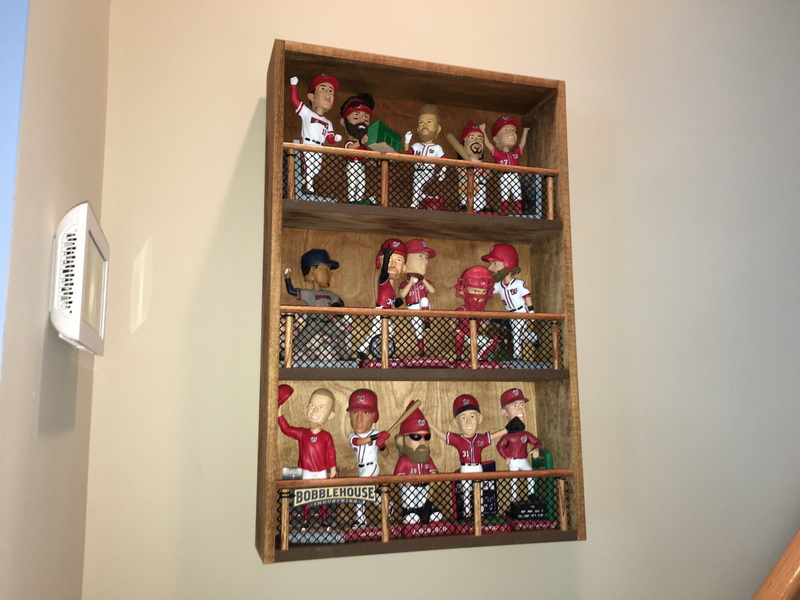
Glass and acrylic are the most popular materials for Bobblehead display fronts because they are clear, easy to clean, and protect Bobbleheads from dust and accidental contact. Acrylic is lighter and safer for wallmounted Bobblehead cases, while glass offers greater scratch resistance and a more traditional cabinet look.
To reduce dust inside a Bobblehead display case, make sure the front door or lid closes tightly and install weatherstripping or foam seals around edges. A wellsealed Bobblehead case combined with occasional gentle cleaning keeps your Bobbleheads much cleaner than open shelves.
Quality LED lights produce very little heat and, when positioned correctly, are safe for Bobblehead displays. To protect Bobbleheads further, avoid placing LEDs extremely close to plastic or resin surfaces and keep light exposure moderate, especially if your Bobblehead display also receives some sunlight.
Building a Bobblehead display case gives you complete control over size, style, and shelf spacing, which is ideal for unique or very large Bobblehead collections. Buying a premade Bobblehead case is faster and often includes features like locks or preinstalled lighting, but may not match your exact space or Bobblehead capacity requirements.
The safe number of Bobbleheads per shelf depends on shelf length, thickness, and mounting strength. As a guideline, avoid lining Bobbleheads edgetoedge; leave small gaps between each Bobblehead and stay comfortably below the shelf's maximum load to prevent sagging or instability.


