
Views: 222 Author: Mia Publish Time: 2026-01-09 Origin: Site
Content Menu
● Why Your Bobblehead Collection Needs A Display Case
● Planning Your Bobblehead Display Case
● Choosing Materials For Bobblehead Protection
● Safety And Security Considerations
● Step By Step: Building The Bobblehead Display Case Frame
● Designing Shelves For Bobblehead Stability
● Glass Or Acrylic For Your Bobblehead Display Case
● Installing Doors, Hinges, And Hardware
● Lighting Your Bobblehead Display Case
● Arranging Bobbleheads Inside The Case
● Maintenance And Long Term Care
● FAQ
>> 1. How deep should a Bobblehead display case be?
>> 2. Is acrylic or glass better for a Bobblehead display case?
>> 3. How can I prevent Bobbleheads from falling over inside the case?
>> 4. Do I really need special protection for my Bobblehead display case if it is near windows?
>> 5. What lighting is safest for Bobblehead figures?
A Bobblehead display case is one of the best ways to protect your collection, reduce dust, and turn your favorite Bobblehead figures into a true focal point at home or in the office. With a few basic tools and the right materials, you can create a custom Bobblehead display case that fits your wall, matches your décor, and keeps every Bobblehead safe and beautifully presented.

A Bobblehead is more than a toy; it is a collectible that often carries emotional value, brand value, and fan value. A proper Bobblehead display case protects both appearance and long term condition. A well built Bobblehead display case also helps reduce the risk of fading, warping, and accidental falls caused by open shelving and unstable surfaces.
A closed Bobblehead display case keeps dust, fingerprints, and accidental knocks away from your favorite Bobblehead figures. A dedicated Bobblehead display case also prevents curious hands from grabbing and shaking your Bobblehead collection too aggressively. Over time, this simple protection keeps each Bobblehead looking fresh, clean, and ready to wobble.
Proper planning helps you avoid wasted material and ensures your Bobblehead display case has the right size, depth, and shelf layout for your growing Bobblehead collection. Before cutting any material, think carefully about how many Bobblehead figures you have now, how many Bobblehead slots you might need in the future, and where the Bobblehead display case will actually stand or hang.
- Measure the wall or tabletop where the Bobblehead display case will sit, marking width, height, and safe viewing distance.
- Decide if your Bobblehead display case will be wall mounted, freestanding, or placed on top of existing furniture.
- Plan shelf spacing according to Bobblehead height so each Bobblehead has space to wobble freely without hitting the shelf above.
You can sketch a simple layout to decide how many shelves your Bobblehead display case should have, how wide each row of Bobbleheads should be, and whether you need space for extra large Bobblehead figures or future additions.
The core of any Bobblehead display case is the frame and the front panels. The frame provides structure for the shelves and the Bobblehead collection, while the panels allow you to see the Bobbleheads clearly while keeping them safe inside.
For the frame, many builders choose wood because it is easy to cut, shape, and finish. Plywood can be used for a cost effective Bobblehead display case, while solid wood can be used for a more premium Bobblehead display case with a furniture grade look. You can stain or paint the wood so it complements both your room and your Bobblehead themes.
For the front panels and doors, you can use either glass or acrylic. Glass has a traditional look, while acrylic is lighter and easier to handle. In both cases, the aim is to keep the Bobbleheads visible and protected. The right material choice depends on the size of the Bobblehead display case, your budget, and your safety preference.
When building a Bobblehead display case, safety matters in two ways: safety while building and safety while using the case. Basic workshops safety, like wearing eye protection and keeping your workspace organized, helps you avoid injuries. Safe installation and secure mounting help you avoid accidents around your Bobblehead collection.
If you choose glass for your Bobblehead display case, handle pieces carefully and follow recommended techniques for cutting, drilling, and mounting. If you choose acrylic, take your time to protect the surfaces from scratches. For a wall mounted Bobblehead display case, always use anchors, brackets, or studs that can handle the combined weight of the case and the Bobbleheads.
If your Bobblehead collection has rare or signed Bobblehead pieces, you can add locks or other simple security hardware. This ensures that your Bobblehead display case is not only attractive but also tamper resistant in busy spaces, home offices, or shared rooms.
The frame is the structural skeleton that holds every Bobblehead shelf, panel, and door of the Bobblehead display case. Even if you are new to woodworking, a simple rectangular Bobblehead display case can be built with basic tools and careful measuring.
Start by cutting the top, bottom, and side pieces according to your planned dimensions. These pieces form the outer rectangle of the Bobblehead display case. Make sure each cut is straight and square so the Bobblehead display case will not lean or twist.
You can label the pieces as you cut them so you know which panel will be the top, which will be the bottom, and which panels will be the sides. This avoids confusion later when you start assembling the Bobblehead display case.
Once all frame parts are cut, you can pre drill screw holes to minimize splitting. Apply wood glue along the edges, clamp the panels together in a perfect rectangle, then insert screws or nails to secure the structure. Check with a square at each corner so the Bobblehead display case stays aligned.
At this stage you have a basic box shape without shelves, doors, or a back panel. You can already see where your Bobblehead collection will sit and how much overall volume your Bobblehead display case will occupy.
Next, cut a back panel that covers the entire rear of the frame. The back panel can be plywood, MDF, hardboard, or another flat sheet. Attach it with glue and fasteners around the perimeter. The back panel adds rigidity and gives your Bobblehead display case a solid rear surface for mounting hardware.
A strong back panel also keeps dust and light from entering from behind, which is useful for Bobblehead collections placed against bright windows or busy hallways.
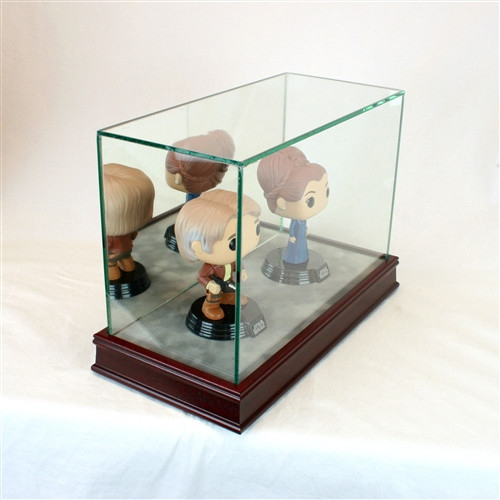
Shelves are where your Bobblehead collection actually lives, so you must balance depth, spacing, and load capacity. The goal is to keep each Bobblehead stable, visible, and free to wobble.
You can decide whether shelves in the Bobblehead display case should be fixed or adjustable. Fixed shelves are simple and strong. Adjustable shelves use shelf pins or tracks, allowing you to reposition each Bobblehead row as your collection grows.
- Measure the tallest Bobblehead in your collection and add extra clearance so the head and springs can move freely.
- Use sturdy shelf material that will not sag under the weight of a row of Bobbleheads.
- Consider adding a small lip or rail at the front edge of each shelf to reduce the chance that a Bobblehead will slide forward.
You can also use clear risers or steps on the shelves to create multi level Bobblehead rows. This allows every Bobblehead in the back to remain visible, even when the shelves are full.
Your choice between glass and acrylic affects the feel and function of your Bobblehead display case. Both materials can work well for Bobblehead collections, and each has its own advantages.
Glass offers a classic look and a hard, scratch resistant surface. It feels solid, and many people associate a glass front with museum style display. However, glass is heavier and more fragile during handling and installation, which matters in large Bobblehead cases.
Acrylic is lighter and more impact resistant. This makes it easier to mount large doors or panels on a Bobblehead display case. Acrylic is often used for sports displays, figurines, and other collectibles where strength and clarity are needed. The main trade off is that acrylic must be cleaned and handled carefully to avoid scratches.
If the Bobblehead display case is very large or mounted high on a wall, acrylic may be easier and safer to work with. For smaller Bobblehead cases or furniture style cabinets, glass doors may look and feel more traditional.
A Bobblehead display case with doors offers better dust control and security than an open shelf. When the doors close smoothly and seal well, your Bobblehead collection stays cleaner and less exposed to accidental contact.
You can build framed doors that hold glass or acrylic panels, or you can use simple panel doors depending on the style of your Bobblehead display case. The key is to choose hinges and hardware that match the weight and size of the doors.
- Use sturdy hinges that fully support each door and allow smooth opening and closing.
- Align doors carefully so the gap between them stays even and the Bobblehead display case looks symmetrical.
- Install handles or knobs that are comfortable to use and match the style of your Bobblehead collection and room décor.
If you want extra protection for your Bobblehead collection, you can add small locks to the doors. This is especially useful for Bobblehead displays in offices, game rooms, or semi public areas where many people may pass by.
Lighting has a huge impact on how impressive your Bobblehead collection looks. Good lighting in a Bobblehead display case can highlight the sculpting, paintwork, and branding on each Bobblehead without overwhelming the figures.
LED strips are popular because they are thin, efficient, and generate very little heat. You can mount LED strips above each shelf or along the sides to wash your Bobblehead rows with even light. With warm light, your Bobblehead collection feels cozy. With cool light, the Bobbleheads look bright and sharp.
You can also use spotlights or puck lights for key Bobblehead figures that you want to highlight, such as rare Bobbleheads, signed Bobbleheads, or limited edition Bobblehead sets. By layering lighting, you can create a dynamic Bobblehead display case that draws attention immediately.
Even the best built Bobblehead display case looks empty until you arrange your Bobbleheads with intention. The way you group and position Bobbleheads can tell a story and make your collection more engaging.
You can organize by theme, such as placing sports Bobbleheads on one shelf, movie Bobbleheads on another, and corporate Bobbleheads on a third. You can also organize by team, color, year, or personal importance.
Place the most important Bobbleheads at eye level. These might be your favorite Bobbleheads, the rarest Bobbleheads, or the Bobbleheads that visitors ask about most often. Use risers, steps, or stands to create layers so that Bobbleheads in the back do not disappear behind the front row.
Try to avoid overcrowding. When each Bobblehead has a bit of space around it, the details are easier to see and the wobbling motion feels more natural.
Over time, dust, fingerprints, and everyday life can affect both the Bobblehead display case and the Bobbleheads inside. Regular maintenance keeps your collection looking fresh and your Bobblehead case in good condition.
Wipe down panels gently with a soft cloth. Avoid harsh chemicals on acrylic surfaces, and avoid abrasive pads that can scratch both acrylic and glass. Dust the shelves and Bobbleheads gently from time to time, being careful around delicate springs and small parts.
Check hinges, screws, and mounting hardware occasionally. A secure Bobblehead display case is less likely to shift, tilt, or loosen under the weight of a growing Bobblehead collection. If you notice any sagging shelves or misaligned doors, correct them early before they cause more serious issues.
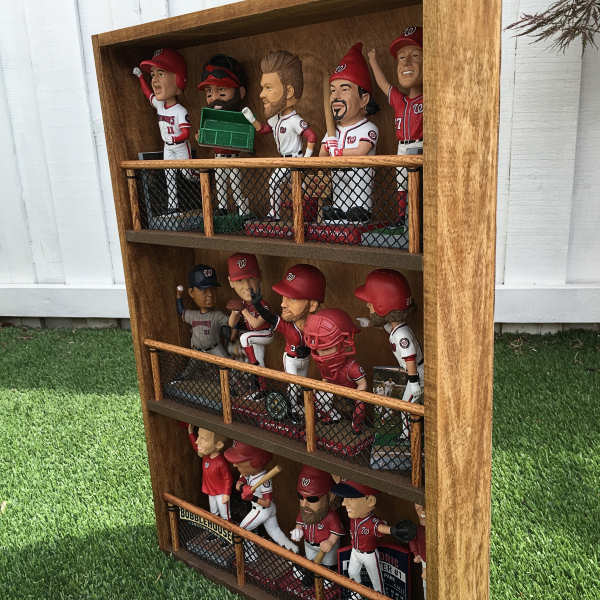
A custom Bobblehead display case does much more than store figures. It transforms every Bobblehead into part of a curated exhibition that reflects your personality, hobbies, and history. With careful planning, the right materials, and simple construction steps, you can build a Bobblehead display case that protects your collection and makes it the centerpiece of any room.
By choosing a solid frame, thoughtful shelving, suitable glass or acrylic, and well planned lighting, you create a safe and attractive home for every Bobblehead you own today and every Bobblehead you will add tomorrow. Whether your collection is small and personal or large and themed, a dedicated Bobblehead display case turns random figurines into a meaningful display.
Most standard Bobblehead figures are comfortable in a display case with a moderate interior depth that allows for wobbling without hitting the front door or back panel. You should test a few of your existing Bobbleheads and choose a depth that gives a bit of extra space in front of and behind each Bobblehead.
Both materials can work well. Glass offers a classic feel and a hard surface, while acrylic is lighter and more impact resistant. For larger Bobblehead display cases, acrylic is often easier to handle and safer, while glass can be a good choice for smaller or furniture style Bobblehead cabinets.
You can use non slip pads, small amounts of removable putty, or subtle front lips on shelves to keep Bobbleheads from sliding. Stable shelves, level installation, and reasonable spacing between Bobbleheads also help minimize tipping and collisions when doors open and close.
If your Bobblehead display case sits close to bright windows or under strong lighting, protective measures can help reduce long term fading and heat exposure. You can use curtains, blinds, or specially selected panel materials that soften the impact of direct light on your Bobblehead collection.
Cool running LED lighting is generally a good choice because it produces very little heat. This keeps the inside of the Bobblehead display case comfortable for both the case materials and the Bobbleheads themselves. Avoid lighting that becomes hot to the touch or sits too close to sensitive paint and plastic.


