
Content Menu
● Understanding Broken Bobblehead Damage
● Choosing the Right Glue for a Broken Bobblehead
● Tools and Preparation for Bobblehead Repair
● Assessing Where the Bobblehead Is Broken
● Fixing a Broken Bobblehead Head or Neck
>> Step 1: Check the Spring and Neck Socket
>> Step 2: Glue the Head Back in Place
● Repairing Broken Bobblehead Legs and Arms
>> Reinforcing a Broken Bobblehead Limb With a Pin
>> Gluing Small Bobblehead Breaks Without a Pin
● Fixing a Broken Bobblehead Base or Stand
>> Step 1: Clean and Align the Broken Base
>> Step 2: Glue the Base or Stand
● Replacing or Re Gluing a Broken Bobblehead Spring
>> Removing the Damaged Bobblehead Spring
>> Installing a New Bobblehead Spring
● Filling Cracks and Repainting a Broken Bobblehead
>> Color Matching and Painting
● Safety Tips for Bobblehead Repair
● Preventing Future Bobblehead Breaks
● FAQ
>> 1. How do I know which glue to use on my broken Bobblehead?
>> 2. Can a Bobblehead with a completely detached head still be fixed?
>> 3. What should I do if my Bobblehead spring is bent or broken?
>> 4. How can I repair and repaint chips or cracks so they are not visible on my Bobblehead?
>> 5. How can I prevent my Bobblehead from breaking again after I repair it?
A broken Bobblehead can feel like a disaster, especially when the Bobblehead is a limited edition, a team giveaway, or a custom gift with strong emotional value. A shattered Bobblehead head, snapped Bobblehead leg, or broken Bobblehead base looks serious at first glance, but in many cases the Bobblehead can be repaired to a displayworthy condition. With the right glue, simple tools, and some patience, a broken Bobblehead can often be restored so that the Bobblehead stands straight, looks clean, and even continues to bobble. This guide explains how to assess Bobblehead damage, choose the correct adhesive, fix broken Bobblehead parts step by step, and finish with touchups that keep your Bobblehead collection looking professional.

Before fixing any broken Bobblehead, it is essential to understand exactly what type of damage the Bobblehead has suffered. Different breaks in a Bobblehead require different repair techniques, and guessing can cause more harm than good. A broken Bobblehead might have structural damage, cosmetic damage, or both, and each needs its own approach for a longlasting fix.
Typical broken Bobblehead problems include:
- A broken Bobblehead head or neck, where the head has separated from the spring or from the neck post.
- Broken Bobblehead limbs, such as legs, arms, or hands, often at thin or weightbearing points.
- A cracked or broken Bobblehead base or stand, which makes the Bobblehead impossible to display upright.
- A broken or detached Bobblehead spring that stops the figure from bobbling.
Most modern Bobblehead figures are made of resin, plastic, or polyresin, while some older or premium Bobbleheads may be ceramic or porcelain. The material affects how the broken Bobblehead should be glued and how much pressure it can handle. If the Bobblehead is resin or plastic, super glue or epoxy is usually suitable, but a ceramic Bobblehead might need a specialized ceramic adhesive. Taking a moment to identify the Bobblehead material and the exact break line will help you choose the safest and strongest repair method.
Choosing the best adhesive is one of the most important decisions when repairing a broken Bobblehead. Using the wrong glue on a Bobblehead can leave cloudy residue, weak joints, or brittle connections that snap again quickly. Different glues react differently with resin, plastic, or ceramic, so a general household glue may not be ideal for a valued Bobblehead.
Common adhesive choices for Bobblehead repairs include:
- Cyanoacrylate super glue: This fastsetting glue is popular for small, clean breaks on resin and plastic Bobbleheads. It cures quickly, so the Bobblehead can often be handled within minutes, but you must position the Bobblehead parts accurately on the first try.
- Twopart epoxy: This adhesive consists of resin and hardener that are mixed just before use. It provides a very strong bond for heavy Bobblehead parts, large broken areas, and weightbearing joints like legs and bases.
- Ceramic or porcelain adhesive: Some Bobbleheads are made of ceramic, and those require an adhesive specifically formulated for ceramic items to prevent weak repairs.
- Flexible or rubberlike adhesives: For certain Bobblehead bases or clear stands, a more flexible adhesive can reduce stress and cracking in areas that experience minor movement.
When deciding which glue to use on a broken Bobblehead, think about the weight of the part, how much load it carries, and whether the Bobblehead will be frequently moved. Heavy Bobbleheads and structural joints generally benefit from epoxy, while small Bobblehead accessories may be fine with a tiny drop of super glue.
A successful Bobblehead repair starts with good preparation. Before gluing any broken Bobblehead parts, gather your tools and set up a clean, welllit workspace. A rushed or cluttered environment makes it easier to misalign Bobblehead parts or smear glue where it does not belong.
Useful tools for repairing a broken Bobblehead:
- Tweezers or needlenose pliers for handling small Bobblehead fragments and metal springs.
- Cotton swabs and isopropyl alcohol to clean old glue and dust from the Bobblehead surfaces.
- Finegrit sandpaper to smooth Bobblehead edges and remove rough spots after filling or gluing.
- Toothpicks or small sticks to apply glue precisely on tiny Bobblehead joints.
- Epoxy putty or modeling putty to fill gaps, chips, or missing Bobblehead material.
- Small clamps, rubber bands, or painter's tape to hold Bobblehead parts in place while glue cures.
- Soft cloth or foam pad to protect the Bobblehead paint while you work.
Before applying glue, always clean the broken Bobblehead surfaces. Dust, old adhesive, or skin oils can weaken the bond and cause the repaired Bobblehead to fail. Gently wiping the broken edges of the Bobblehead with alcohol and letting them dry completely gives the new adhesive the best chance to grip.
Not all broken Bobblehead damage is obvious at first glance. A Bobblehead that arrived rattling in a box might have hidden cracks inside the neck cavity or under the base. Take time to examine the Bobblehead from every angle and identify all problem points so you do not fix one area only to have another Bobblehead fracture appear later.
Key areas to inspect on a broken Bobblehead:
- The Bobblehead head and neck: check for a cracked collar, broken plastic ring, or damaged spring attachment.
- The Bobblehead torso: look for hairline cracks running from the neck down into the body.
- The Bobblehead limbs: gently flex legs and arms to see if any partially broken joints move unnaturally.
- The Bobblehead base: inspect both the top and the bottom for fractures, chips, or missing pieces around peg holes.
Once you know exactly where the Bobblehead is broken, you can plan a repair strategy, such as reattaching the Bobblehead head, pinning a leg joint, or reinforcing the base.
A detached or broken Bobblehead head is one of the most dramatic but also one of the most repairable issues. Depending on the design, the Bobblehead head may have separated from the spring, cracked at the neck, or broken the internal connector.
Start by examining how the Bobblehead head originally connected to the body. Some Bobbleheads use a spring that screws into a socket in the head, while others have a plastic insert or plug that holds the spring in place. If the Bobblehead spring itself is intact, you may only need to glue the plug or rim of the head back into the correct position. If the spring is bent or snapped, you will need to address the spring separately.
Hold the Bobblehead head and body close together without glue and make sure the face is oriented correctly. This dryfit test will show you how the Bobblehead is meant to sit when fully repaired.
Once you understand the connection, you can reattach the broken Bobblehead head:
1. Clean the neck area and head socket of the Bobblehead with alcohol to remove residue.
2. If the joint is small and tight, place a tiny drop of super glue on the connector or spring seat; for larger or weightbearing necks, use mixed epoxy.
3. Press the Bobblehead head gently but firmly onto the neck, keeping the face oriented forward.
4. Hold the Bobblehead in position until the glue grips, then support the head with tape or a soft prop while the adhesive cures.
After curing, test the Bobblehead by gently tapping the head. Ideally, the Bobblehead should bob freely but feel secure, with no wobble at the glued joint itself.
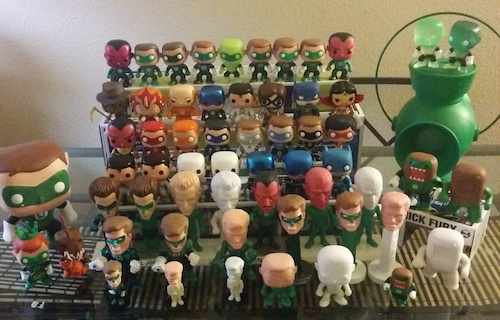
Legs and arms on a Bobblehead are often thinner than the torso, so a fall can easily snap these points. A broken Bobblehead leg is especially serious if it carries most of the figure's weight. In such cases, a simple butt joint with glue might not be strong enough, and adding a pin can reinforce the Bobblehead limb.
Pinning involves inserting a small metal piece through both sides of the break in the Bobblehead to create an internal support:
1. Mark the center of each broken Bobblehead surface where the leg or arm meets.
2. Use a pinvise or small hand drill to make a shallow hole in each side, aligned as straight as possible.
3. Cut a short length of metal wire, such as a piece of paperclip, that fits snugly in the Bobblehead holes.
4. Testfit the metal pin in the Bobblehead to ensure the joint closes cleanly with no gap.
5. Apply epoxy or appropriate glue into the holes and on the broken Bobblehead surfaces.
6. Insert the pin, press the Bobblehead limb together, and hold or clamp until the adhesive begins to set.
This hidden pin spreads the load along the Bobblehead limb and greatly reduces stress on the glue line, producing a stronger repair than adhesive alone.
For smaller Bobblehead accessories or light arms that do not carry much weight, pinning may not be necessary. In these cases, a careful super glue application is often enough:
- Ensure the broken Bobblehead edges fit together perfectly; trim or sand gently if they do not.
- Place a very small amount of glue on one side of the Bobblehead break, then align and press the pieces.
- Wipe away any excess glue with a toothpick or cotton swab before it hardens.
- Let the Bobblehead rest undisturbed while the adhesive cures.
Even simple joints like this can be surprisingly strong when the broken Bobblehead pieces match closely and are not under constant stress.
A broken Bobblehead base or stand can make an otherwise intact figure impossible to display. Bases may crack along thin edges, snap around peg holes, or separate from the Bobblehead feet. Repairing the base properly ensures that the Bobblehead stands straight and does not topple.
Examine how the Bobblehead base or stand broke and collect all fragments. Sometimes tiny chips from the base of the Bobblehead feet or underside of the base get lost; finding and reusing them helps keep the original shape. Clean each broken Bobblehead surface and dry them before gluing.
Place the Bobblehead base pieces together without adhesive to see how they align. If the bottom of the Bobblehead is rough or uneven after breaking, sand it lightly so that the repaired base rests flat.
For a cracked Bobblehead base:
1. Apply a thin line of epoxy or strong glue along the crack on the underside of the Bobblehead base.
2. Press the broken edges together and hold until the adhesive starts to grab.
3. Reinforce the underside of the Bobblehead base with a thin layer of epoxy or a strip of tape while curing, if it will not be visible when displayed.
For a broken clear Bobblehead stand or peg:
- Clean both the broken peg and the socket.
- Use a cleardrying adhesive to minimize visibility around the Bobblehead joint.
- Allow extra curing time because small plastic joints on a Bobblehead can be stressed when you reinsert the peg.
Once fully dry, test the Bobblehead on the repaired base to ensure the figure stands straight and does not lean or twist.
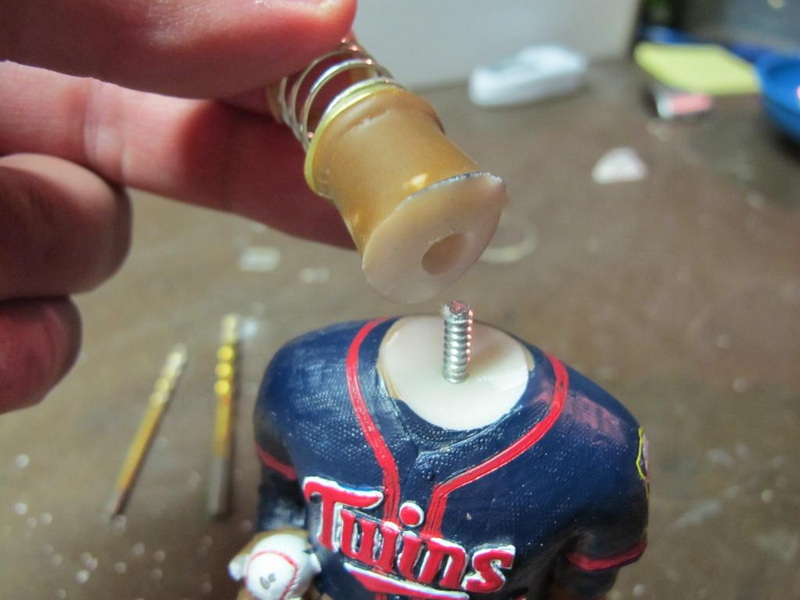
The spring is the heart of a Bobblehead, and a broken Bobblehead spring means the head no longer bobbles. In some cases the spring snaps entirely; in others it detaches from the body spindle or head plug. Replacing or regluing the spring restores the signature motion of the Bobblehead.
To safely remove a broken Bobblehead spring:
- Hold the Bobblehead body securely and use needlenose pliers to grip the end of the spring.
- Twist and pull gently until the spring slides off the spindle or out of the head socket.
- If the spring is buried in plastic or resin, carefully clear the surrounding material so you do not enlarge the hole too much.
Once the faulty Bobblehead spring is removed, inspect the attachment points for cracks or chips in the resin. Any damage in these areas may need to be filled or stabilized before installing a new Bobblehead spring.
To replace the spring on a Bobblehead:
1. Select a new spring similar in diameter and length to the original Bobblehead spring.
2. Apply a small amount of strong glue around the base of the spring where it will contact the Bobblehead spindle.
3. Place the spring onto the spindle and hold it upright until the glue begins to set.
4. After the bottom bond cures, apply glue to the top of the Bobblehead spring and position the head so that it aligns and faces forward.
5. Use tape or a gentle support to hold the Bobblehead head in the desired position while the adhesive cures completely.
When the glue is fully dry, tap the Bobblehead head lightly and check that it bobs smoothly and returns to a natural position.
Even when a broken Bobblehead is structurally repaired, surface cracks and chips can remain visible. Filling these imperfections and repainting them restores the appearance of the Bobblehead and can even hide the repair entirely.
For visible Bobblehead cracks or small missing fragments:
- Mix a small amount of epoxy putty or use a dedicated figurine filler.
- Press the putty into the crack or chip on the Bobblehead, slightly overfilling to compensate for shrinkage.
- Once the putty hardens, sand the area carefully with finegrit sandpaper so it transitions smoothly into the surrounding Bobblehead surface.
If a large piece of the Bobblehead is missing, build up layers of putty in thin stages instead of trying to replace the entire volume at once. This layered approach gives you better control over the shape and detail of the Bobblehead repair.
Repainting a repaired Bobblehead section requires patience and good color matching:
- Use acrylic paints compatible with resin and plastic, as they adhere well and are easy to mix.
- Start with base colors that match the Bobblehead's original tones, then adjust slightly with small amounts of lighter or darker pigment.
- Apply several thin coats of paint instead of one thick layer, letting each coat dry fully before adding the next.
- Blend edges gently to avoid harsh transitions between old and new Bobblehead paint.
When you are satisfied with the color, spray a clear protective varnish—gloss, semigloss, or matte—to seal the paint and unify the finish across the whole Bobblehead.
Bobblehead repairs are relatively small projects, but they involve strong adhesives, sharp tools, and sometimes hot water or heated air. Following simple safety practices will protect you and your Bobblehead collection.
Safety reminders when fixing a broken Bobblehead:
- Work in a ventilated area when using super glue, epoxy, or spray varnish, and avoid inhaling fumes.
- Wear disposable gloves if you are sensitive to adhesives, and never touch your face or eyes while handling glue.
- Keep sharp tools like drills or hobby knives under control and always cut or drill away from your body and the main Bobblehead surface.
- If you soften Bobblehead joints with warm or hot water, handle the figure with tongs or a cloth and give it time to cool before working on it further.
- Store all glues and solvents out of reach of children and away from direct heat.
These precautions help ensure that both you and your Bobblehead make it through the repair process safely.
Once you have invested time in fixing a broken Bobblehead, it makes sense to protect the figure from future accidents. Simple changes in Bobblehead display and handling habits can greatly reduce the likelihood of another break.
Prevention tips for Bobblehead collectors:
- Place Bobbleheads on stable, level surfaces away from the edges of shelves or desks.
- Avoid hightraffic locations where the Bobblehead can be bumped, such as narrow hallways or crowded desktop corners.
- When dusting, support the Bobblehead base and gently wipe the head to avoid snapping the spring or limbs.
- If you transport Bobbleheads, wrap each Bobblehead individually in soft material and keep them upright in a snug container.
- Consider using display cases or acrylic boxes for rare or valuable Bobbleheads to protect them from falls and dust.
By treating each Bobblehead as a small collectible sculpture, you can extend the life of your entire Bobblehead collection and reduce the need for future repairs.
Fixing a broken Bobblehead is a rewarding project that combines careful observation, simple tools, and a bit of craftsmanship. A damaged Bobblehead may look hopeless at first, but once you understand the structure of the Bobblehead and the types of breaks that occur, it becomes clear that many problems—snapped limbs, cracked bases, detached heads, and broken springs—can be corrected. By choosing the right glue for the Bobblehead material, reinforcing important joints with pins or new springs, filling and sanding cracks, and repainting with matching colors, you can restore both the function and appearance of almost any Bobblehead. With practice, your broken Bobblehead repairs will become cleaner, stronger, and more invisible, allowing each Bobblehead in your collection to stand proudly and bobble again.
The best glue for a broken Bobblehead depends on the material and the type of break. Resin and plastic Bobbleheads usually respond well to cyanoacrylate super glue for small joints and twopart epoxy for heavier or structural areas, while ceramic or porcelain Bobbleheads require an adhesive specifically labeled for ceramic surfaces. If the joint carries the weight of the Bobblehead, epoxy is often the safest option because it provides a stronger, more durable bond.
Yes, a Bobblehead with a detached head can often be fixed as long as the main pieces are intact. Start by checking whether the Bobblehead spring is still usable and whether the neck socket or head plug is cracked. After cleaning both sides of the broken Bobblehead connection, apply the appropriate glue, set the head onto the spring or neck post in the correct orientation, and support it while the adhesive cures. In many cases, the Bobblehead will bobble again once the joint has fully hardened.
If the Bobblehead spring is severely bent or broken, it is usually better to replace it rather than trying to bend it back into shape. Remove the damaged Bobblehead spring carefully, clean the attachment points on the head and body, and install a new spring of similar size using a strong adhesive. Make sure the Bobblehead head is aligned while the glue cures so that the figure faces forward and the bobbling motion is smooth when you test it.
To make chips and cracks less visible on a repaired Bobblehead, first fill any gaps with epoxy putty or similar filler and sand the area smooth once it hardens. Then mix acrylic paints to match the original Bobblehead colors as closely as possible and apply several thin coats, blending the edges into the surrounding paint. When the color match looks good, seal the repaired Bobblehead area with a clear varnish so that the finish matches the rest of the figure.
Preventing further damage to a repaired Bobblehead involves careful display and handling habits. Keep the Bobblehead on a stable, flat surface away from shelf edges, and avoid areas where it might be knocked over. When cleaning, support both the base and head of the Bobblehead to reduce stress on joints and the spring. For especially valuable or fragile Bobbleheads, consider using a display case or protective cover to shield the figure from accidental bumps, falls, and dust.


