
Views: 222 Author: Mia Publish Time: 2025-12-16 Origin: Site
Content Menu
● Why Use 3D Printing For Making Bobbleheads?
● Materials And Tools You'll Need
>> Equipment
>> Supplies
● Step-by-Step Process To Make A 3D-Printed Bobblehead
>> Step 1: Develop The Concept
>> Step 2: 3D Modeling The Head And Body
>> Step 3: Preparing The Model For Printing
>> Step 4: Printing The Head, Body, And Base
>>> FDM Printers
>> Step 5: Post-Processing And Surface Preparation
>> Step 6: Assembling The Spring Mechanism
>> Step 7: Painting And Custom Finishing
>> Step 8: Test And Adjust The Bobble Motion
>> Step 9: Mounting On Base And Packaging
● Advanced Bobblehead Design Tips
● Maintenance And Care For 3DPrinted Bobbleheads
● Troubleshooting Common 3D Printing Issues
● Industrial Applications Of 3DPrinted Bobbleheads
● Future Of Bobbleheads In Additive Manufacturing
● FAQ
>> 1. What's the best printer type for creating a high-quality bobblehead?
>> 2. How can I ensure smooth paint finish on my 3D-printed bobblehead?
>> 3. Why won't my bobblehead's head move properly?
>> 4. What size should an average bobblehead be for 3D printing?
>> 5. Can I use full-color 3D printing instead of painting?
Creating a bobblehead with a 3D printer combines art, technology, and craftsmanship in one exciting process. It allows anyone—from hobbyists to professional manufacturers—to design fully customized figurines quickly and precisely. With 3D printing, you can bring imagination to life, producing exact replicas of people, celebrities, or mascots without costly molding steps. Whether you plan to print a gift for a friend, start a mini collectible brand, or create promotional merchandise, understanding how to make a bobblehead with a 3D printer will open countless creative possibilities. This article walks through the entire process—from concept and modeling to painting, assembly, and professional finishing.

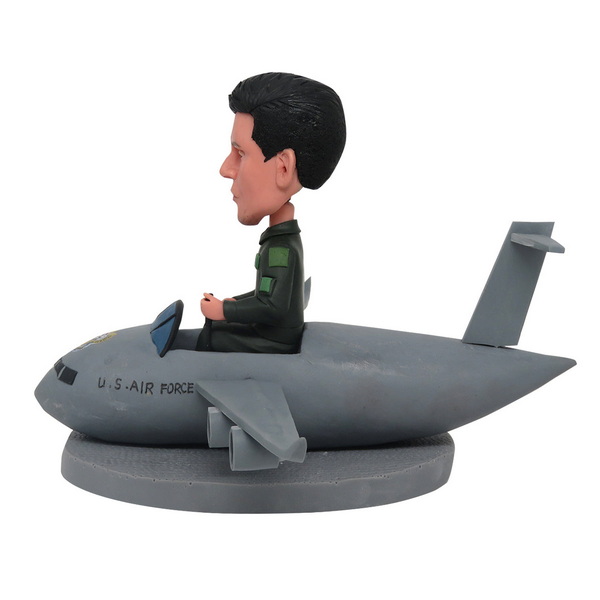
Why Use 3D Printing For Making Bobbleheads?Traditional bobblehead production relies on manual sculpting and resin casting. While this method works well for mass manufacturing, it's less efficient for small batches or oneofakind designs. 3D printing, on the other hand, offers tremendous flexibility, precision, and cost savings.
Key Advantages- Detailed Accuracy: 3D printers reproduce realistic facial features and intricate textures impossible to carve by hand.
- Efficiency: You can produce prototypes or final versions within hours instead of weeks.
- Personalization: Every printed bobblehead can be unique — no two figures need to look alike.
- Cost Control: 3D printing eliminates expensive mold fabrication, making it ideal for short runs.
- Creative Freedom: Any digital idea can become a tangible product quickly.
3D printing has transformed traditional bobblehead manufacturing into a modern, accessible art form.
Materials And Tools You'll NeedGetting started requires a few essential tools and materials. Choosing the right combination ensures a smoother workflow and higher quality.
Equipment- 3D Printer: FDM, SLA, or DLP printers all work; resin printers offer superior fine detail.
- 3D Modeling Software: Programs such as Blender, ZBrush, or Autodesk Maya.
- Slicing Software: Cura, PrusaSlicer, or Chitubox for preparing your print files.
- Laptop or desktop computer: Strong enough for 3D modeling and rendering.
Supplies- Filament or resin: PLA, ABS, or resin—depending on the printer.
- Epoxy or glue: For assembly.
- Metal spring: To create the bobbling movement.
- Acrylic paints and brushes: For customizing colors and fine details.
- Sandpaper and files: To smooth surfaces.
- Primer and varnish: For long-term protection and gloss finishing.
Having these ready will streamline every production stage and reduce the risk of print defects.
Step-by-Step Process To Make A 3D-Printed BobbleheadStep 1: Develop The ConceptBefore opening any software, define your idea clearly. Decide who or what your bobblehead will represent. Possible options include:
- Individual portraits (friends, family, or yourself)
- Company mascot or CEO miniatures
- Fictional or cartoon-inspired designs
- Athletes, public figures, or humorous characters
Gather multiple reference photos from different angles so the modeler can accurately capture likeness and posture. Some designers even scan themselves with a mobile 3D scanning app to get realistic geometry within minutes.
Step 2: 3D Modeling The Head And BodyUse modeling software like Blender or ZBrush to sculpt the head separately from the body. For realistic portraits, concentrate effort on facial expression, hairstyle, and clothing wrinkles.
Tips for strong design:
- Maintain exaggerated head-to-body ratio (usually 1:3).
- Add connector cavities in both the head and torso for spring placement.
- Simplify tiny elements if your printer cannot reproduce fine details.
- Hollow large parts to reduce weight and material usage.
Export the model files in .STL or .OBJ formats once design and size are complete.
Step 3: Preparing The Model For PrintingUse slicing software to convert 3D models into printable layers. During this phase:
- Adjust print settings: Layer height 0.1–0.2 mm for fine detail.
- Optimize support structure under overhangs like noses and arms.
- Set an infill rate of around 20% to balance weight and strength.
- Preview the model for any floating or unconnected elements.
Well-planned slicing ensures structural stability and minimizes failed prints.
Step 4: Printing The Head, Body, And BaseLoad your file to the 3D printer. Ensure proper leveling of the print bed to prevent layer shifting. Printing times depend on size and detail: a 6-inch head may take 5–8 hours, while the full body can take 10–12 hours.
FDM Printers- Pros: Affordable, reliable, suitable for quick prototypes.
- Cons: Visible layer lines, more post-processing required.
Resin Printers (SLA/DLP)- Pros: Extremely high resolution and smooth finish.
- Cons: Messier cleanup, resin handling precautions required.
After printing, remove excess supports carefully to avoid chipping delicate parts. Allow resin parts to cure under UV light and let FDM prints cool completely.
Step 5: Post-Processing And Surface PreparationFreshly printed parts often show minor ridges or lines. Smoothing is essential for a professional bobblehead appearance.
- Sand the surfaces starting with 400 grit, finishing near 1000 grit.
- Apply a filler primer, wait for drying, and then sand lightly again.
- Use fine brushes for small corners or curves.
Repeat this process until the surface feels perfectly smooth. Clean the dust gently before painting.
Step 6: Assembling The Spring MechanismThe signature feature of every bobblehead is its springy head. To install:
1. Drill or carve a small hole at the neck center of the body.
2. Create a matching recess inside the head bottom.
3. Insert a metal spring, adding a bit of epoxy at both ends.
4. Hold the head upright until adhesive stabilizes.
The correct alignment ensures consistent and balanced wobbling once assembled.
Step 7: Painting And Custom FinishingPainting transforms a plain 3D print into a lifelike, polished collectible. Start with a neutral primer coat, then apply vibrant acrylic colors.
Recommended sequence:
1. Base coat (skin tone or uniform color)
2. Detail coat (eyes, lips, logos, accessories)
3. Shading and highlights for realism
4. Clear gloss or matte varnish
Artists often use airbrush tools for smooth gradients and fine-line brushes for facial details. Allow at least one full day of drying before reassembling.
Step 8: Test And Adjust The Bobble MotionCheck movement balance by gently tapping the head. It should bobble freely but return quickly to its center position. If it tilts, shorten or slightly reposition the spring.
Tips for perfect wobbling:
- keep the head lightweight and hollow,
- ensure the spring's centerline aligns vertically,
- avoid excessive glue that stiffens joint flexibility.
A properly constructed bobblehead should display graceful, continuous movement with minimal friction.
Step 9: Mounting On Base And PackagingAttach the finished figure onto its base using epoxy. Customized bases can feature nameplates, event labels, or company branding.
Once fixed, polish gently with a microfiber cloth to remove fingerprints. Pack the bobblehead using foam inserts or bubble wrap to prevent damage during storage or shipping.

Advanced Bobblehead Design TipsOnce you master the basics, explore professional enhancement techniques:
1. Multimaterial printing: Combine PLA and flexible filaments for durable joints.
2. 3D facial scanning: Capture realistic faces within seconds for corporate souvenirs.
3. Add interior magnets: Make detachable accessories or alternate expressions.
4. Dual extrusion printers: Print in multiple colors without post-painting.
5. Digital libraries: Store reusable characters, poses, and accessories to streamline future prints.
These methods help enthusiasts and manufacturers alike push creativity while maintaining precision.
Maintenance And Care For 3D Printed BobbleheadsTo keep your 3Dprinted bobblehead looking new, follow these maintenance tips:
- Clean gently: Use a soft cloth or air blower; never use alcohol-based cleaners.
- Avoid direct sunlight: UV exposure can fade paint.
- Protect from heat sources: Excessive temperature can warp PLA and soften adhesives.
- Handle by the base: Lifting by the head can loosen or stretch the spring.
- Dust regularly: Prevent grime from dulling color brightness.
Proper care extends your figure's life, preserving detail and mobility for years.
Troubleshooting Common 3D Printing IssuesEven skilled users encounter challenges while printing bobbleheads. Here's how to fix them:
- Layer lines visible: Use smaller layer height or sand carefully before painting.
- Support marks: Adjust support density for easier removal.
- Warping corners: Calibrate print bed temperature or add adhesive stick.
- Poor adhesion: Ensure even bed leveling before printing.
- Weak head connection: Reinforce neck joint with epoxy or replace spring.
Most printing errors have simple adjustments. Keep testing until you achieve seamless layers and clean surfaces.
Industrial Applications Of 3D Printed BobbleheadsBeyond personal crafting, 3Dprinted bobbleheads play a major role in professional promotion and entertainment industries:
- Corporate giveaways: CEO or mascot models for marketing campaigns.
- Sports merchandising: Player bobbleheads offered during events.
- Film and gaming collectibles: Characters brought from digital worlds to physical form.
- Wedding gifts: Personalized couple bobbleheads commemorating special days.
Because digital files can be edited effortlessly, factories can massproduce customized versions while still delivering individuality.
Future Of Bobbleheads In Additive ManufacturingThe future looks bright for 3Dprinted bobbleheads. With AIpowered modeling, fullcolor resin printing, and sustainable materials, the possibilities continue to grow.
Innovations to watch:
- Fullcolor printers that remove the need for manual painting.
- Biodegradable resins that minimize environmental impact.
- Automated painting robots for mass personalization.
- Hybrid realities: Combining digital avatars with printed collectibles.
In coming years, 3D printing may redefine collectibles entirely—turning each bobblehead into an interactive product linking physical expression with digital creativity.
ConclusionMaking a bobblehead with a 3D printer is both a creative and technical achievement. From sketching your first idea to assembling the final figure, each step showcases the power of digital craftsmanship. 3D technology eliminates traditional molding limits, allowing anyone to create lifelike, customized collectibles at home or in a professional studio.
With careful modeling, fine-tuned printing, smooth finishing, and vibrant painting, your printed bobblehead can rival commercial examples in quality and personality. The combination of imagination and precision defines the future of this beloved art form—one nodding head at a time.

FAQ1. What's the best printer type for creating a high-quality bobblehead?Resin printers (SLA or DLP) deliver the finest detail and smooth surfaces. FDM printers are suitable for beginners and larger-scale figures requiring durability.
2. How can I ensure smooth paint finish on my 3D-printed bobblehead?Sand slowly between coats, use filler primer to hide layer lines, and finish with gloss varnish to achieve a professional texture.
3. Why won't my bobblehead's head move properly?The spring may be too tight or misaligned. Realign the head and ensure the spring sits perfectly centered without excess glue.
4. What size should an average bobblehead be for 3D printing?Standard personal bobbleheads measure between 5 and 8 inches tall, balancing visual appeal with print time efficiency.
5. Can I use full-color 3D printing instead of painting?Yes. New commercial printers support full-color resin printing. However, hand-painting remains popular for artistic control and depth.


