
Content Menu
● Core definition: what makes a Bobblehead a Bobblehead
● How Bobbleheads differ from other collectibles
● A brief history of the Bobblehead concept
● Major types of Bobblehead figures
>> Pop culture and entertainment Bobblehead
>> Corporate and industrial Bobblehead
>> Personalized “from photo” Bobblehead
>> Humorous and novelty Bobblehead
● How a Bobblehead is designed and produced
>> Mold making and part production
● Assembly, painting, and quality control
>> Assembly and bobble mechanism
● Packaging and distribution of Bobblehead figures
● Why Bobbleheads work so well in marketing
● Examples of Bobblehead use in industrial contexts
● FAQ
>> 1. Is every figure with a large head automatically a Bobblehead?
>> 2. Can a Bobblehead be made in any size?
>> 3. What materials make the best Bobblehead for corporate gifts?
>> 4. Are Bobbleheads only suitable for entertainment and sports brands?
>> 5. How should a company begin planning its first Bobblehead project?
A Bobblehead is a small figurine whose head moves independently of its body, usually attached by a spring or similar mechanism so that it wobbles when touched. Unlike a fixed statue, a Bobblehead adds motion and personality to the character it represents, turning a simple likeness into a playful, interactive object. From sports and entertainment to corporate gifts and industrial branding, the Bobblehead has grown into a universal symbol of fun, loyalty, and identity.
For a Chinese company that produces and exports highquality abrasives and refractory materials, understanding exactly what a Bobblehead is—and why people like Bobbleheads so much—helps reveal why this unique item works so well in marketing. A welldesigned Bobblehead can bring your serious industrial brand to life, making safety, durability, and precision feel friendly, human, and memorable.

Although Bobblehead designs vary widely, several core elements appear in almost every true Bobblehead.
First, a Bobblehead has a clearly defined head and body. The head is usually larger than normal to emphasize facial details, while the body is relatively small and stable. Second, the head is connected to the body via a flexible element—commonly a metal spring or a plastic joint—that allows the head to move. Third, when the figurine is tapped or disturbed, the head oscillates for a few seconds before settling, creating the signature bobbling effect that gives the Bobblehead its name.
Some modern designs hide the spring inside the neck or under the chin to make the Bobblehead appear more realistic, but the essential behavior remains the same: touch the figure lightly and the head will bobble up and down or side to side. Without this movement, a figure is just a statue or bighead toy, not a true Bobblehead.
The world of collectibles is crowded with action figures, vinyl toys, statues, miniatures, and plush dolls. Bobbleheads share some similarities with these items, yet they occupy their own niche.
Unlike regular action figures, which often have movable limbs and are meant for posing, a Bobblehead usually has a fixed body and only the head moves. Statues and resin figures may capture great detail but remain entirely static; a Bobblehead, by contrast, invites interaction every time someone taps the head and watches it wobble. Vinyl toys and art figures sometimes use stylized proportions, but without the bobbling mechanism, they still are not Bobbleheads.
This combination of motion and caricature makes the Bobblehead distinctive. It turns a character into a small, animated presence, almost like a miniature ambassador that nods along whenever someone glances its way. That hint of humor and movement explains why Bobblehead figures are often placed on desks, dashboards, and shelves where they can be seen and enjoyed every day.
The idea behind the Bobblehead—an independent, nodding head on a figure—predates the modern term by centuries. In earlier times, artisans in Europe and Asia crafted noddinghead figures as curiosities and decorations. These early pieces used internal weights or simple mechanisms to allow the head to move when disturbed, charming viewers long before the word “Bobblehead” existed.
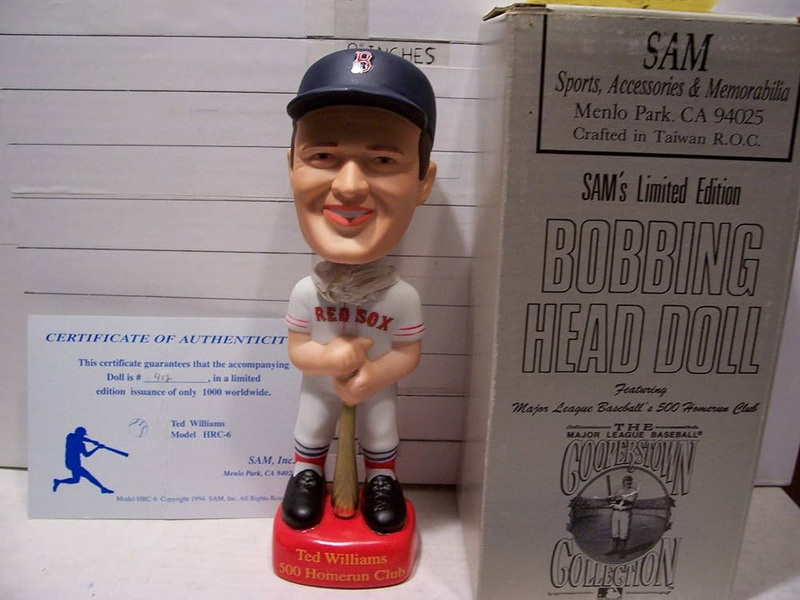
The modern Bobblehead era began in the mid20th century, especially in the 1960s, when sports organizations started using Bobblehead dolls as part of their promotional programs. Early sports Bobbleheads often featured generic faces, with team names or city names on their bases. They were given away at stadiums as souvenirs or sold in shops, introducing millions of fans to the concept of a wobblinghead mascot.
Over time, Bobblehead figures evolved from simple, generic dolls into detailed, customizable collectibles. As sculpting, molding, and printing technologies improved, manufacturers could capture the likenesses of individual players, actors, and fictional characters. Today, Bobblehead collectibles span sports, movies, music, politics, and corporate branding, reflecting how this small format can represent almost anything.
While every Bobblehead shares the core wobblinghead feature, different categories have emerged to serve different needs.
Sports Bobbleheads feature players, coaches, mascots, or team logos. They are often tied to specific events, such as opening days, championship celebrations, or special anniversary nights. Fans collect these Bobblehead figures as mementos of seasons, games, and personal memories.
These Bobbleheads represent movie characters, TV heroes, musicians, and comic figures. Many popculture Bobblehead lines are released alongside film or show launches, acting both as merchandise and promotional tools. Some become highly collectible when production runs are low or when the associated franchise gains cult status.
Custom Bobbleheads created for companies depict founders, executives, mascots, or generic workers in company uniforms or safety gear. For an abrasives and refractory materials brand, a Bobblehead might show a worker wearing PPE, holding a grinding wheel, or standing in front of a furnace. These Bobbleheads serve as corporate gifts, tradeshow giveaways, and internal recognition awards.
In this category, a Bobblehead is sculpted to resemble a specific person based on photographs. Customers order Bobbleheads of themselves, friends, or family members, often as gifts for weddings, birthdays, or graduations. The body may show a general theme (e.g., engineer, doctor, football player), while the head is customized.
Novelty Bobbleheads include joke characters, animals, generic office workers, and amusing slogans. These Bobblehead figures are often sold as lighthearted gifts and desk decorations. While not all of them become highly collectible, they contribute to the Bobblehead's image as a playful and approachable object.
Answering “What's a Bobblehead?” is not complete without understanding the steps behind a quality Bobblehead figure. While details vary between manufacturers, most production runs follow a similar process.
The process starts with an idea: who or what the Bobblehead will depict, what the pose will be, and what story it should tell. For your abrasives and refractory materials company, this might be a Bobblehead mascot representing safety, precision grinding, or hightemperature performance.
Designers outline key elements:
- Head style (realistic, cartoon, animal, human).
- Clothing (work uniforms, PPE, branded shirts).
- Accessories (grinding wheel, cutting disc, furnace background, company logo).
- Base design (simple platform, logo plate, or environment detail).
A clear concept ensures the Bobblehead is instantly recognizable and aligned with your brand.
Once the concept is approved, artists produce sketches and turnaround drawings showing the Bobblehead from multiple angles. These drawings guide sculptors or digital artists, who create a threedimensional model in clay or software.
Important considerations at this stage include:
- Maintaining structural strength around the neck and base.
- Ensuring the head is light enough to bobble easily.
- Balancing the Bobblehead so it stands upright without tipping.
The 3D model serves as the master reference for creating molds.
Using the master model, manufacturers create molds from metal, silicone, or other suitable materials. Separate molds are often used for each major Bobblehead component (head, body, base, accessories).
Resin or plastic is then poured or injected into these molds to create the raw Bobblehead parts. After curing or cooling, the parts are removed, trimmed, and cleaned to remove excess material or visible seam lines.
After parts are prepared, the next steps turn raw pieces into fully recognizable Bobblehead figures.
The head and body are joined using a spring or joint. In many Bobbleheads, the spring is glued or fixed into the head, then attached to the neck area of the body. The joint must be secure enough to hold the head but loose enough to allow smooth bobbling.
The assembled head and body are then attached to the base, which may be decorated with logos or printed text. If there are accessories—such as tools, signs, or background elements—they are fixed in place at this stage.
Painting transforms the bare pieces into a finished Bobblehead. Steps typically include:
- Spraying or brushing base colors onto the body and head.
- Adding fine details such as facial features, text, and small logos.
- Applying shading or highlight effects to enhance depth.
- Spraying clear protective coats to guard against scratches and fading.
Each Bobblehead is checked for paint accuracy, clean lines, and correct colors. Poorly painted Bobblehead units are either corrected or rejected.
Before packaging, inspectors perform final checks:
- Does the head bobble freely when tapped?
- Does the Bobblehead stand straight without wobbling at the base?
- Are there any chips, cracks, misprints, or assembly defects?
Only Bobblehead figures that pass these checks are approved for shipping.
A Bobblehead is usually packaged in a protective box that holds the figure securely and highlights the theme. Packaging design is part of the overall impression and often includes:
- A clear product image or illustration of the Bobblehead.
- Branding elements such as logos, slogans, and color themes.
- Basic information about the character or event the Bobblehead represents.
Inside the box, cardboard inserts, foam, or molded plastic help keep the Bobblehead stable during shipping. For your company, the packaging is another chance to share key messages about safety, quality, and innovation.
Bobbleheads reach end users via different channels: trade shows, retail shelves, online orders, internal events, or direct gifts to clients and partners. In each case, the unboxing moment is important: a Bobblehead that looks impressive and feels solid from the start is more likely to be kept and displayed.
Bobbleheads succeed as marketing tools for several reasons that go beyond their physical design.
- Memorability: The unusual combination of a caricatured head and motion makes a Bobblehead easy to remember.
- Conversation starter: People who see a Bobblehead on a desk or shelf often ask about it, creating natural opportunities to discuss the brand behind the figure.
- Emotional link: A Bobblehead given at a meaningful moment—such as a factory visit, training completion, or project milestone—becomes a physical reminder of that experience.
- Longterm visibility: Unlike flyers or brochures that are quickly filed or discarded, Bobblehead mascots often stay in view for months or years.
For your abrasives and refractory materials brand, a Bobblehead mascot can quietly work every day in customers' offices, reminding them of your expertise and reliability.
Industrial companies increasingly use Bobblehead figures in creative ways.
- A safety Bobblehead in PPE perched on monitors or workstations, reminding staff to follow procedures.
- A technical Bobblehead holding a grinding disc or standing next to a furnace as part of productlaunch gift sets.
- A limitededition Bobblehead distributed at major trade fairs to attract visitors and differentiate your booth.
- A series of Bobblehead awards given to distributors or employees who reach specific performance goals.
Each of these uses reinforces core values—safety, performance, partnership—through a medium that people enjoy and remember.
A Bobblehead is, at first glance, a simple figure with a wobbling head. In reality, it is a carefully designed combination of caricature, engineering, and storytelling. From early nodding figures to modern, detailed collectibles, the Bobblehead format has proven its ability to capture attention, express identity, and carry a message far beyond the moment it is received.
For a company that produces abrasives and refractory materials, understanding “What's a Bobblehead?” means recognizing how this small, moving figure can serve as a longterm ambassador for technical strengths and safety culture. With clear concept design, robust materials, reliable manufacturing, and thoughtful deployment at key events, a Bobblehead mascot can transform complex industrial topics into something friendly, memorable, and worth keeping on display.
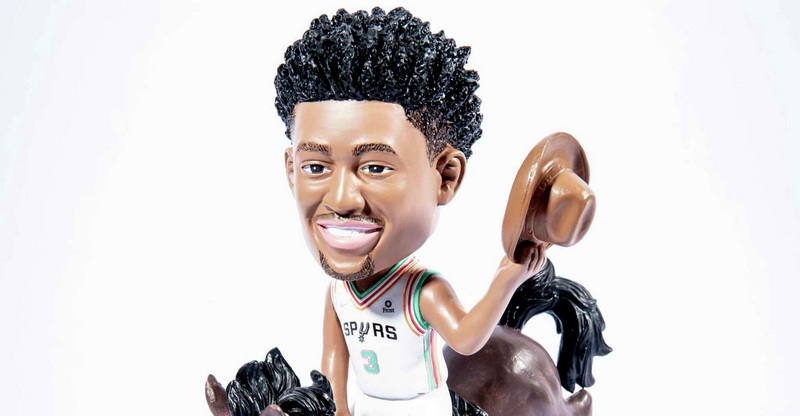
No. A figure with a large head is only a Bobblehead if the head can move independently of the body, usually through a spring or joint. Stylized or “bighead” figures without movement are not true Bobblehead items, even if they look similar at first glance.
Yes. While most Bobblehead figures stand between 10 and 25 centimeters tall, Bobbleheads also exist as tiny keychains and as large event statues. Size does not define the Bobblehead; the defining feature is the bobbling head connected to a stable body and base.
For most corporate Bobblehead projects, resin or quality plastics such as PVC and ABS work well. Resin offers a heavier, premium feel and fine detail, while plastics provide durability and lower shipping weight. Good springs and paints are also essential for a professional Bobblehead finish.
No. Bobbleheads are widely used in industrial, financial, educational, and governmental contexts. Any organization that wants a friendly, recognizable mascot can benefit from a custom Bobblehead. For industrial brands, Bobbleheads are especially useful for promoting safety culture, celebrating milestones, and strengthening partner relationships.
A company should start by defining the Bobblehead's role: What character will it represent, what message should it carry, and who will receive it? From there, it should commission concept art and a prototype, then confirm materials, quantities, and distribution plans. Tying the Bobblehead to a specific event—such as a trade fair, product launch, or anniversary—will make the campaign more focused and impactful.


