
Views: 222 Author: Mia Publish Time: 2025-12-22 Origin: Site
Content Menu
● Early Nodding Figures Before the Bobblehead
● 19th Century References and German Nodders
● The Birth of the Modern Sports Bobblehead
● Key Milestones in Bobblehead Evolution
● Bobblehead Materials and Manufacturing Changes
● The Bobblehead as a Cultural Icon
● How Collectors Define the “First” Bobblehead
● Bobblehead Uses in Modern Marketing
● Why the Bobblehead Design Works
● From Niche Collectible to Global Bobblehead Fame
● How a Modern Bobblehead Is Made
● Modern Custom Bobbleheads: Personalized Bobblehead Projects
● Collecting Bobbleheads: Rarity, Condition, and Value
● Bobbleheads in Digital and Promotional Campaigns
● Why the Bobblehead Remains Popular
● FAQ
>> 1. Was the Bobblehead invented in 1960?
>> 2. What is the earliest known Bobblehead style figure?
>> 3. Who were the first Bobblehead sports stars?
>> 4. When did Bobbleheads become popular again after the 1960s?
>> 5. Why do historians disagree on when the Bobblehead was “invented”?
The Bobblehead was not invented in a single year; it evolved from 17th–18th century “nodding head” figures in Asia into modern sports Bobbleheads that appeared around 1960 in Major League Baseball promotions. Today, Bobblehead history is understood as a timeline: early temple nodders, 19th century European nodders, and the 1960s sports Bobblehead boom that made the Bobblehead a global collectible.

In the 17th century, Asian artisans produced “temple nodders,” religious figures such as Buddha statues with heads that gently nodded, widely seen as the spiritual ancestors of the modern Bobblehead. By the late 18th century, nodding head figures from Canton (Guangzhou) were being exported in large numbers to Europe and America, where they became fashionable curiosities among the elite.
These nodding figures used weighted or hinged mechanisms so the head would move with a light touch, anticipating the spring mechanisms later used in Bobblehead toys. Although nobody called them “Bobbleheads” yet, the core idea—a figure whose head moves independently from the body—was already firmly in place and set the stage for the modern Bobblehead.
One of the earliest written references connected to the Bobblehead appears in 19th century literature, where characters are compared to nodding figurines with wobbly heads. This shows that bobbling or nodding figurines were familiar enough in that era to be used as a literary image.
Around the late 1700s and early 1800s, Germany became a key production center for ceramic nodders with spring connected heads, often called “nodders” or “bobbers,” which many historians view as direct predecessors of the modern Bobblehead. These German nodders were usually animals or simple characters 6–8 inches tall, and they helped shape the scale and proportions that would later characterize the Bobblehead.
The modern Bobblehead, as collectors recognize it today, truly emerged in 1960, when Major League Baseball produced a series of Bobblehead dolls representing each team with the same cherubic or “angel like” face. These early 1960 Bobbleheads were imported from Asia and made of fragile papier mâché or porcelain, which is why undamaged examples are rare today.
During the 1960 World Series, the first player specific baseball Bobbleheads were released for star players, all sharing a similar stylized face but different team uniforms. Many collectors and historians treat this 1960 sports promotion as the true “invention” moment of the modern Bobblehead because it combined mass production, famous personalities, and strong fan demand in a single Bobblehead campaign.
Over the following years, Bobbleheads appeared for more sports, including other baseball teams and American football clubs, turning the Bobblehead into a standard stadium souvenir. By the late 1960s, distinctive mascot and “weirdo” Bobbleheads were produced in limited runs that are now extremely valuable in the vintage Bobblehead market.
After a decline in popularity in the 1970s and 1980s, the Bobblehead experienced a major revival in 1999 when a famous stadium held a Bobblehead giveaway for a legendary player, showing how a classic Bobblehead hero could still excite modern fans. This revival, supported by improved plastic manufacturing, made the Bobblehead sturdier, more detailed, and easier to produce at scale, driving a new era of Bobblehead collecting.
Early 1960s sports Bobbleheads were typically made from papier mâché or ceramic, making them lightweight but fragile, with cracking and chipping very common over time. As Bobblehead demand grew, factories shifted toward plastic and resin, which made the Bobblehead more durable and allowed for sharper facial details and complex poses.
Modern Bobblehead production now commonly uses resin casting from silicone molds, plus digital sculpting that captures realistic likenesses of athletes, celebrities, or custom customers ordering their own Bobblehead. These manufacturing advances have helped the Bobblehead evolve from a simple nodder toy into a refined, collectible Bobblehead figure that fans proudly display for decades.
As Bobblehead history developed, Bobbleheads moved beyond sports into broader pop culture, covering movie characters, television icons, musicians, and even political leaders as commemorative Bobblehead designs. Today, Bobbleheads appear in everything from official museum collections to novelty marketing campaigns, proving that a well designed Bobblehead can become a cultural symbol, not just a toy.
In the digital age, Bobblehead promotions frequently tie into social media and e commerce, where limited edition Bobbleheads sell out quickly and secondary markets track rare Bobblehead values much like trading cards. This has turned certain vintage 1960s Bobbleheads and special modern Bobbleheads into high value collectibles, reinforcing how far the Bobblehead has come since early temple nodders.
When collectors ask “When was the Bobblehead invented?”, some point to 17th century temple nodders and 18th century export nodders as the earliest Bobblehead like items. Others focus on 19th century German nodders as the moment the modern Bobblehead idea first appeared clearly in European and American culture.
Most sports memorabilia specialists, however, answer that the Bobblehead was effectively “invented” in 1960, when team and player Bobbleheads were launched and gave the Bobblehead a standardized form, fan base, and global marketing platform. For practical purposes, this is why many timelines divide Bobblehead history into “pre 1960 nodders” and “post 1960 modern Bobbleheads.”
Modern brands use Bobbleheads as powerful marketing tools, capitalizing on the Bobblehead's long history and emotional appeal to fans and customers. Stadium giveaway Bobbleheads can increase attendance, while corporate Bobbleheads, mascot Bobbleheads, and event Bobbleheads create lasting memories linked to a brand or campaign.
Industrial suppliers, consumer brands, and niche manufacturers now order custom Bobblehead lines as part of loyalty programs, conference giveaways, or social media contests. Because a Bobblehead is three dimensional, durable, and visually distinctive, a well designed Bobblehead often outperforms flat printed gifts in long term visibility and engagement.
The Bobblehead design works because it exaggerates the head, which is the most recognizable part of a human or character, and connects it to the body with a playful, moving joint. This combination of an oversized head and a wobbling motion makes the Bobblehead instantly readable from a distance and emotionally engaging when it moves.
From a psychological perspective, the Bobblehead benefits from the same appeal as caricature: simplified features and a large head make a person or mascot seem more friendly, humorous, and approachable. That is why a Bobblehead version of a serious manager, athlete, or politician can feel more relaxed and fun than a realistic statue.
In the 1960s and 1970s, Bobbleheads were still relatively niche, often found only in stadium shops, small gift stores, or among dedicated collectors. The Bobblehead's presence was strong in baseball but limited in other areas, and production quality varied widely from one batch to another.
By the 1990s and 2000s, as global manufacturing improved and licensing expanded, Bobbleheads began to appear for every kind of entertainment property: movies, TV series, video games, and even internet personalities. The Bobblehead thus moved from a stadium curiosity into a mainstream pop culture collectible, with entire product lines dedicated to Bobblehead characters.
Modern Bobblehead manufacturing typically follows a series of steps: concept design, sculpting, mold making, casting, assembly, painting, and packaging. Concept artists create drawings or 3D models that show the Bobblehead's pose, facial expression, and base design, making sure the oversized head still captures the likeness.
A sculptor then creates a master model for the Bobblehead, either by hand or using digital sculpting tools, paying special attention to the head's balance and spring attachment point. The master Bobblehead is used to create silicone molds, which in turn allow factories to cast many identical resin Bobblehead bodies and heads ready for assembly.
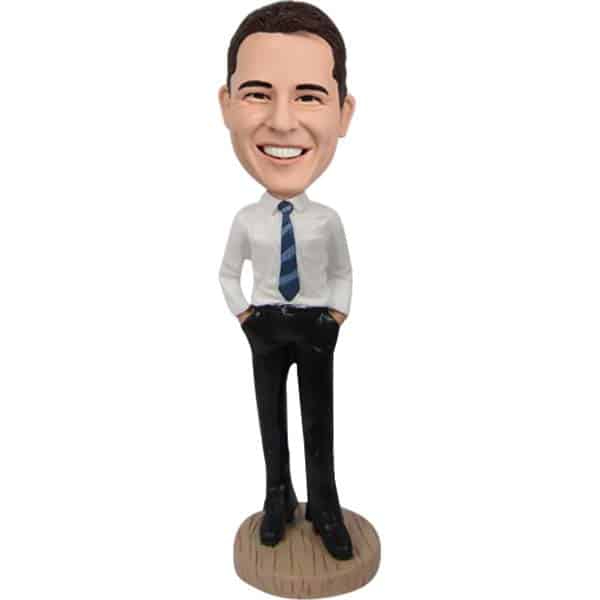
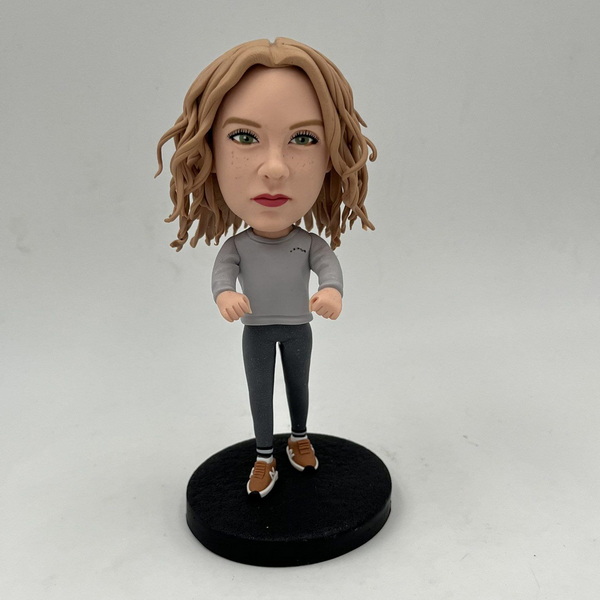
Today, custom Bobbleheads allow fans, families, and companies to turn almost any person into a Bobblehead. Customers upload photos and choose body styles—such as work uniforms, wedding outfits, sports jerseys, or fantasy costumes—so that the final Bobblehead reflects the personality of the subject.
These custom Bobblehead orders often start in low quantities, from single Bobbleheads to small batches, before scaling up if a design proves popular. Because each custom Bobblehead must still follow the traditional oversized head and moving joint formula, even highly personalized designs remain instantly recognizable as part of the Bobblehead family.
In the Bobblehead collector world, rarity and condition play a major role in determining a Bobblehead's value. Early 1960s sports Bobbleheads, limited mascot Bobbleheads, or error Bobbleheads with unusual paint or labels can command high prices among serious Bobblehead enthusiasts.
Condition is especially important because older Bobbleheads made from papier mâché or brittle ceramic can crack, chip, or fade over time. Collectors therefore look for Bobbleheads with minimal wear, original boxes, and intact springs, knowing that a pristine vintage Bobblehead is far more desirable than a damaged one.
As digital marketing has grown, Bobbleheads have gained a new role as anchors for online campaigns. A limited edition Bobblehead, announced online and distributed at an event or through a promotion, can drive social media shares, pre registrations, and fan interest long before the Bobblehead is physically delivered.
Brands sometimes create virtual Bobblehead images or animations to pair with real Bobblehead giveaways, making the Bobblehead the connecting symbol between physical events and digital content. This synergy helps keep the Bobblehead relevant for younger generations, who may first meet a character on a screen before ever holding a Bobblehead figure.
The Bobblehead remains popular because it occupies a unique space between toy, collectible, and miniature statue. Unlike static figurines, a Bobblehead invites interaction—people naturally tap the head, watch it wobble, and often share the moment with friends.
This playful interaction encourages people to keep Bobbleheads on desks, shelves, and dashboards where they are seen daily. As long as brands and creators continue to design imaginative Bobbleheads with strong characters and stories, the Bobblehead will remain a fun, recognizable symbol in both fan culture and marketing.
The Bobblehead did not appear from nowhere in a single year; instead, it grew out of centuries of nodding head figures, from 17th century temple nodders to 18th century export nodders and 19th century German nodders. Yet, for most collectors and sports fans, the modern Bobblehead was effectively “invented” in 1960, when team and player Bobbleheads defined the classic Bobblehead look, scale, and purpose.
Since then, the Bobblehead has become a durable pop culture icon used in stadium giveaways, corporate promotions, and personalized gifts, all tracing their heritage back to that moment when the Bobblehead made the leap from niche nodder to mass market collectible. Understanding this history helps any brand or collector appreciate why a well designed Bobblehead still captures attention and loyalty in a crowded modern marketplace.
Many experts treat 1960 as the practical invention date of the modern Bobblehead because that is when team and player Bobbleheads were first widely promoted. However, Bobblehead like nodders existed centuries earlier in Asia and Europe, so 1960 is best seen as the birth of the modern sports Bobblehead, not the very first nodding figure.
The earliest widely recognized Bobblehead style figures are 17th century Asian “temple nodders,” which feature religious figures with nodding heads. By the 18th century, similar nodding head figures were documented in Europe, clearly anticipating the modern Bobblehead's wobbling motion.
In 1960, the first player specific baseball Bobbleheads were released for several superstar players during a major championship series. These early Bobblehead figures shared a common stylized face but different uniforms, and they are now some of the most iconic early sports Bobbleheads in existence.
After losing momentum in the 1970s and 1980s, Bobbleheads surged back in popularity in the late 1990s when a famous team held a commemorative Bobblehead giveaway for a legendary player. That successful promotion sparked a new wave of Bobblehead nights across baseball and other sports, firmly re establishing the Bobblehead as a modern fan favorite.
Historians disagree because some emphasize the earliest nodding figures, while others focus on the moment Bobbleheads became standardized collectibles. For that reason, answers range from 17th century temple nodders to 1960 sports promotions, but all agree that the modern Bobblehead we know today took shape around the 1960 baseball Bobblehead era.


