
Views: 222 Author: Mia Publish Time: 2026-02-09 Origin: Site
Content Menu
● Early Nodding Figures In Asia
● From Asia To Europe: Early Bobblehead Style Figures
● The First Bobblehead References In Literature
● Where Were The First Modern Bobbleheads Made?
>> German Ceramic Bobblehead Origins
>> Japanese And Early 20th Century Bobbleheads
● The Bobblehead In American Sports Culture
● Modern Bobblehead Production And Global Manufacturing
● So, Where Was The First Bobblehead Made?
● How The History Of Bobblehead Influences Today's Collectibles
● FAQ
>> 1. Were the very first Bobblehead figures made in China?
>> 2. Why is Germany often mentioned in Bobblehead history?
>> 3. What role did Japan play in Bobblehead development?
>> 4. When did Bobblehead become popular in American sports?
>> 5. Can we name one single country as the birthplace of the Bobblehead?
The history of the Bobblehead stretches across centuries, cultures, and continents, making the question “Where was the first Bobblehead made?” more complex than it seems. To understand the true origin of the Bobblehead, we need to look at early nodding figures in Asia, the development of ceramic Bobblehead style dolls in Europe, and the rise of modern sports Bobblehead collectibles. By exploring these stages, we can see how the Bobblehead evolved from religious and decorative nodders into one of today's most recognizable collectibles.

Long before the word “Bobblehead” existed, artisans in Asia were already creating figures with moving heads that nodded or bobbled gently. Many historians trace the earliest Bobblehead like figures to 17th century China, where “temple nodders” were made as representations of Buddha and other deities. These early nodding statues featured heads mounted in a way that let them move when touched or when the surrounding surface vibrated.
These Chinese nodders were often placed in temples and palaces as religious and decorative objects. Their subtle motion gave them a lifelike presence, and this effect is very similar to what we see in a modern Bobblehead. The moving head symbolized respect, agreement, or a gentle blessing, which gave the nodder a special role beyond simple decoration.
Later, similar nodding dolls appeared in Japan and other parts of Asia, further expanding the tradition of movable head figures that predate the modern Bobblehead concept. In some cases, these nodding figures were crafted as animals, scholars, or mythological characters, each with a distinct cultural meaning. Although these figures were not called “Bobblehead” at the time, they contained three key features that define a Bobblehead today: a distinct head, a body or base, and a mechanism that allows the head to move independently. For this reason, many collectors and historians consider these Asian temple nodders to be the true ancestors of the Bobblehead.
The idea of nodding figures did not stay in Asia. By the 18th century, Chinese nodders were being exported to England and other parts of Europe, where they attracted the interest of collectors, aristocrats, and members of royal families. European porcelain factories, inspired by these imports, began producing their own nodding figures that would later influence the development of the Bobblehead.
Prominent European makers, including Meissen in Germany and other porcelain factories, produced nodder figures with movable heads, sometimes representing exotic characters, clowns, musicians, or fashionable people of the time. These nodders were crafted in materials such as bisque and porcelain, and they were used mainly as high end decorative objects in elite homes and royal residences.
By the 19th century, nodding dolls were widely produced in Germany, France, and England, reaching a peak in popularity among collectors of fine porcelain. Their design and mechanics, with heads attached by wires or similar devices, allowed them to move in a way that strongly resembles a modern Bobblehead, even if the term “Bobblehead” was not yet common. In many European households, these nodding figures served as both conversation pieces and symbols of taste, bridging the gap between art and novelty.
The word “Bobblehead” itself may be relatively modern, but written references to Bobblehead like figures appeared long ago. One of the earliest known Western references comes from the Russian writer Nikolai Gogol. In his 1842 short story “The Overcoat,” Gogol describes a character's neck as being like the neck of plaster cats that wag their heads, a clear nod to the idea of nodding or bobbling figures.
This passage shows that by the mid 19th century, Bobblehead style figures were already familiar enough that writers could use them as a visual reference. Even though Gogol did not use the word “Bobblehead,” the description matches the behavior of a Bobblehead doll perfectly. These early literary references suggest that Bobblehead type figures were part of everyday culture long before the modern sports Bobblehead explosion.
In addition to literature, nodding figures appeared in paintings, cabinet displays, and later in catalogues of porcelain manufacturers. Collectors knew that these nodders were special, and many families passed them down as heirlooms. This long cultural presence helped prepare the world for the moment when the Bobblehead would shift from fine porcelain into mass produced novelty and sports marketing.
When people ask “Where was the first Bobblehead made?”, they often mean the first modern, collectible Bobblehead similar to the ones found in today's sports and pop culture markets. While temple nodders came from China and many early nodders were produced across Europe, the first modern Bobblehead toys and collectibles are generally associated with Germany and Japan.
Several historical sources point to 18th and 19th century Germany as the birthplace of modern Bobblehead dolls. German factories produced ceramic nodders and animal Bobbleheads that closely resemble what we consider a Bobblehead today. These German Bobblehead dolls often had spring mounted or wire mounted heads and were sold as toys and novelties throughout Europe and America.
By the early 1900s, German companies were producing a range of Bobblehead style figurines, including animals, caricatures, and comic characters. Many of these were made of ceramic or bisque, and collectors today often classify them as early Bobblehead antiques. Because they were produced in series and exported widely, Germany can be considered one of the first countries where Bobblehead toys were systematically manufactured for broader commercial use.
Japan also played a key role in the early commercial Bobblehead era, particularly in connection with the sports Bobblehead boom of the mid 20th century. In the 1960s, when Major League Baseball teams in the United States introduced team and player Bobbleheads, many of the early papier mâché Bobblehead dolls were produced in Japan.
These sports Bobblehead dolls depicted famous baseball players and team mascots. They were sold or given away at stadiums and became highly sought after collectibles among fans. Although the concept of the Bobblehead was older, this period marks the birth of the modern sports Bobblehead culture that continues today. The collaboration between Japanese factories and American sports organizations established the Bobblehead as a standard part of fan merchandise.
While the first Bobblehead style figures came from Asia and Europe, the United States played a crucial role in turning the Bobblehead into a mainstream pop culture icon. Baseball, in particular, helped transform the Bobblehead from a niche novelty into a widely recognized collectible.
In the 1960s, Major League Baseball released Bobblehead dolls styled after popular players. These early sports Bobblehead figures were usually made of papier mâché and featured generic faces painted with different team uniforms. Despite their simple design, fans loved them, and Bobbleheads quickly became a regular part of stadium merchandise and special promotions.
In later decades, advancements in materials and manufacturing technology allowed Bobblehead producers to move from fragile papier mâché to more durable plastics and resins. This shift made Bobblehead production more scalable and cost effective, helping Bobblehead giveaways and promotions spread across many sports leagues and events. Today, Bobblehead nights are common in baseball, basketball, hockey, and even minor league and university sports, and fans eagerly collect limited Bobblehead editions.
American sports marketing also helped define how Bobbleheads are used: as loyalty rewards, commemorative items for record breaking performances, and fun representations of mascots, players, and even coaches. This creative use of Bobblehead design has encouraged ongoing innovation in poses, themes, and packaging.
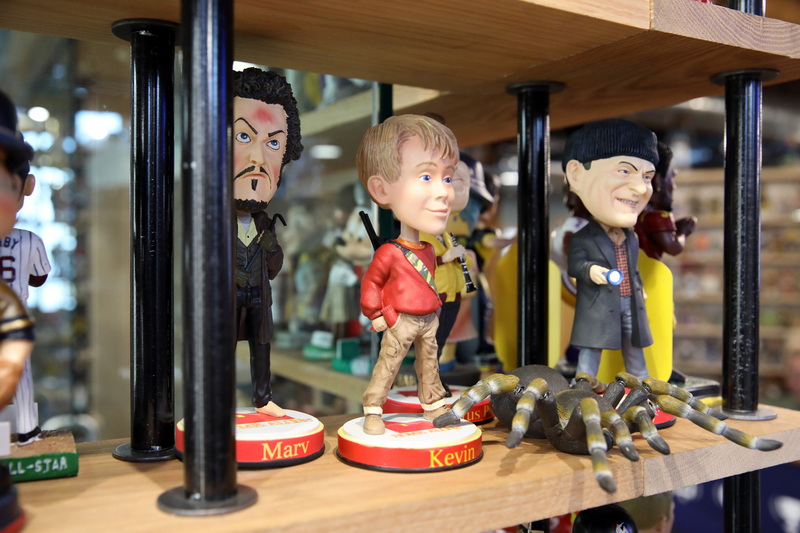
Today, Bobblehead production is a global industry, with a large share of manufacturing carried out by specialized factories, especially in China. These factories produce Bobblehead figures for sports teams, entertainment brands, corporations, and individual customers around the world.
Modern Bobblehead manufacturing combines digital tools and traditional craftsmanship. Typical steps include:
- 3D modeling or hand sculpting the Bobblehead design, including the head, body, and base.
- Creating molds for mass production in resin, PVC, or other durable materials.
- Casting, assembling, and painting each Bobblehead, often with detailed logos, numbers, and branding elements.
- Adding packaging tailored to the campaign, such as color boxes, window boxes, or protective blister packs.
Because of efficient production lines and mature supply chains, contemporary Bobblehead factories can handle small custom Bobblehead orders as well as large runs of promotional Bobblehead campaigns. This flexibility allows organizations of all sizes to use Bobbleheads in marketing, celebrations, or collector programs.
For companies in the abrasives and refractory industry or any other industrial field, custom Bobblehead mascots can also be used as creative giveaways for exhibitions, client visits, and brand anniversaries. A well designed Bobblehead can stand on a customer's desk for years, silently promoting the brand.
If we combine all the historical evidence, we find that there is no single simple answer to “Where was first Bobblehead made?” Instead, the Bobblehead evolved through several stages, each rooted in different countries and time periods.
Key points include:
- The earliest Bobblehead like figures, known as temple nodders, appeared in 17th century China, where they were used as religious and decorative figures with gently moving heads.
- European porcelain factories, especially in Germany, adapted these ideas in the 18th and 19th centuries, making nodders and early Bobblehead style dolls from ceramic and bisque.
- Modern Bobblehead toys, especially sports Bobblehead dolls, emerged in the 20th century with significant contributions from German and Japanese manufacturers.
- The United States popularized the sports Bobblehead culture, using Bobblehead promotions to engage fans and create a massive collector market.
From this perspective, we can say that the first Bobblehead type figures were made in China, early modern Bobblehead dolls were strongly associated with Germany, and the first modern sports Bobblehead craze was rooted in collaborations involving Japanese production and American baseball teams. The Bobblehead that fans love today is the result of this long, international evolution.
Understanding where the first Bobblehead came from adds depth to the way we view modern Bobblehead collectibles. When you hold a Bobblehead today, you are holding an object connected to centuries of design, trade, and cultural exchange.
Several historical influences still shape the Bobblehead market:
- Asian artistry: The expressive faces and graceful movements of early temple nodders inspire the character and motion of many modern Bobblehead designs.
- European porcelain traditions: The craftsmanship and attention to sculpt detail seen in antique German and French nodders influence how high quality Bobblehead figurines are sculpted and painted today.
- American sports marketing: The use of Bobblehead giveaways in stadiums has turned Bobblehead figures into powerful promotional tools and status items for fans across the world.
Modern custom Bobblehead services, including those that produce corporate mascots, sports figures, or pop culture icons, draw on all these traditions to create Bobblehead products that are both fun and historically rich. In many ways, every new Bobblehead design is part of an ongoing story that began centuries ago.
The question “Where was first Bobblehead made?” leads to a fascinating journey through global history rather than a single location. The earliest Bobblehead like figures originated as temple nodders in 17th century China, where craftsmen created religious and decorative figures with gently moving heads. In the 18th and 19th centuries, European porcelain makers, especially in Germany, developed ceramic nodders that looked very much like early Bobblehead dolls. During the 20th century, German and Japanese manufacturers helped shape modern Bobblehead toys, while American sports culture transformed the Bobblehead into a beloved fan collectible and marketing tool. Today's Bobblehead industry brings these influences together, proving that the Bobblehead is not just a simple toy, but a cross cultural icon that reflects centuries of creativity, craftsmanship, and global exchange.
Contact us to get more information!
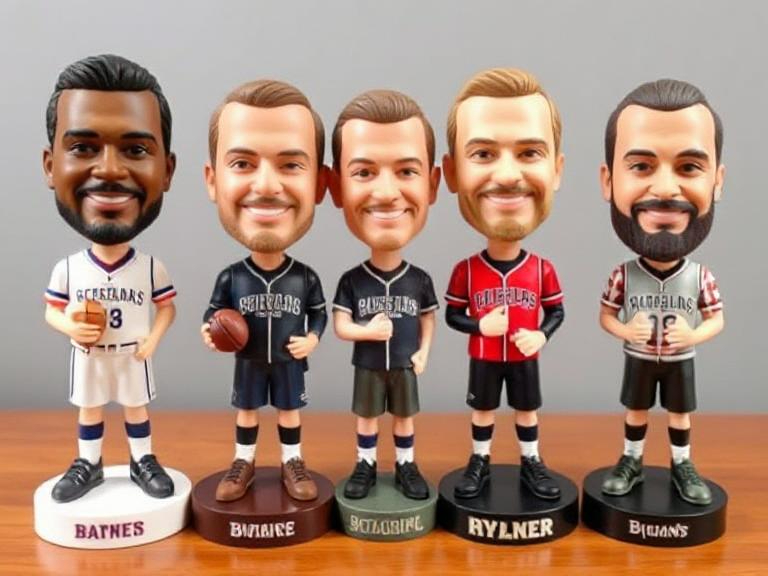
The earliest Bobblehead like figures are generally believed to be Chinese temple nodders from the 17th century, which featured movable heads similar to a modern Bobblehead. These nodders inspired later Bobblehead developments in Europe and other regions, and many historians view them as the starting point of Bobblehead history.
Germany is famous for producing 18th and 19th century ceramic nodders and early Bobblehead dolls. Many collectors regard these German pieces as some of the first modern Bobblehead toys because they were widely manufactured, exported, and closely resembled what we recognize today as a Bobblehead in both form and function.
Japan played an important role in the mid 20th century when many of the earliest sports Bobblehead dolls, especially baseball Bobblehead figures, were produced there. These Japanese made Bobbleheads were often sold or given away at American baseball stadiums and helped launch the modern sports Bobblehead craze that continues in stadiums today.
Bobblehead popularity in American sports surged in the 1960s, when baseball teams released player and team Bobblehead dolls made of papier mâché. Since then, Bobblehead giveaways and special Bobblehead nights have become common across many sports leagues, turning the Bobblehead into a core part of fan culture and collectibles.
Because Bobblehead history involves Chinese temple nodders, European nodding dolls, German and Japanese manufacturing, and American sports marketing, it is difficult to credit one country alone. Instead, the Bobblehead is best seen as a global creation with roots in multiple cultures, each of which contributed key steps to its development.
1. https://www.bobbleheadhall.com/history/
2. https://en.wikipedia.org/wiki/Bobblehead
3. https://www.historyofdolls.com/history-of-famous-dolls/history-of-bobblehead/
4. https://stuckeys.com/the-original-yes-men-a-brief-history-of-bobbleheads/
5. https://coupleofthings.net/blogs/coupleofthings/the-history-of-bobbleheads-from-baseball-to-pop-culture-icon
6. https://www.creators.com/read/contemporary-collectibles/10/09/nodders-the-yes-men-of-the-doll-world
7. https://www.overthemonster.com/red-sox-history/24480908/in-celebration-of-national-bobblehead-day-a-history-of-bobbleheads
8. https://trustsportshobby.com/blogs/news/behind-the-bobble-exploring-the-history-of-sports-bobbleheads
9. https://www.wonderfulmuseums.com/museum/bobblehead-museum/
10. https://www.bobbleheads.com/history-of-bobbleheads
11. https://moorabool.com/2024/02/24/nod-if-you-like-antiques-a-collection-of-nodders-other-funny-things/
12. https://www.wowcustombobbleheads.com/what-country-had-the-first-bobblehead.html
13. http://eggzack.com/article/2025-02-06-bobbleheads-through-the-ages-from-ancient-origins-to-modern-customiza.html


