
Views: 222 Author: Mia Publish Time: 2025-12-30 Origin: Site
Content Menu
● Early Chinese Temple Nodders
● How Temple Nodders Reached Europe
● German Porcelain And The Birth Of European Bobbleheads
● NineteenthCentury References To BobbleheadStyle Figures
● From Porcelain Nodders To MassProduced Bobbleheads
● The 1960 Sports Bobblehead Breakthrough
● Material Evolution: From Porcelain To Resin
● How The Bobblehead Mechanism Works
● Bobbleheads As PopCulture Icons
● Museums, Events, And The Bobblehead Community
● Custom And Corporate Bobbleheads
● The Global Supply Chain Behind Bobbleheads
● Collecting Strategies For Bobblehead Enthusiasts
● How Bobbleheads Connect Regions And Eras
● FAQ
>> 1. What country made the first Bobblehead?
>> 2. Why are German Bobbleheads considered important?
>> 3. When did sports Bobbleheads become popular?
>> 4. What materials are used to make Bobbleheads today?
>> 5. Are antique Bobbleheads valuable?
The first Bobblehead-style figures emerged in 17th century China as so called “temple nodders,” religious figurines with articulated, nodding heads. These early Chinese creations established the essential bobbing head mechanism that defines every Bobblehead people recognize today.[1][2]
Over time, European artisans—especially German porcelain makers—adapted and refined these nodding figures into decorative objects for elites, while 20thcentury manufacturers in Japan and other countries transformed the Bobblehead into a massproduced sports and popculture icon. In this way, the history of the Bobblehead bridges Asia, Europe, and the global collectible market.[3][4]

The earliest known ancestors of the Bobblehead appeared in China during the 1600s, where craftsmen produced religious figures with movable heads that nodded gently when disturbed. These “temple nodders” often depicted deities such as Buddha and were designed to sit in shrines, palaces, and wealthy homes.[2][1]
Artisans used weighted heads and flexible connections—sometimes simple wire or a pivot point—to create the nodding motion, giving the figures a lifelike, contemplative presence. This use of an oversized, mobile head relative to a static body is the conceptual core of the modern Bobblehead design.[5][2]
By the 18th century, global trade routes carried Chinese porcelain and temple nodders to Europe, where they fascinated collectors and royal households. These nodding figures appeared in aristocratic interiors and were often displayed alongside other Chinese export porcelains, reflecting the era's fascination with Asian aesthetics.[6][3]
One notable reference comes from an 18thcentury portrait of Queen Charlotte, where Chinese nodding figures are visible in the background, confirming their presence in British royal collections. Their popularity among elites helped inspire European porcelain factories to imitate and reinterpret these early Bobblehead-like pieces.[7][3]
In the 1700s and 1800s, German porcelain centers such as Meissen and Dresden began creating their own versions of nodding figures based on imported Chinese examples. These European nodders sometimes portrayed “pagoda” figures, exoticized Asian characters with moving heads and occasionally moving arms or hands.[4][2]
The German nodders refined the engineering that would later define the Bobblehead: carefully balanced heads mounted on hidden mechanisms that allowed smooth, controlled bobbing. Because these pieces were produced in respected porcelain workshops and exported widely, many historians see Germany as the birthplace of the “modern” Bobblehead doll, even though the original concept came from China.[4][5]
By the 19th century, nodding figures were well known enough in Europe and Russia to serve as literary references. In Nikolai Gogol's 1842 story “The Overcoat,” the main character's neck is compared to the plaster cats that wag their heads, an analogy readers of the time would immediately recognize.[1][5]
Manufacturers also produced small porcelain and ceramic nodders for export markets such as the United States, often as novelty decorations. These early commercial Bobblehead products were not yet linked to branded entertainment or sports teams but helped normalize the idea of the nodding figurine as a playful household object.[8][1]
The transition from fragile porcelain nodders to modern Bobblehead dolls came with changes in materials and manufacturing methods. As global trade intensified in the late 19th and early 20th centuries, factories in Japan and other regions began producing handpainted Bobblehead figures using papiermâché and other lightweight materials.[9][5]
These early 20thcentury Bobblehead dolls were often generic character figures designed for export, with simple springbased or pivoted heads. Their lower cost and lighter weight made them ideal as novelty items, prizes, or advertising giveaways, paving the way for the Bobblehead boom that would arrive with professional sports promotions.[9][4]
A major turning point in Bobblehead history occurred in 1960, when Major League Baseball introduced team Bobblehead dolls as stadium giveaways. These figures, usually produced in Japan from papiermâché, all had similar youthful faces, but their uniforms and logos represented different teams.[3][9]
That same year also saw the release of the first playerspecific Bobblehead dolls showcasing stars like Roberto Clemente, Mickey Mantle, Roger Maris, and Willie Mays. These licensed sports Bobblehead figures connected fans emotionally to their heroes and proved that a simple nodding doll could become a powerful symbol of loyalty and fandom.[10][3]
Early nodders and Bobblehead-style figures relied heavily on porcelain, bisque, or ceramic, which required hightemperature firing and meticulous handpainting. While visually impressive, these materials were fragile and expensive to transport, limiting the scale of Bobblehead production and distribution.[2][5]
As plastics and synthetic resins became mainstream, manufacturers quickly realized that these materials were ideal for Bobblehead bodies and heads. Modern Bobblehead dolls typically use injectionmolded plastic or cast resin for the body, a lightweight oversized head, and a metal spring or flexible connector to generate the characteristic wobble.[4][9]
Although designs vary, the essential Bobblehead mechanism is surprisingly simple. The body and head are sculpted separately; the body includes an embedded attachment point, while the head has a matching cavity or hook. A spring or flexible connector is secured between these points.[5][4]
Because the head is relatively large and light compared with the body, even a small touch or vibration causes it to oscillate on the spring. Gravity and the spring tension work together to dampen the motion gradually, creating the friendly, repeated nod that gives the Bobblehead its playful personality.[1][4]
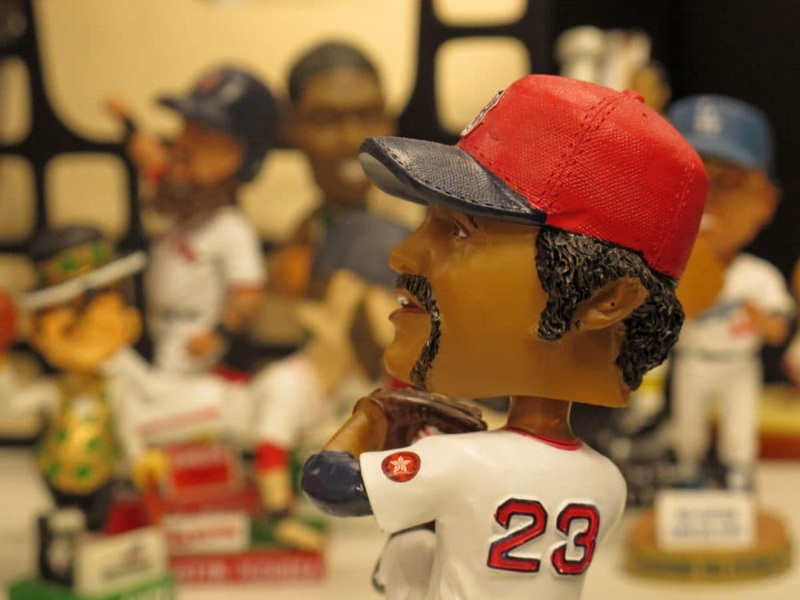
After their sports breakthrough, Bobblehead dolls rapidly expanded into broader pop culture. Manufacturers began producing Bobblehead versions of movie characters, rock stars, politicians, cartoon mascots, and even ordinary customers via personalized orders.[11][4]
Limitededition releases and crosspromotions turned Bobblehead dolls into collectible items with real secondarymarket value. A stadium giveaway Bobblehead tied to a recordsetting game or championship season can become a prized collector's piece, especially if production numbers were low or the figure featured a notable printing or sculpting variation.[12][10]
The growth of Bobblehead culture led to dedicated institutions and events. The National Bobblehead Hall of Fame and Museum, located in Milwaukee, Wisconsin, preserves thousands of Bobblehead figures from different eras, including rare sports nodders, political figures, and custom designs.[6][3]
Enthusiast communities celebrate National Bobblehead Day and other themed events through social media, exhibitions, and trading meetups. These gatherings highlight how the Bobblehead has evolved from an obscure temple nodder into a shared symbol of nostalgia, humor, and fan identity.[10][12]
Modern manufacturing and digital sculpting have enabled a growing market for custom Bobblehead dolls. Customers can submit photos to create personalized Bobblehead figures of themselves, family members, or colleagues, often used as gifts for birthdays, weddings, or corporate milestones.[11][4]
Businesses also use branded Bobblehead giveaways to promote products, commemorate anniversaries, or reward loyal clients. A cleverly designed corporate Bobblehead can become a memorable piece of desk decor that keeps a logo or brand message in view—literally nodding in agreement with the company's story.[10][4]
Today's Bobblehead production relies on a global supply chain that integrates design studios, molding workshops, painting lines, packaging factories, and logistics providers. Sculpting and design may take place in one country, while tooling, molding, and painting are carried out in another region better equipped for mass production.[9][4]
Highvolume Bobblehead orders, such as major sports promotions or large corporate campaigns, demand consistent materials, precise molds, and reliable finishing processes. This often involves advanced plastics, highquality pigments, and controlled curing or drying environments, reflecting manufacturing expertise similar to that used in broader ceramics, polymer, and surfacetreatment industries.[5][10]
For collectors, understanding the history of the Bobblehead can guide smart acquisition decisions. Many enthusiasts focus on vintage 1960s sports Bobblehead dolls, early Japanese papiermâché figures, or rare promotional releases linked to significant games or cultural moments.[9][10]
Condition is crucial: original boxes, intact springs, undamaged paint, and authentic markings can dramatically increase the value of a Bobblehead. Scarce runs, misprints, or unusual sculpts are especially sought after, as they combine nostalgia with rarity—two key drivers in the Bobblehead collector market.[7][6]
The story of the Bobblehead illustrates how a simple mechanical idea can travel across cultures and centuries. Chinese artisans first used nodding heads to animate religious figures, European porcelain makers reinterpreted the idea as decorative nodders, and modern factories in Japan, Germany, China, and other regions industrialized the concept for global audiences.[2][4]
As a result, today's Bobblehead embodies a blend of Asian craftsmanship, European design refinement, and contemporary massproduction techniques. Fans displaying a modern sports Bobblehead on a shelf are indirectly connected to the 17thcentury temple nodders and 18thcentury porcelain nodders that started the whole tradition of bobbing heads and perpetual, cheerful agreement.[5][10]
The answer to the question “Where was the first Bobblehead made?” leads back to 17thcentury China, where temple nodders with articulated heads first appeared as religious and decorative objects. These early Chinese creations established the essential bobbinghead mechanism that later defined the Bobblehead.[1][2]
European porcelain makers, especially in Germany, adapted these nodders into refined decorative pieces, helping shape the visual language of the modern Bobblehead doll. Later, Japanese and global manufacturers replaced porcelain with papiermâché, plastic, and resin, opening the door to massproduced sports and popculture Bobblehead figures.[2][4]
From royal collections and literary references to stadium giveaways and dedicated museums, the Bobblehead has evolved from a niche curiosity into a worldwide collectible, connecting continents, eras, and industries through a single, smiling, nodding head.[6][10]
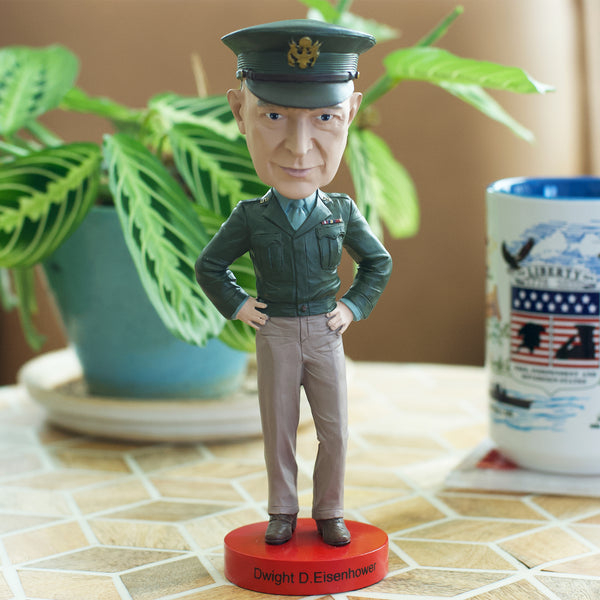
The earliest Bobblehead-style figures were made in China during the 17th century, where artisans created temple nodders with movable heads depicting deities and other religious figures. These nodders used weighted or pivoted heads to create a gentle nodding motion and are widely regarded as the first true Bobblehead-like objects.[1][2][5]
German porcelain factories in the 18th and 19th centuries produced sophisticated nodders inspired by Chinese imports, refining both sculpting and mechanism. Because these German nodders looked similar to modern Bobblehead dolls and were exported broadly, many collectors see Germany as the birthplace of the “modern” Bobblehead tradition.[4][2][5]
Sports Bobblehead dolls became widely popular in 1960, when Major League Baseball teams introduced papiermâché Bobblehead figures as promotional giveaways. Playerspecific Bobblehead dolls for stars like Roberto Clemente and Mickey Mantle soon followed, cementing the Bobblehead as a core part of sports fan culture.[3][10][9]
Most modern Bobblehead figures rely on plastic or resin for the body and head, combined with a metal spring or flexible connector to attach the head. Earlier Bobblehead generations used porcelain, ceramic, or papiermâché, but these materials are less common now due to cost, weight, and fragility.[4][5][9][1]
Antique nodders and early Bobblehead dolls can be highly valuable, especially 18thcentury porcelain nodders and rare 1960s sports Bobblehead figures in excellent condition. Collectors pay premiums for pieces with original packaging, strong provenance, limited production runs, or unique sculpting and printing variations.[12][7][6][10]
[1](https://en.wikipedia.org/wiki/Bobblehead)
[2](https://elizabethappraisals.com/a-nod-to-this-porcelain-nodder/)
[3](https://www.bobbleheadhall.com/history/)
[4](https://popculturespot.com/pages/history-of-bobble-heads)
[5](https://www.historyofdolls.com/history-of-famous-dolls/history-of-bobblehead/)
[6](https://www.smithsonianmag.com/travel/visit-worlds-only-bobblehead-hall-fame-and-museum-180972837/)
[7](https://stuckeys.com/the-original-yes-men-a-brief-history-of-bobbleheads/)
[8](https://www.bobbleheads.com/history-of-bobbleheads)
[9](https://baseballhalloffame.ca/virtual-collection-bobblehead-dolls/)
[10](https://blog.pristineauction.com/blog/the-history-of-bobbleheads-in-baseball-from-gimmick-to-collectible-goldmine)
[11](https://coupleofthings.net/blogs/coupleofthings/the-history-of-bobbleheads-from-baseball-to-pop-culture-icon)
[12](https://rapidesparishjournal.com/2025/01/07/national-bobblehead-day-a-nod-to-nostalgia-and-collectibles/)


