
Content Menu
● Early Nodding Figures In Asia
● Bobbleheads Travel To Europe
● “Nodders” And “Bobbers” In The 19th Century
● German Influence On Modern Bobbleheads
● The Emergence Of Modern Bobbleheads
● Bobbleheads And The 1960 Sports Boom
● Bobbleheads In The Late 20th Century
● The Role Of Bobbleheads In Baseball Culture
● The National Bobblehead Hall Of Fame And Museum
● Why There Is No Single Bobblehead Inventor
● Bobbleheads In Modern Pop Culture
● How Bobbleheads Are Made Today
● Materials: From Papier Mâché To Resin Bobbleheads
● Collecting And Preserving Bobbleheads
● FAQ
>> 1: Is there a single person who invented Bobbleheads?
>> 2: When did Bobbleheads first appear in history?
>> 3: When did sports teams start using Bobbleheads?
>> 4: What materials are modern Bobbleheads made from?
>> 5: Why are Bobbleheads so popular today?
Bobbleheads are beloved collectibles with a surprisingly long and global history, but there is no single known “inventor” of Bobbleheads. Instead, Bobbleheads evolved from centuries-old “nodding head” figures in Asia and Europe and were later popularized in the 20th century by German ceramic makers and American sports promotions.[1][2][3][4]

The roots of modern Bobbleheads can be traced back to 17th century Asia, where “temple nodders” depicting Buddha and other religious figures were crafted with heads that gently nodded in response to movement. These early nodding figures used simple mechanical connections, such as springs or hidden supports, to allow the head to bob independently of the body, a key feature of modern Bobbleheads.[2][5][6][1]
In China and Japan, small nodding figures and string dolls with movable heads and limbs appeared as amusing toys and decorative items, long before the word “Bobbleheads” existed. Collectors and historians see these nodders as the direct ancestors of today's Bobbleheads, even though they were not called Bobbleheads at the time.[4][5][7][8][2]
From Asia, nodding figures made their way to Europe in the 18th century, where they appeared as porcelain “Chinese nodders” in royal and aristocratic collections. Paintings from this period, such as Johann Zoffany's 1765 portrait of Queen Charlotte, show nodding figures displayed prominently in royal rooms, demonstrating how early Bobbleheads-like objects became fashionable decor.[5][6][9][2]
European porcelain factories, including prominent German and other continental manufacturers, adapted the nodder concept and produced their own versions with articulated heads and sometimes moving hands. These nodders, while not yet known as Bobbleheads, established the idea of decorative figures whose heads bobble or nod in response to a touch or movement.[9][10][11][2]
By the 19th century, ceramic nodders and “bobbers” became more common as decorative figurines in Europe and beyond. These early Bobbleheads-style pieces featured spring-connected heads and were often made from bisque or porcelain, typically depicting animals, people, or caricatured figures.[3][7][10][11][1][2]
Around this time, the idea of the Bobbleheads entered Western literature. In an 1842 short story often translated as “The Overcoat,” Russian writer Nikolai Gogol described a character's neck as resembling those of wagging plaster animals, providing one of the earliest textual references to Bobbleheads-like figures in the West. By the late 1800s and early 1900s, German ceramic producers in particular were known for making nodders and wobblers that clearly anticipate the look and motion of modern Bobbleheads.[6][7][8][11][1][2][3]
Germany played a major role in the development of what collectors now recognize as early modern Bobbleheads. German factories produced ceramic nodders and small bisque figures whose heads were attached with springs or elastic cords, allowing them to bobble when moved. These figures, sometimes called “nodders,” “bobbers,” or “wobblers,” became popular novelty items and collectibles and helped solidify the basic mechanical concept behind Bobbleheads.[7][8][10][11][2][3]
Many of these early German Bobbleheads-style figures were exported to other markets, including England and North America, where they appeared on shelves and mantels as whimsical decor. Over time, the concept of a figure with an oversized, movable head that nods with motion transitioned from ceramic art to mass-produced toys and promotional Bobbleheads.[8][10][2][3][4][7]
As manufacturing technologies improved, modern Bobbleheads began to appear in various forms made from papier mâché, ceramic, and eventually plastic. By the early 20th century, small nodding figures were already being produced as toys and novelties, though they were not yet widely recognized as the Bobbleheads collectibles known today.[11][12][2][3][7]
According to Bobbleheads historians and collectors, the first widely recognized wave of modern Bobbleheads dolls arrived in the mid 20th century, particularly in connection with sports. In the 1950s and 1960s, Bobbleheads began to move from niche novelties to mainstream culture, fueled by professional sports leagues and other organizations looking for appealing giveaways.[12][13][2][3][6][7]
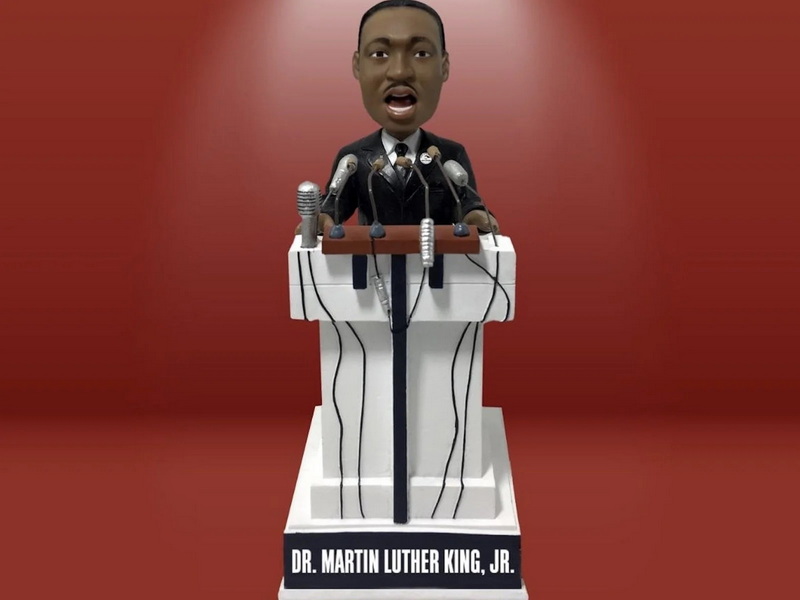
While no single person is credited with “inventing” Bobbleheads, the 1960s sports boom played a decisive role in defining Bobbleheads as fans know them today. In 1960, Major League Baseball worked with manufacturers in Japan to create papier mâché Bobbleheads representing each team, all with the same cherubic face but different uniforms.[2][3][7][12]
During the 1960 World Series, player specific Bobbleheads were produced for stars such as Mickey Mantle, Willie Mays, Roger Maris, and Roberto Clemente. These early sports Bobbleheads, although fragile due to their papier mâché construction, became iconic collectibles and helped establish Bobbleheads as a major part of sports culture.[14][3][6][7][12][2]
After an initial burst of popularity, interest in Bobbleheads waned somewhat in the 1970s and 1980s as other types of toys and collectibles took center stage. However, the 1990s saw a major resurgence of Bobbleheads, this time molded in more durable plastic and produced in large quantities for stadium giveaways and promotions.[1][3][4][7][12]
With improved materials, more detailed sculpting, and licensed likenesses of athletes, entertainers, and fictional characters, Bobbleheads exploded in variety and volume. Teams across baseball, basketball, and other sports embraced Bobbleheads as fan favorite promotions, creating themed nights where fans who arrived early would receive limited edition Bobbleheads.[13][3][6][14][1][2]
Baseball has played a particularly important role in transforming Bobbleheads into cultural icons. Many MLB teams schedule multiple Bobbleheads nights each season, featuring current stars, legends, mascots, and special events. Fans often plan their attendance around these promotions, arriving early at the ballpark to secure a Bobbleheads and sometimes even trading or selling extras.[3][6][12][2]
Bobbleheads nights can commemorate milestones such as record breaking home runs, anniversaries of championships, or special theme nights that connect teams with movies, TV shows, or charitable causes. In some cases, players have delivered memorable on-field performances on their own Bobbleheads nights, further cementing the connection between Bobbleheads and sports history.[15][6][14][2]
Today, the legacy of Bobbleheads is celebrated by institutions such as the National Bobblehead Hall of Fame and Museum in Milwaukee, which chronicles the evolution from temple nodders to modern plastic Bobbleheads. The museum houses thousands of Bobbleheads, including historic nodders and the latest limited edition Bobbleheads, illustrating how the concept has changed over centuries.[5][6][2]
Exhibits show Bobbleheads from sports, politics, entertainment, and pop culture, confirming that Bobbleheads have become a major medium for representing public figures and events in playful, collectible form. This institution underscores that Bobbleheads are the result of gradual evolution and cultural exchange rather than the creation of a single Bobbleheads “inventor.”[4][6][12][2][5]
So, who invented the Bobblehead? The most accurate answer is that Bobbleheads do not have one known inventor in the way that some modern devices do. Instead, Bobbleheads emerged from a blend of 17th century Asian temple nodders, 18th century European porcelain nodders, 19th century German ceramic wobblers, and 20th century American sports marketing.[7][1][2][4][5]
Historians can point to key milestones—such as early Asian nodders, European royal collections, German nodders, and the 1960 sports Bobbleheads wave—but no documented individual is universally recognized as the single person who invented Bobbleheads. This shared history makes Bobbleheads a collective cultural invention, shaped by artists, manufacturers, and promoters across centuries and continents.[10][6][1][2][4][5][7]
While sports Bobbleheads are especially visible, Bobbleheads now extend far beyond stadiums. There are Bobbleheads of musicians, actors, politicians, historical figures, fictional characters, and even animals, all designed with the signature oversized bobbling head. Bobbleheads are used as corporate gifts, promotional items, crowdfunding rewards, and custom tributes for weddings, graduations, and business branding.[1][2][3][4]
This expansion means that Bobbleheads function not only as toys but also as personalized memorabilia, marketing assets, and even art pieces. Custom Bobbleheads manufacturers can now create one off personalized Bobbleheads based on a photo, allowing individuals and companies to turn nearly any person into a Bobbleheads figure.[6][2][3][4][1]
Modern Bobbleheads production combines digital tools with traditional modeling. Sculptors often start by creating a prototype—either by hand or using 3D modeling software—that captures the likeness and key details of the character. This prototype is then used to produce molds, which are filled with resin or plastic to form the Bobbleheads bodies and heads.[3][4][1]
After molding, Bobbleheads components are assembled with springs or other connectors so that the head can bobble independently. Skilled painters then apply colors, logos, and fine details by hand or with stencils, transforming plain castings into finished Bobbleheads ready for fans and collectors.[6][1][3]
The materials used for Bobbleheads have evolved significantly. Early sports Bobbleheads were usually made of papier mâché or ceramic, which offered good detail but were fragile and susceptible to chips, cracks, and moisture damage. As plastic and resin technologies advanced, manufacturers shifted Bobbleheads production to these more durable materials, making it practical to produce large runs for stadium giveaways and retail sales.[12][2][4][7][1][3]
Modern resin Bobbleheads can capture very fine details, from facial expressions to uniform stitching, while remaining relatively lightweight and sturdy. This combination of detail and durability helped propel Bobbleheads from niche novelties into everyday collectibles that can survive being displayed, handled, and transported by fans.[4][1][3]
For collectors, Bobbleheads are more than simple trinkets; they are part of carefully curated collections featuring rare, vintage, and special edition Bobbleheads. Vintage German nodders, early 1960 papier mâché sports Bobbleheads, and limited modern releases can command high prices, particularly when they are in excellent condition with original packaging.[11][2][7][6]
Proper storage helps preserve Bobbleheads value: keeping Bobbleheads out of direct sunlight, avoiding excess heat, and protecting delicate springs and paint are all important. Serious collectors often display Bobbleheads in cases or on shelves while keeping boxes and certificates safely stored to maintain both visual appeal and collectible status.[2][11][6]
Bobbleheads did not appear overnight and they do not have a single documented inventor. Instead, Bobbleheads grew from centuries of creativity, starting with Asian temple nodders, evolving through European and German nodders, and finally exploding into worldwide popularity through mid 20th century sports promotions and modern plastic manufacturing. Today's Bobbleheads represent a global, collaborative invention shaped over time by many cultures, factories, and fans, turning Bobbleheads into one of the most recognizable and beloved collectibles in the world.[5][7][12][1][2][3][4][6]

No, there is no single known person credited with inventing Bobbleheads; the concept developed gradually from 17th century Asian nodding figures through European and German nodders to modern sports and pop culture Bobbleheads. Historians view Bobbleheads as a collective cultural creation rather than a patented invention by one individual.[7][1][2][4][5]
Nodding figures similar to Bobbleheads appeared in Asia in the 1600s, and Chinese nodders were documented in Europe by the 1760s and 1770s. Literary references to Bobbleheads like figures show up by 1842, and by the late 19th and early 20th centuries, German factories were mass producing ceramic nodders that closely resemble modern Bobbleheads.[8][9][1][2][5][6][7]
Sports teams, especially Major League Baseball clubs, began using Bobbleheads prominently around 1960, when team and player Bobbleheads were produced in papier mâché and sold or given away to fans. The 1960 World Series player Bobbleheads featuring stars like Mickey Mantle and Roberto Clemente are considered landmark examples in sports Bobbleheads history.[14][12][2][3][6][7]
Most modern Bobbleheads are made from durable plastics or resins, sometimes combined with metal springs and small hardware to create the bobbling motion. Earlier Bobbleheads were typically made from papier mâché or ceramic, which looked attractive but were more fragile and prone to chipping or cracking.[12][1][2][3][4][7]
Bobbleheads are popular because they combine playful motion with recognizable faces from sports, entertainment, politics, and everyday life, making them fun and personal collectibles. Limited releases, stadium Bobbleheads nights, and custom Bobbleheads options all fuel demand, turning Bobbleheads into a versatile medium for fandom, marketing, and personal expression.[14][1][2][3][4][6]
[1](https://en.wikipedia.org/wiki/Bobblehead)
[2](https://www.bobbleheadhall.com/history/)
[3](https://www.bobbleheads.com/history-of-bobbleheads)
[4](https://www.hotels4teams.com/the-fascinating-history-of-the-bobblehead-doll/)
[5](https://stuckeys.com/the-original-yes-men-a-brief-history-of-bobbleheads/)
[6](https://www.smithsonianmag.com/travel/visit-worlds-only-bobblehead-hall-fame-and-museum-180972837/)
[7](https://www.historyofdolls.com/history-of-famous-dolls/history-of-bobblehead/)
[8](https://popculturespot.com/pages/history-of-bobble-heads)
[9](https://www.creators.com/read/contemporary-collectibles/10/09/nodders-the-yes-men-of-the-doll-world)
[10](https://www.wisfarmer.com/story/money/2017/07/31/nodders-early-form-bobble-heads/525249001/)
[11](https://dollsmagazine.com/antique-qa-nodders/)
[12](https://baseballhalloffame.ca/virtual-collection-bobblehead-dolls/)
[13](https://www.youtube.com/watch?v=D9bKzvHcVVo)
[14](https://jugssports.com/blog/how-the-baseball-bobblehead-craze-got-started-and-will-it-end/)
[15](https://www.mlb.com/news/aaron-judge-homers-on-his-superman-bobblehead-day)


