
Content Menu
● Early Temple Nodders: The Origins of the Bobblehead Idea
● German Nodders: The First Commercial Bobblehead Style Figures
● The First Written Reference to a Bobblehead Style Figure
● Who Made the First Modern Bobblehead?
● Where Was the First Bobblehead Made?
● The Evolution of Materials in Bobblehead Production
● How Modern Bobbleheads Are Made
● Popular Types of Bobbleheads Today
>> Celebrity and Entertainment Bobbleheads
>> Political and Historical Bobbleheads
>> Corporate and Promotional Bobbleheads
● Why Bobbleheads Remain So Popular
● Collecting and Protecting Bobbleheads
● FAQ
>> 1. Who made the first Bobblehead?
>> 2. When were the first sports Bobbleheads made?
>> 3. What materials were used in the earliest Bobbleheads?
>> 4. Why are some Bobbleheads so valuable?
>> 5. How did Bobbleheads become popular again in recent decades?
When people ask “Who made the first Bobblehead?”, they are usually hoping for one clear name or one famous company. In reality, no single artist or factory can honestly claim to have made the very first Bobblehead. The Bobblehead, as we know it today, is the result of a long evolution that started with ancient temple nodders, passed through German ceramic workshops, and finally exploded in popularity with Japanese made sports Bobbleheads for Major League Baseball in 1960.
Even though there is no single inventor, we can still trace who made the first modern, mass produced Bobblehead, who made the first sports Bobblehead, and who helped turn the Bobblehead into a global collectible. Understanding this journey helps collectors, brands, and fans appreciate every Bobblehead on their shelves and see how this simple nodding figure became an unforgettable cultural icon.
The word Bobblehead itself has become a powerful keyword in the worlds of collecting, branding, and online search. Today, Bobbleheads are found in homes, offices, stadiums, museums, and corporate showrooms around the world. To understand why Bobbleheads are so popular, we need to look back at how they were first imagined, made, and refined across several centuries.
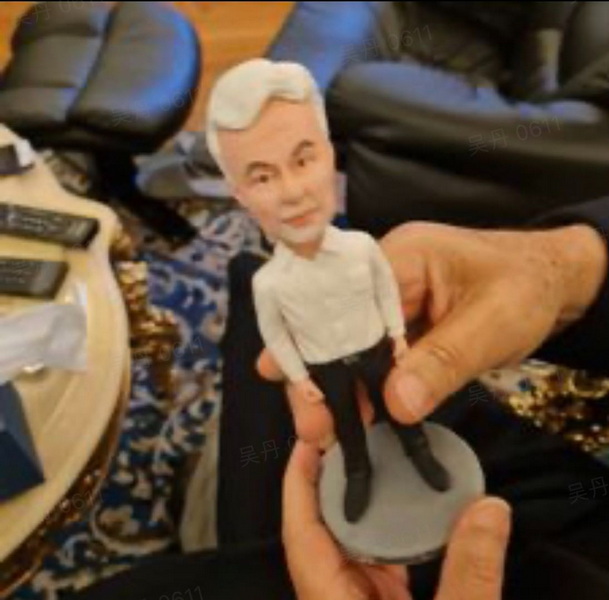
The earliest ancestors of the Bobblehead appeared in 17th century Asia as “temple nodders,” often representing Buddha or other religious figures. These temple nodders featured heads that moved gently when touched or when the surrounding environment vibrated, creating a calming, lifelike motion that fit perfectly into a spiritual setting.
Art historians and collectors have identified temple nodders in Chinese and Japanese art and in European paintings from the 18th century, where imported nodding figures appear as luxury objects in royal homes. These early nodders were carefully crafted and decorated, with finely painted faces and robes, which shows that even from the beginning, the Bobblehead idea was connected with skillful craftsmanship and attention to detail.
Although these figures were not called Bobbleheads at the time, the basic idea—a figure with a head that nods or “bobbles” on a pivot or weight—is exactly what defines a Bobblehead today. The movement of the head created a sense of presence and personality that made these nodders stand out from ordinary statues.
Because these temple nodders were handmade by many craftsmen over decades, we cannot name one person who “made the first Bobblehead.” Instead, the first Bobblehead like objects were created by anonymous artisans using traditional techniques, gradually shaping the concept of a nodding figure that later became the modern Bobblehead. In this sense, the Bobblehead is a shared cultural creation that began in the temples and palaces of Asia.
Beginning in the late 1700s and early 1800s, German ceramic factories started producing nodding animal and human figures, often called “nodders,” “bobbers,” or “nodding dolls.” These figures, which ranged from about 6 to 8 inches in height, used springs or similar mechanisms to allow the head to wobble independently of the body—very similar to a modern Bobblehead.
These German nodders were some of the first Bobblehead style items to be made in larger quantities and exported internationally. They typically depicted animals like dogs and cats, as well as children, clowns, and other playful characters, and they were sold as toys, home decorations, and novelty items. Many of them were brightly painted and designed to bring a sense of humor and movement into the home.
Collectors today often consider these early German nodders the first commercially produced Bobblehead like figures in the Western world. They mark an important step in the Bobblehead story, moving the nodding figure out of religious and royal contexts and into everyday life.
However, even with these German nodders, we still cannot point to a single person or a single factory record and say, “This is who made the first Bobblehead.” Production often involved multiple workshops, and historical documentation is incomplete. What we can say is that German ceramic makers collectively moved the Bobblehead from a temple and palace context into ordinary households and helped give the Bobblehead its commercial foundation.
The earliest known Western written reference to what we now call a Bobblehead appears in the 1842 short story “The Overcoat” by Russian author Nikolai Gogol. In this story, Gogol describes a character's neck as being like “the necks of plaster cats which wag their heads.” This comparison clearly refers to nodding or bobbing figures similar to Bobblehead dolls.
This literary reference shows that by the mid 19th century, nodding figures were common enough in Europe that readers immediately understood the image. Even though the modern word Bobblehead did not exist at that time, the idea of a figure with a loose, wagging head had entered everyday language.
For collectors and historians, Gogol's story is an important milestone. It proves that Bobblehead like nodders were a familiar part of life almost 200 years ago and connects early temple and ceramic nodders with the later world of commercial Bobbleheads. It also suggests that people have long associated nodding figures with a slightly humorous, exaggerated, and memorable appearance.
Most experts agree that the first modern Bobblehead, in the sense of a mass produced, branded Bobblehead collectible, appeared in the mid 20th century. Early 20th century nodders were made from materials like ceramic and papier mâché and often featured generic characters or simple designs. They were sold as novelties, souvenirs, and decorations.
A key milestone came in 1960, when Major League Baseball (MLB) produced a series of papier mâché Bobblehead dolls—one for each team. These Bobbleheads were manufactured in Japan and featured a uniform “cherubic” face that was the same across all teams; only the uniforms and logos were different. This was the first large scale, coordinated Bobblehead program linked to a major sports league.
That same year, during the 1960 World Series, MLB and its partners created the first player specific Bobbleheads for Roberto Clemente, Mickey Mantle, Roger Maris, and Willie Mays. These player Bobbleheads, also made in Japan, are often referred to as the first modern sports Bobbleheads and are highly prized by collectors today. They were sold or given away to fans and quickly became cherished souvenirs.
So, if we adjust the question “Who made the first Bobblehead?” to “Who made the first modern sports Bobblehead?”, the answer becomes clearer: Japanese manufacturers working for Major League Baseball in 1960 produced the first widely recognized modern Bobblehead dolls. Even though the exact names of the sculptors and factory managers may be lost, this program marks the birth of the modern Bobblehead era.
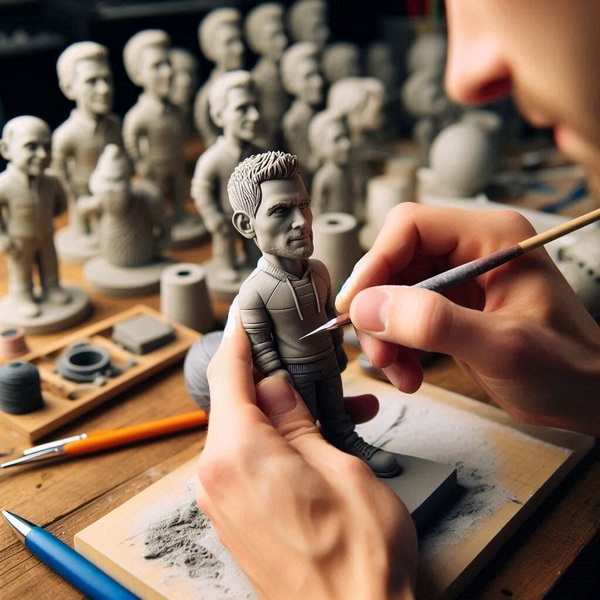
From a geographical point of view, historians typically trace the earliest Bobblehead like figures to 17th century China, where temple nodders were created as representations of Buddha and other important spiritual figures. These Chinese nodders were later exported to Europe, where they influenced artisans, collectors, and designers.
The first commercially successful Western nodders were made in Germany in the 18th and 19th centuries. These German ceramic Bobblehead style dolls, sometimes called nodders or bobbers, traveled throughout Europe and North America as decorative pieces and toys. Their popularity helped establish the Bobblehead concept in Western markets.
The first modern sports Bobbleheads, however, were made in Japan for the American baseball market around 1960. This combination of Chinese origins, German development, and Japanese mass production shows that the Bobblehead is truly an international creation, not the invention of a single country or company.
Later, Bobblehead production would expand into other regions, especially in Asia, where large scale manufacturing of resin and plastic Bobbleheads became common. Today, Bobblehead production is supported by global supply chains, with design, molding, painting, and packaging often handled across multiple locations.
Early temple nodders were made from materials such as plaster, ceramic, or terracotta, depending on the region and period. These materials allowed artisans to sculpt detailed figures but also made the nodders relatively heavy and fragile. The nodding mechanism relied on carefully balanced heads and hidden supports.
German nodders of the 18th and 19th centuries were typically ceramic, fired in kilns and then painted. This gave them good durability and a glossy finish, but they remained vulnerable to chips and cracks if dropped. Their weight also limited the size and complexity of the nodding mechanisms.
In the early and mid 20th century, commercial Bobbleheads were often made from papier mâché—a lightweight, moldable material that allowed manufacturers to produce Bobbleheads relatively cheaply. The 1960 MLB Bobbleheads, for example, were papier mâché figures imported from Japan. Their fragility is one reason why undamaged originals are rare and valuable among collectors.
By the mid 1960s, many Bobblehead manufacturers had switched to ceramic or composition materials to improve durability and appeal to a wider market. In later decades, resin and plastic became the standard materials for Bobbleheads because they can capture fine detail while remaining strong and relatively lightweight. Resin Bobbleheads in particular are known for their sharp lines and ability to reproduce facial expressions and small accessories.
Modern Bobblehead factories use a mix of manual sculpting, digital modeling, resin casting, injection molding, and hand painting to produce detailed Bobbleheads for sports teams, companies, and individual customers. Springs, metal rods, and precision connectors are used to control the motion of the head, ensuring that each Bobblehead delivers the classic “bobble” effect that fans expect.
Today's Bobblehead production process blends traditional artistry with industrial efficiency. The Bobblehead journey usually begins with a concept or reference photos. Sculptors or digital artists create an initial model of the Bobblehead, capturing the key features of the person, mascot, or character.
Once the design is approved, a master sculpt is produced and used to create molds. These molds allow factories to cast large numbers of identical Bobblehead bodies and heads from resin or plastic. After casting, each piece is trimmed, cleaned, and smoothed to remove seams or imperfections.
The next step is painting. Many Bobblehead factories rely on skilled painters to hand paint faces, uniforms, logos, and fine details. Stencils, decals, and automated techniques may also be used for consistent branding and lettering. The head and body are then assembled using a spring or other flexible connector, creating the Bobblehead's signature motion.
Quality control teams inspect the finished Bobbleheads for paint quality, structural integrity, and proper bobble movement. Once a Bobblehead passes inspection, it is packaged in a protective box, often with custom artwork, player stats, or event information. Strong packaging is especially important for Bobbleheads that will be shipped long distances or stored for years as collectibles.
Today, the Bobblehead industry is diverse, and different types of Bobbleheads appeal to different audiences and markets.
Sports Bobbleheads are among the most popular and recognizable types. Baseball, basketball, football, hockey, and other sports leagues regularly release Bobbleheads of star players, mascots, and championship teams. Fans often line up early for limited edition Bobblehead giveaways, and many stadiums plan multiple Bobblehead nights throughout a season.
Movie characters, TV stars, musicians, and even social media personalities are frequently turned into Bobbleheads. These entertainment Bobbleheads allow fans to display their favorite heroes and icons on desks, shelves, and dashboards, making the Bobblehead a fun form of personal expression.
Political figures, presidents, activists, and historical leaders are often represented as Bobbleheads sold in museums, online stores, and campaign shops. These Bobbleheads can be serious, humorous, or satirical, but they always draw attention and spark conversation.
Many companies order custom Bobbleheads of founders, executives, brand mascots, or iconic products. These corporate Bobbleheads are used as gifts, awards, event souvenirs, and marketing tools. They help humanize a brand and create a physical reminder of a partnership or achievement.
Custom Bobbleheads based on customer photos have become a major niche. Individuals can order Bobbleheads of themselves, friends, family members, or couples for weddings, birthdays, anniversaries, and other special occasions. Personalized Bobbleheads turn the classic Bobblehead into a unique, one of a kind gift.
Bobbleheads combine humor, recognition, and movement in a way that appeals to people of all ages. The oversized head and bobbing motion create a cartoon like version of a real person or character, which feels both flattering and funny. This playful style makes it easy for fans to connect emotionally with a Bobblehead.
For brands and teams, Bobbleheads are powerful promotional tools. Limited edition Bobblehead giveaway nights drive ticket sales, increase attendance, and create long term memories. Because Bobbleheads often stay on desks or shelves for years, they continue promoting the team or company long after the original event, serving as a constant reminder of a special game or campaign.
Collectors appreciate Bobbleheads because they combine visual appeal with scarcity and story. Some Bobbleheads commemorate historic games, records, or milestones. Others are part of themed series that take years to complete. Variants, special editions, and error Bobbleheads create extra excitement and challenge in the hobby.
Beyond pure collecting, Bobbleheads also work well as conversation pieces. A Bobblehead on a desk can start a discussion about a favorite team, a beloved show, or a personal hobby. This mix of personality, movement, and storytelling is a big part of why the Bobblehead remains one of the most popular collectibles in the world.
Bobblehead collectors evaluate their Bobbleheads based on several key factors: rarity, condition, authenticity, character popularity, and historical importance. Early Japanese made 1960s sports Bobbleheads, limited stadium giveaway Bobbleheads, and unusual error Bobbleheads can all be especially valuable.
To protect Bobbleheads, collectors usually:
- Keep Bobbleheads out of direct sunlight to prevent fading and material damage.
- Avoid extreme temperatures and humidity that can cause warping or cracking.
- Use stable shelves, stands, or display cases to prevent falls and impacts.
- Dust gently with a soft cloth or brush and avoid harsh cleaning chemicals.
- Save original boxes, inserts, and packaging materials, which often increase resale value.
For businesses that produce or commission Bobbleheads, designing sturdy packaging and using reliable materials is essential to ensure that each Bobblehead arrives safely and remains collectible for years. Protective inserts, foam supports, and strong outer boxes reduce breakage and protect the reputation of both the brand and the Bobblehead itself.
So, who made the first Bobblehead? Strictly speaking, no single person or company did. The Bobblehead began as temple nodders crafted by anonymous artisans in 17th century Asia, developed into ceramic nodders in 18th and 19th century Germany, and finally became the modern Bobblehead through Japanese made sports figures commissioned by Major League Baseball in 1960.
Each stage added something new: religious meaning and motion from temple nodders, commercial distribution and playful themes from German factories, and mass popular appeal from sports Bobbleheads and modern customization. Today, Bobbleheads made from resin, plastic, and advanced composites are used to celebrate athletes, entertainers, historical leaders, companies, and individual people around the world.
Whether you are a collector, a marketer, or a fan, understanding who made the first Bobblehead—and how the Bobblehead evolved—adds depth to every nodding figure on your shelf. Each Bobblehead represents not only a character or a brand, but also a long, international history of craftsmanship, creativity, and joyful motion.
Contact us to get more information!
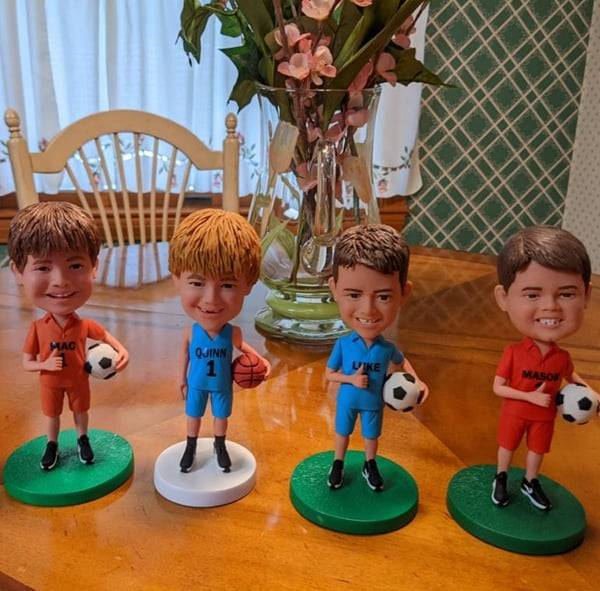
There is no single known person who made the first Bobblehead. The earliest Bobblehead like figures were 17th century Chinese temple nodders, followed by German ceramic nodders in the 18th and 19th centuries. The first modern sports Bobbleheads were produced in Japan for Major League Baseball in 1960, marking the beginning of the modern Bobblehead era.
The first widely recognized sports Bobbleheads were created in 1960, when Major League Baseball produced papier mâché Bobbleheads for each team and player specific Bobbleheads for Roberto Clemente, Mickey Mantle, Roger Maris, and Willie Mays. These early Bobbleheads were made in Japan and released around the 1960 World Series, quickly becoming iconic collectibles.
Early temple nodders and nodders were typically made from ceramic, plaster, terracotta, or similar materials. In the 20th century, many Bobbleheads were made from papier mâché, and later from ceramic and composition materials. Modern Bobbleheads are usually made from resin or plastic, combined with metal springs and specialty coatings to deliver durability and detailed designs.
Some Bobbleheads are highly valuable because they are rare, fragile, and historically significant. Early 1960s Japanese made sports Bobbleheads, limited edition stadium giveaways, and unusual manufacturing error versions can command high prices among collectors. Condition, originality, and the popularity of the character or event heavily influence the market value of a Bobblehead.
Bobbleheads experienced a major revival in the late 1990s and early 2000s, when sports teams reintroduced Bobblehead giveaway nights featuring detailed resin Bobbleheads. A famous example is the 1999 Willie Mays Bobblehead giveaway by the San Francisco Giants, which helped bring Bobbleheads back into the public spotlight and restart the modern Bobblehead craze. Since then, Bobbleheads have expanded into entertainment, politics, corporate branding, and personalized gifts.
1. https://www.bobbleheadhall.com/history/
2. https://en.wikipedia.org/wiki/Bobblehead
3. https://www.bobbleheads.com/history-of-bobbleheads
4. https://popculturespot.com/pages/history-of-bobble-heads
5. https://www.historyofdolls.com/history-of-famous-dolls/history-of-bobblehead/
6. https://stuckeys.com/the-original-yes-men-a-brief-history-of-bobbleheads/
7. https://www.smithsonianmag.com/travel/visit-worlds-only-bobblehead-hall-fame-and-museum-180972837/
8. https://baseballhalloffame.ca/virtual-collection-bobblehead-dolls/
9. https://www.denotterauctions.com/our-blog/2025/5/19/a-nod-to-the-past-the-collectible-charm-of-1960s-vintage-sports-bobbleheads
10. https://www.wowcustombobbleheads.com/where-was-first-bobblehead-made.html
11. https://www.overthemonster.com/red-sox-history/24480908/in-celebration-of-national-bobblehead-day-a-history-of-bobbleheads
12. https://www.youtube.com/watch?v=D9bKzvHcVVo


