
Content Menu
● Casting and parts fabrication
● Customization and production planning
● Quality assurance and standardization
● Marketing considerations and SEO strategy
● Practical tips for aspiring makers
● FAQ
>> 1: What are the essential steps to make a bobblehead doll?
>> 2: What materials are commonly used for bobbleheads?
>> 3: How long does it take to produce a custom bobblehead?
>> 4: How can a brand ensure consistency across thousands of units?
>> 5: What licensing considerations exist for character bobbleheads?
Creating a bobblehead doll blends artistic design with precise manufacturing processes. From concept and sculpting to molding, casting, assembly, painting, and finishing, every step contributes to a collectible that captures character while meeting safety and durability standards. Whether for personal gifts, promotional merchandise, or bespoke commissions, bobbleheads occupy a unique space where creativity meets mass production. This article presents a comprehensive, practical guide to making bobbleheads, covering creative design, materials, tooling, production workflows, quality assurance, and marketing considerations. Throughout, the term Bobbleheads will reference the broader category of bobblehead dolls—ranging from highly customized, hand-crafted pieces to scalable, factory-made products—emphasizing their value as both art and commercial merchandise.

- Ideation and brief: The process begins with a clear brief that defines the character, pose, size, and production constraints. A strong concept balances recognizable likeness with stylized elements that translate well to mass manufacturing.
- Sculpting and prototyping: Prototypes can be hand-sculpted in clay or created digitally via 3D modeling. Hand-sculpted maquettes capture nuanced facial expressions, while 3D models support rapid iteration and precise geometries. The chosen path influences tooling requirements, material choices, and downstream production speeds.
- Reference materials and fidelity: Collecting reference imagery, clothing textures, and branding guidelines ensures the final bobblehead closely matches the intended subject while maintaining consistent quality across multiple units.
- Raw materials: Material selection affects weight, durability, surface finish, and cost. Resin-based choices are popular for high-detail pieces, while plastics offer cost-effective mass production. Metal components may be used for structural strength or specific mechanical features.
- Mold design: After approving a prototype, molds are created to enable repeated casting. Silicone molds are favored for intricate details and flexibility, whereas metal molds are preferred for high-volume runs due to durability and faster cycle times. Proper mold design minimizes seams and ensures repeatability.
- Parting lines and assembly considerations: Strategic placement of parting lines reduces visible seams and facilitates efficient assembly. Designers plan how head, body, limbs, and base will align, ensuring proper balance and a convincing bobbling action.
- Casting processes: Casting involves filling molds with liquid resin or polymer-based materials to form parts. Resin casting yields high-detail results, while plastic injection molding supports large-scale production with consistent outcomes.
- Core components and tolerances: A bobblehead typically comprises a head, body, neck spring, and base. The neck spring must be calibrated to deliver smooth bobbling without looseness or stiffness. Precision tolerances ensure reliable assembly and display stability.
- Quality control during fabrication: Dimensional checks, surface finish evaluation, and spring-tension testing are standard QC steps to identify defects before assembly and packaging.
- Subassembly and integration: Heads and bodies are produced separately and then joined with a spring-neck mechanism. Accurate alignment ensures a natural bobble and avoids wobble that could degrade display quality.
- Painting and detailing: Finishing can be performed by hand or via automated processes, depending on volume and design complexity. Techniques include airbrushing, tampography, and hand-painting for fine details, with attention to color accuracy, shading, and texture.
- Sealing and protection: Protective clear coats guard against wear, UV damage, and moisture. Durable finishes help preserve colors and details over time, especially for items intended as long-term collectibles.
- Packaging: Packaging design protects the product during transit and on shelves, while branded packaging enhances perceived value and marketing impact.

- Custom bobbleheads for brands or events: Custom work demands clear design validation, licensing checks, and a structured proofing workflow. Lead times hinge on design complexity, licensing status, and production capacity.
- Lead time and capacity planning: Production planning balances design complexity, tooling readiness, material supply, and workforce capacity. Accurate planning mitigates bottlenecks and supports timely delivery for campaigns or product launches.
- Regulatory and safety considerations: Depending on target markets, bobbleheads may require compliance with toy safety standards and small-parts regulations. Clear labeling and age guidance help meet regulatory expectations and protect consumers.
- Consistency across units: A robust QA program checks dimensions, color accuracy, and bobble mechanism function. Batch sampling ensures uniform quality across production lots.
- Longevity testing: Endurance tests for bobble action, base stability, and coating durability simulate normal display conditions, supporting long-term satisfaction and reducing defect rates.
- Feedback loops: Structured customer feedback, defect reporting, and field data collection drive continuous improvement across materials, molds, painting, and assembly processes.
- Keyword strategy for Bobbleheads: Integrate the term naturally across headings and body text. Use variations such as “custom bobbleheads,” “promotional bobbleheads,” and “collectible bobbleheads” to broaden reach and capture related searches.
- Visual SEO: Optimize images with descriptive file names, alt-text, and captions that connect visuals to the bobblehead-making process. Ensure fast-loading media to improve user experience and search rankings.
- Global market considerations: Address licensing frameworks, regional safety standards, and consumer preferences. Localized content, multilingual summaries, and region-specific case studies can help expand reach and relevance in international markets.
- Start with a clear plan: Begin with concept sketches and, if possible, 3D modeling to test proportions and articulation. Early prototypes save time and reduce costly changes later in production.
- Prototyping and iteration: Develop multiple prototypes to evaluate scale, facial likeness, and the bobble mechanism's reliability. Iterative feedback improves final quality and customer satisfaction.
- Manufacturing readiness: For larger runs, optimize tooling for efficiency, simplify fine details that complicate molding, and standardize painting and finishing processes to ensure consistent outcomes.
- Brand storytelling: Build a compelling narrative around your bobblehead line—whether it celebrates a franchise, a corporate milestone, or a customizable character series—to deepen consumer engagement and loyalty.
Making a bobblehead doll is a multidisciplinary process that couples artistry with engineering discipline. From initial concept and sculpting to molding, casting, assembly, and finishing, each stage contributes to a durable, display-worthy product that resonates with fans, collectors, and brands alike. A well-planned workflow, strong quality assurance, and a clear marketing strategy centered on the Bobbleheads keyword can yield collectible pieces that connect emotionally with audiences while delivering reliable, scalable production outcomes. The result is a bobblehead doll that captures character, exudes charm, and stands up to repeated handling and long-term display.
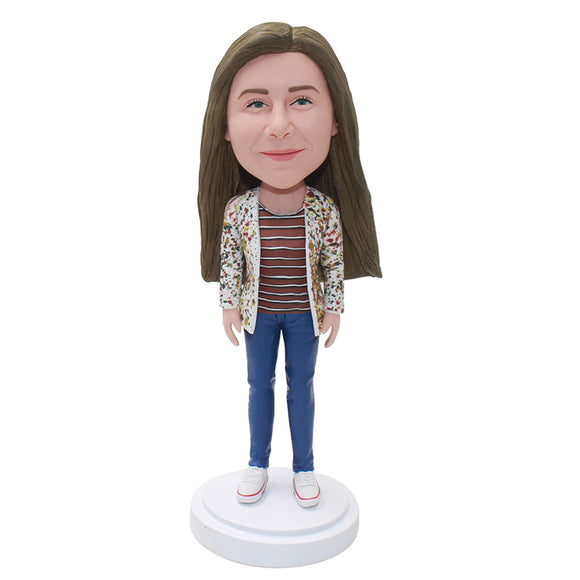
Concept and design, sculpting or 3D modeling, molding, casting, assembling with a spring neck, painting and finishing, and packaging.
Resin for detail, plastic for mass production, and protective coatings to preserve paint and finish over time.
Turnaround varies by complexity and quantity, but most projects span several weeks from prototype to final production.
Implement standardized molds, precise color matching, automated or semi-automated painting, and comprehensive QA with batch sampling and functional testing of the bobble mechanism.
Licensing depends on likeness rights; brands should secure appropriate rights or pursue original character designs to ensure compliance and market viability.
[1](https://omgbobbleheads.com.au/how-are-bobbleheads-made-a-step-by-step-guide/)
[2](https://www.bbobbler.com/how-are-bobble-heads-made/)
[3](https://www.bbobbler.com/where-are-bobbleheads-made/)
[4](https://www.bobblecustom.com/blog/how-are-bobbleheads-made-a-step-by-step-guide)
[5](https://www.instructables.com/3D-Printed-Bobblehead/)
[6](https://www.my3dselfie.com/blogs/news/a-step-by-step-guide-to-making-your-own-bobblehead)
[7](https://www.youtube.com/watch?v=RN9QVyJWMaE)
[8](https://coupleofthings.net/blogs/coupleofthings/behind-the-scenes-how-custom-bobbleheads-are-made)
[9](https://www.litzone.app/news/bobbleheads-how-they-re-made)
[10](https://www.bobbleheads.com/frequently-asked-questions)


