
Views: 222 Author: Mia Publish Time: 2026-01-16 Origin: Site
Content Menu
● Why Choose Clay for a Bobblehead?
● Best Types of Clay for a Bobblehead
● Tools and Materials for a Clay Bobblehead
● Basic Structure: Head, Body, and Balance
● Step 1: Divide the Clay for Your Bobblehead
● Step 2: Make a PinchPot Head for the Bobblehead
● Step 3: Build the Clay Bobblehead Body
● Step 4: Sculpt Facial Features on the Bobblehead Head
● Step 5: Shape Hair and Accessories
● Step 6: Create the Clay Bobblehead Connection
● Step 7: Use Slip and Score for Strong Joints
● Step 8: Let Your Clay Bobblehead Dry (or Fire)
● Step 9: Paint and Decorate Your Clay Bobblehead
● Step 10: Final Assembly and Wobble Adjustment
● Safety and Durability Tips for Clay Bobbleheads
● FAQ
>> 1. What clay is best for a Bobblehead?
>> 2. How do you keep a clay Bobblehead from cracking?
>> 3. Can children make clay Bobbleheads?
>> 4. Do you need a real metal spring for a clay Bobblehead?
>> 5. Should a clay Bobblehead be glazed or painted?
Making a Bobblehead out of clay is one of the most satisfying ways to create a personalized, nodding character that truly feels handmade. With simple clay handbuilding techniques, a basic spring or wire connector, and some acrylic paint, a clay Bobblehead can be sculpted at home or in a classroom with no special machinery. A clay Bobblehead is also a great project for learning about character design, balance, and threedimensional thinking.

Clay is ideal for a Bobblehead because it is easy to shape, can capture fine details, and becomes strong once dry or fired. Airdry clay, earthenware, or lowfire clay can all be used to build a clay Bobblehead head and body with expressive faces and stable bases. Compared with plastic or resin, clay gives a handmade texture and flexibility in size, pose, and style for every Bobblehead.
Different clays give slightly different results, but several are well suited to a clay Bobblehead.
- Airdry clay: Easy to use at home, no kiln needed, perfect for beginner Bobblehead makers.
- Earthenware clay: Common in schools, fired in a kiln, strong and durable for clay Bobbleheads.
- Polymer clay: Bakes in a small oven, good for smaller, detailed Bobblehead figures.
Many art teachers note that airdry clay Bobbleheads can be made successfully as long as the clay is not too thick and is allowed to dry completely. Earthenware clay Bobbleheads are more durable after firing, while polymer clay Bobbleheads are ideal for small, highly detailed collectibles.
Having the right tools makes shaping a clay Bobblehead easier and more enjoyable.
- Clay (airdry, earthenware, or polymer) for head and body of the Bobblehead
- Clay tools: loop tools, needle tool, ribs, or household items like toothpicks and butter knives
- Wire, paper clip, or small spring for the Bobblehead connector
- Pencil or dowel to wrap wire into a Bobblehead spring
- Slip (clay mixed with water) and scoring tools for joining clay parts on the Bobblehead
- Acrylic paints and brushes for finishing the clay Bobblehead
- Optional kiln and glaze if using ceramic clay for a fired Bobblehead
Keeping a damp cloth or plastic wrap nearby helps prevent your clay Bobblehead from drying out while you work. A sturdy board or piece of cardboard also makes it easy to move the Bobblehead safely during drying.
Most clay Bobblehead methods use a pinchpot head and a cone or slabbased body.
- The Bobblehead head is often a hollow pinch pot so it is lighter and easier to wobble.
- The Bobblehead body can be a solid cone, slab body, or hollow form that supports the head and spring.
- Balance is crucial, since the heavy clay Bobblehead head sits on top of the body and must not tip over.
Treat the clay Bobblehead as both sculpture and engineering: the form must look interesting and stand up comfortably while the head nods freely.
Begin by dividing the clay into portions for the head, body, and accessories.
- Roll a ball of clay roughly the size of an orange.
- Separate about onethird of the clay for the Bobblehead head and the remaining twothirds for the body and extra parts.
- Keep unused clay wrapped or in a plastic bag so it stays moist while you work on the Bobblehead.
Dividing the clay early prevents the head from becoming too large and ensures enough material remains for arms, base, hair, and decorative elements on the Bobblehead.
A pinchpot is a simple handbuilding technique perfect for a clay Bobblehead head.
1. Roll the head portion of clay into a smooth ball for the Bobblehead.
2. Press your thumb into the center of the ball and slowly pinch and turn, thinning the walls evenly to form a hollow ball.
3. Keep the Bobblehead head walls about the thickness of your little finger so they are not too heavy or fragile.
4. Shape the pinchpot into a round or slightly oval form, depending on the Bobblehead character.
A hollow pinchpot head dries more evenly and gives the Bobblehead a better wobble because of the reduced weight. You can gently flatten one side or stretch the chin to create different character styles.
Next, construct the clay Bobblehead body using a cone, slab, or hollow shape.
- Roll the body clay into a ball and then stretch it into a tall cone with a flat base so the Bobblehead stands up.
- Alternatively, roll a slab and cut a shape for the Bobblehead body, then form it into a standing figure or creature.
- Hollow the cone slightly with a loop tool and do a “pinkie check” so the base is not too thick, which helps even drying for the Bobblehead.
- Attach arms, tails, or wings using slip and score so they stay firmly connected on the clay Bobblehead.
The top of the Bobblehead body should be rounded or flat, sized so the head can sit on it or connect via a spring or paperclip mechanism. A wider base makes the Bobblehead more stable, especially when the head is large.
Facial details give the clay Bobblehead its personality.
- Use small balls of clay for eyes, attaching them with slip and score to the Bobblehead face.
- Roll thin coils of clay for eyelids, eyebrows, and lips and blend gently into the Bobblehead head.
- Shape a separate piece for the nose, attach it, and refine nostrils with a needle tool or toothpick.
- Add ears, hair, horns, or hats to match the Bobblehead character you want to create.
You can exaggerate certain features—big eyes, a long nose, or a wide smile—to give the Bobblehead a more cartoonlike, friendly look. For a portrait Bobblehead of a person, focus on distinctive elements such as hairstyle, glasses, or facial hair.
Hair and accessories often make a Bobblehead instantly recognizable and more fun.
- For short hair, build up volume around the scalp and carve texture lines with a tool.
- For long hair, add strands or sections that flow over the shoulders while keeping them thick enough not to break.
- Include accessories such as hats, headbands, glasses, or earrings to personalize the Bobblehead.
- Add clothing details around the neck and shoulders that visually link the head to the body style.
Avoid making accessories too thin or heavy, or they may crack or pull the Bobblehead out of balance while it dries.
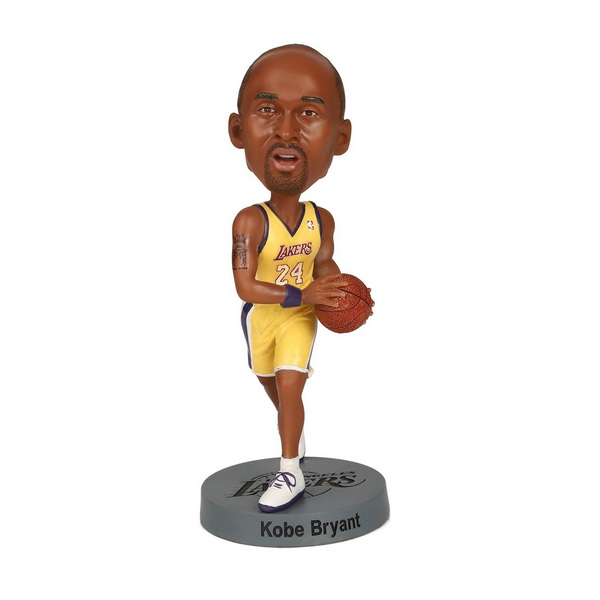
Clay Bobbleheads use a connector to allow the head to wobble above the body. Common methods include:
- Paperclip or wire spring: A bent paper clip or coiled wire anchored in the body and inserted into the head of the Bobblehead.
- Pencil support: A small hole in the Bobblehead body that holds a pencil or rod as a support, with a looser head sitting on top.
- Simple wobble: A rounded cone body top with the pinchpot head resting on it, allowing a mild wobble without a spring.
In many classroom Bobblehead lessons, a paper clip spring is inserted into the top of the body while the clay is still workable, then the head is placed on later after drying and gluing. For home Bobbleheads, a wire coil wrapped around a pencil also works well.
Strong joints are vital so clay Bobblehead parts do not fall apart after drying or firing.
- Scratch or score both surfaces where two clay pieces meet on the Bobblehead.
- Brush or dab slip (clay and water mixture) into the scored area.
- Press pieces together firmly and smooth the seam so the Bobblehead looks clean and solid.
- Repeat for arms, tails, ears, hair pieces, and other attached features on the Bobblehead.
Good slipandscore technique prevents cracks along joints and keeps your Bobblehead intact for longterm display or gentle play.
Drying and firing depend on the type of clay used for the Bobblehead.
- Airdry clay Bobbleheads should be left out for several days to harden fully.
- Ceramic clay Bobbleheads must dry to bonedry and then be fired in a kiln according to clay instructions.
- Pieces should be spaced so air can flow between them, especially between the Bobblehead head and body.
- Avoid drying the Bobblehead in direct heat to reduce cracking risk.
Some makers cover the Bobblehead loosely with plastic for the first day to slow down drying, then uncover it to finish drying more evenly.
Once hardened and, if needed, fired, the clay Bobblehead can be painted and decorated.
- Use acrylic paint to add base colors for skin, hair, clothing, and accessories on the Bobblehead.
- Mix colors and use layering techniques to create texture, fur, or fabric looks on your Bobblehead.
- Add details like patterns, symbols, words, and facial features to give the Bobblehead more personality.
- Optionally add a clear sealer to protect the paint on the Bobblehead from scuffs and moisture.
Bright, contrasting colors and bold shapes look great on a clay Bobblehead and read well from a distance. You can also add metallic or glitter accents if the Bobblehead is part of a themed collection.
After painting, assemble the clay Bobblehead so it wobbles correctly.
- Glue the paperclip or spring end securely into the body if it is not already fixed.
- Attach the Bobblehead head onto the spring or connector, adjusting angle and depth so it sits upright.
- Test the wobble by tapping the head gently and see how long and how far it moves.
- If the Bobblehead is too topheavy, add weight to the base or slightly shorten the connector to improve balance.
A wellbalanced clay Bobblehead will nod playfully when touched without tipping, making it a satisfying interactive sculpture.
A strong, safe Bobblehead will last longer and be more enjoyable to handle.
- Keep the Bobblehead's neck, arms, and thin parts slightly thicker to avoid breakage.
- Remind children not to bend the Bobblehead spring too roughly to prevent cracks at the connection.
- Use nontoxic paints and sealers when making clay Bobbleheads for young users.
- Place the Bobblehead on a stable shelf or base where it will not be knocked over easily.
These habits make a clay Bobblehead project suitable for homes, classrooms, offices, and gift giving.
Making a Bobblehead out of clay combines classic handbuilding, character design, and simple engineering into one fun, creative project. From dividing the clay and forming a hollow pinchpot head to building a stable body, adding expressive features, and designing a connector, every stage builds skill and personality into your clay Bobblehead. Whether used as an art lesson, a hobby project, or a custom gift, a clay Bobblehead stands out as a charming, wobbling sculpture that reflects the creator's imagination.
Contact us to get more information!
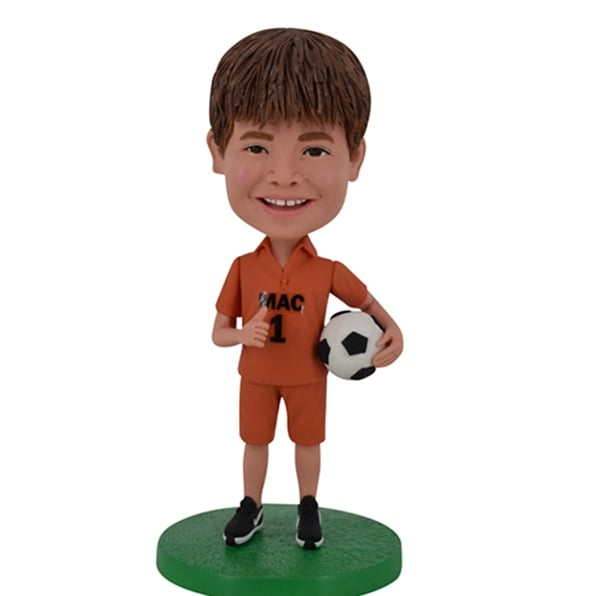
Airdry clay and lowfire earthenware are both popular for clay Bobbleheads because they are easy to shape and strong after drying or firing. Many home crafters choose airdry clay for Bobbleheads to avoid needing a kiln while still getting detailed, paintable surfaces.
To reduce cracking, keep Bobblehead walls an even thickness, use slip and score at joints, and dry pieces slowly in a ventilated but not hot environment. Hollow pinchpot Bobblehead heads and partially hollow bodies dry more evenly and are less likely to crack than thick solid pieces.
Clay Bobbleheads are widely used in elementary and middle school art classes because the project is engaging and teaches basic clay vocabulary and procedures. With supervision and simple connectors like paper clips, students can safely create colorful Bobbleheads that they are proud to take home.
A real metal spring is helpful but not mandatory; many clay Bobbleheads use bent paper clips, wire, or carefully shaped balance between head and body. Classroom Bobblehead lessons often rely on paperclip connectors because they are inexpensive, easy to bend, and create a satisfying wobble for the head.
Ceramic Bobbleheads made from earthenware can be glazed, but many makers prefer acrylic paint because it gives more control and immediate color results. Airdry clay Bobbleheads cannot be glazed in the traditional sense and are typically finished with acrylic paint and an optional clear sealer.
1. https://www.youtube.com/watch?v=Bqde7mDZIhw
2. https://artwithtrista.com/clay-bobblehead-art-lesson/
3. https://www.youtube.com/watch?v=RTf6WU_Ko_E
4. https://www.youtube.com/watch?v=-gsqX_0h6Jg
5. https://crystalbridges.org/blog/diy-build-your-own-bobbleheads/
6. https://linusparr.weebly.com/uploads/7/5/6/0/7560513/clay_bobble_head_lesson.pdf
7. https://www.youtube.com/watch?v=xQhl_1EPAiA
8. https://thislittleclassofmine.weebly.com/home/clay-bobble-heads
9. https://wowartproject.com/2017/05/31/5th-grade-clay-bobbleheads/
10. https://2soulsisters.blogspot.com/2024/06/clay-bobblehead-sculpture.html
11. https://www.youtube.com/watch?v=N63VUoJHuwY
12. https://www.youtube.com/watch?v=Pyt5g_B5eS8
13. https://www.tiktok.com/@amywardcreates//7536935313487269151


