
Views: 222 Author: Mia Publish Time: 2026-01-18 Origin: Site
Content Menu
● What Is A Life Size Bobblehead?
● Planning Your Life Size Bobblehead Design
● Materials And Tools For A Life Size Bobblehead
● Building The Oversized Bobblehead Head
>> Foam-panel Bobblehead head method
>> Paper maché Bobblehead head method
● Creating The Bobblehead Wobble Mechanism
● Internal Support: Helmet, Foam Tube, And Comfort
● Designing The Bobblehead Body And Costume
● Painting, Finishing, And Personalizing Your Bobblehead
● Safety, Testing, And Transport
● Using A Life Size Bobblehead For Events And Marketing
● FAQ
>> 1. How long does it take to make a life size Bobblehead?
>> 2. What is the best material for a life size Bobblehead head?
>> 3. How do I make sure the Bobblehead is safe to wear?
>> 4. Can I convert an existing mascot head into a Bobblehead?
>> 5. How can I use a life size Bobblehead for marketing?
Creating a life size Bobblehead is an exciting DIY project that combines costume making, mascot design, and simple mechanics to produce an oversized wobbling head for events, performances, or brand promotions. With the right materials, tools, and planning, you can build a custom life size Bobblehead that is safe, comfortable, and visually impressive.

A life size Bobblehead is essentially a wearable costume or large prop in which the head is dramatically oversized and mounted on a flexible mechanism so that it “bobbles” as the performer moves. Unlike small collectible Bobblehead figurines, a life size Bobblehead must balance weight, stability, and visibility for the person inside the costume.
Typical life size Bobblehead features include:
- Oversized lightweight head (foam or paper maché) on top of a human-sized body.
- Internal support tube or helmet to hold the Bobblehead head above the wearer's own head.
- Spring or flexible connection between the costume body and the Bobblehead head to create wobble.
- Exterior paint and decoration to match a character, mascot, or brand.
The planning stage determines how your Bobblehead will look, move, and fit the performer. Before cutting foam or blowing up balloons, finalize key design details.
Key planning steps for a life size Bobblehead:
- Decide the character: real person, cartoon, sports mascot, or brand Bobblehead.
- Choose head style: round, square, stylized, or realistic Bobblehead face.
- Define size: typical Bobblehead heads for costumes are roughly 50–70 cm in diameter so they look oversized but still wearable.
- Determine body type: full suit, regular clothes plus Bobblehead head, or themed outfit (e.g., sports jersey, work uniform).
Choosing the right materials is essential to keep your Bobblehead head lightweight, strong, and safe for extended use. Most DIY life size Bobblehead makers use EVA foam or paper maché over a balloon or foam structure.
Common materials for a life size Bobblehead head:
- EVA foam sheets (6–10 mm) or upholstery foam blocks.
- Large balloon or exercise ball for shaping a round Bobblehead head.
- Paper maché (paper strips plus glue or Mod Podge) if not using foam.
- Lightweight helmet or foam tube “hat” to support the head.
- Springs or flexible plastic for the bobbling neck connection.
- Acrylic paints, primer, and clear coat for finishing.
Basic tools needed for Bobblehead construction:
- Sharp craft knives or utility knives for cutting foam.
- Hot glue gun, contact cement, or strong craft glue.
- Scissors, measuring tape, and marker pens.
- Heat gun for shaping EVA foam into curved Bobblehead surfaces.
- Sandpaper for smoothing dried paper maché or foam edges.
The head is the visual focus of a life size Bobblehead, so invest time in shaping and smoothing it correctly. You can build it either from foam panels or from a paper maché shell using a balloon as a mold.
Many makers pattern a sphere from flat EVA foam panels scaled up from a smaller ball. This technique creates a hollow, lightweight Bobblehead head that can be trimmed and carved to refine the shape.
Typical steps:
- Cut a small ball (e.g., basketball) section, then scale the pattern up to your desired Bobblehead size.
- Trace the pattern onto EVA foam 10–12 times and cut the panels with a sharp knife.
- Glue foam panels edge to edge to form a large spherical shell.
- Use a heat gun and internal ball or exercise ball to smooth and round the Bobblehead surface.
- Cut openings for the neck hole and the wearer's vision (hidden behind mesh or in the mouth area).
If you prefer paper maché, you can create a giant Bobblehead shell using a large balloon. This approach is inexpensive but takes more drying time.
Core process:
- Inflate a large balloon or beach ball to the desired Bobblehead diameter.
- Apply multiple layers of paper maché (paper strips plus glue) over the surface and let each layer dry thoroughly.
- Once rigid, carefully deflate and remove the balloon, leaving a hollow Bobblehead shell.
- Cut a neck opening and vision window and reinforce edges with extra layers.
- Smooth bumps with light sanding and filler before priming.
The bobbling motion is what turns a large costume head into a true Bobblehead. To get a smooth and safe wobble, you need a flexible connection between the head and the body that can move but still return to center.
Basic wobble mechanism concepts:
- A spring or flexible rod between the body's neck area and the underside of the Bobblehead head.
- Enough clearance so the Bobblehead head can tilt in all directions without hitting the body hard.
- A stable support so the head does not fall forward or backward permanently.
Common DIY Bobblehead solutions:
- Mount a sturdy coil spring at the center of the neck opening; glue one end to the costume body and the other to a base plate inside the Bobblehead head.
- Add lightweight foam bumpers or stops so the Bobblehead head does not swing too far.
- For more controlled “nod” or “shake” motion, use a jointed wire or parallelogram linkage instead of a single spring.
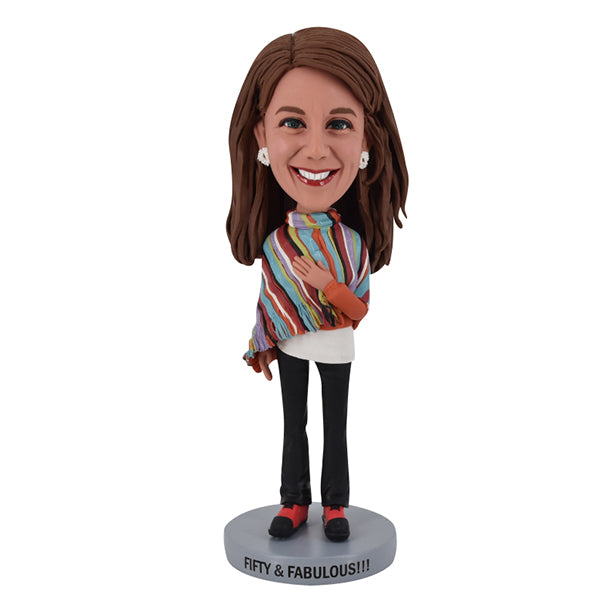
Even with a wobbling neck, the performer needs a stable structure to support the life size Bobblehead on the head or shoulders. Most large Bobblehead heads sit on a helmet or foam tube that distributes weight and keeps the head aligned.
Typical internal support systems:
- Foam tube “hat”: a ring or tube of EVA foam that sits on the performer's head like a helmet and holds the Bobblehead head above it.
- Real helmet: a bicycle, climbing, or construction helmet glued to an internal platform inside the Bobblehead head for extra security.
- Shoulder rest: padded shoulder supports connected to the body suit so the Bobblehead weight is shared between head and shoulders.
Comfort and safety considerations:
- Add soft padding where the Bobblehead support contacts the head or shoulders.
- Ensure good ventilation and air flow; consider small fans inside the Bobblehead head.
- Use lightweight materials so the Bobblehead can be worn for long periods without fatigue.
The body completes the illusion of a giant Bobblehead character and can be as simple or elaborate as you like. Many DIY creators use regular clothing, while professional mascots use fully padded suits.
Options for Bobblehead body design:
- Standard clothes: sports jersey, suit, uniform, or dress that matches the Bobblehead character.
- Mascot-style padded body: foam-padded torso, hips, and arms for a cartoon Bobblehead look.
- Branded outfit: custom-printed clothing with logos or slogans for promotional Bobblehead use.
Practical tips:
- Keep the body relatively simple so attention stays on the Bobblehead head.
- Ensure arm and leg openings are wide enough for comfortable movement.
- Add hidden access zippers or Velcro to get in and out of the Bobblehead costume easily.
Painting transforms a plain foam or paper shell into a recognizable life size Bobblehead character. Good surface prep and layering help your Bobblehead withstand handling, transport, and outdoor use.
Steps for painting and finishing:
- Prime: Seal foam or paper maché with a suitable primer or base coat so paint adheres evenly.
- Base colors: Apply large areas of skin tone, hair, and clothing colors with acrylic paint.
- Detail work: Add facial features, logo, lettering, and highlights using brushes or paint pens.
- Protective coat: Finish the Bobblehead with a clear sealant for durability.
Personalization ideas for a life size Bobblehead:
- Add accessories like hats, glasses, or helmets to the Bobblehead head.
- Paint brand colors, slogans, or jersey numbers for sports or corporate Bobblehead campaigns.
- Include removable props (microphone, ball, tool) to match the Bobblehead character.
Because a life size Bobblehead is worn by a real person, safety and usability must be tested carefully before public use. A well-designed Bobblehead allows good visibility, controlled wobble, and secure footing.
- Vision: Confirm the performer can see clearly through hidden mesh or openings at eye or mouth level.
- Stability: Test the Bobblehead wobble to make sure the head returns to center without hitting the chest or shoulders.
- Weight: Ensure the total Bobblehead weight is manageable for the wearer's size and strength.
- Cooling: Check that the Bobblehead interior is not overheating; add fans or vents if needed.
Transport and storage tips:
- Design the Bobblehead head so it can be removed from the body for easier transport.
- Use padded bags or boxes to protect the painted Bobblehead surface.
- Consider a collapsible or modular Bobblehead structure if you travel frequently for events.
Once your life size Bobblehead is finished, it can become a powerful attraction for live events, social media, and brand experiences. The exaggerated Bobblehead motion and large head shape naturally draw attention and create photo and video opportunities.
- Live appearances at trade shows, sports games, and store openings.
- Short promotional videos featuring the Bobblehead dancing or interacting with people.
- Photo booths where visitors can pose with the Bobblehead character.
- Social media clips (TikTok, Instagram Reels, YouTube Shorts) highlighting the Bobblehead wobble and personality.
Building a life size Bobblehead is a creative project that mixes sculpture, costume design, and simple mechanics to transform a character into an eye catching wobbling giant. By carefully planning the design, selecting lightweight materials, constructing a strong head and wobble mechanism, and testing safety and comfort, you can create a custom Bobblehead that performs reliably at events and promotions. With thoughtful painting, finishing, and marketing, your life size Bobblehead can become a memorable centerpiece for branding, entertainment, and social media content.
Contact us to get more information!
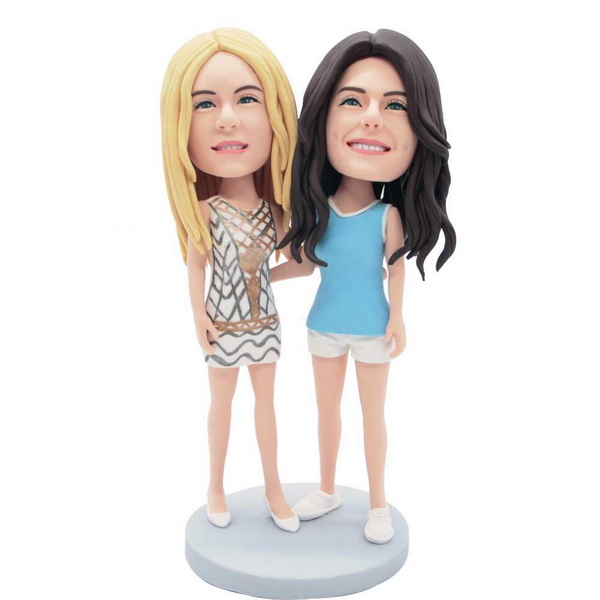
The time to build a life size Bobblehead depends on materials, complexity, and your experience, but most DIY projects require several days to a few weeks including drying and painting. Foam-based Bobblehead heads can be assembled faster, while paper maché Bobblehead builds need extra drying time between layers.
Lightweight foam such as EVA or upholstery foam is commonly used for large Bobblehead heads because it is easy to cut, shape, and glue while remaining light. Paper maché shells over a balloon also work well for DIY Bobblehead projects when budget is limited, though they may be less durable in wet conditions.
To keep a life size Bobblehead safe, ensure clear vision through mesh or hidden openings, use secure internal supports like helmets or foam tubes, and test the wobble motion under real movement. Padding, ventilation, and sensible weight distribution are essential so the Bobblehead performer does not overheat or lose balance.
Yes, an existing mascot head can sometimes be converted into a Bobblehead by adding a flexible spring or linkage between the head and body and adjusting internal supports. You must check that the structure is strong enough and that the new Bobblehead motion does not cause collisions with the body or put excessive strain on the wearer.
A life size Bobblehead is excellent for marketing because it attracts attention in crowds and generates shareable photos and videos for social platforms. Brands can use customized Bobblehead characters at events, in short promotional clips, and in campaigns that encourage visitors to post selfies with the Bobblehead.


