
Content Menu
● Why Silicone Rubber is Ideal for Bobblehead Molds
● Designing the Bobblehead Master
● Planning the Bobblehead Mold Strategy
● Tools and Materials Needed for Bobblehead Mold Making
● Step by Step: Making a Bobblehead Head Mold
>> 2. Position the Bobblehead and Define the Parting Line
>> 4. Mix and Degas the Silicone
>> 5. Pour the First Half of the Bobblehead Mold
>> 6. Flip, Remove the Clay, and Prepare for the Second Half
● Making the Bobblehead Body Mold
● Casting Resin Bobbleheads from the Mold
● Finishing Bobblehead Castings with Abrasives
● FAQ
>> 1. How many Bobbleheads can one silicone mold produce?
>> 2. Do I need separate molds for the Bobblehead head and Bobblehead body?
>> 3. Is vacuum degassing required for Bobblehead molds?
>> 4. Can I make a Bobblehead mold from a 3D printed model?
>> 5. What type of videos work best for teaching Bobblehead mold making?
A high quality Bobblehead mold is the core tool that allows you to reproduce a Bobblehead design again and again for gifts, collections, or branded promotions. Once you have a reliable Bobblehead mold, you can rotocast hollow Bobblehead heads, solidcast Bobblehead bodies, and maintain consistent quality across every batch.

A Bobblehead mold is a negative form—usually made from flexible silicone rubber—that captures the exact shape of a Bobblehead head, Bobblehead body, and sometimes the base. Liquid resin or other casting material is poured inside this Bobblehead mold; when it cures, the solid Bobblehead casting is removed, assembled, and painted.
In professional Bobblehead production, separate molds are used for the Bobblehead head and Bobblehead body. This makes it easier to install the spring or internal mechanism that allows the Bobblehead head to move freely, and also supports using one Bobblehead body with many different Bobblehead heads.
Silicone rubber is the preferred material for Bobblehead molds because it is flexible, has high tear strength, and reproduces very fine details such as facial expressions and hair texture. Silicone Bobblehead molds can handle undercuts and complex shapes while still releasing the casting cleanly without damage.
Silicone is also resistant to most casting resins and can withstand multiple casting cycles. With proper handling and storage, a silicone Bobblehead mold can produce dozens or even hundreds of castings before it needs to be replaced. This durability is critical when manufacturing Bobbleheads for commercial campaigns or ongoing series.
Before you can make a Bobblehead mold, you must have a finished “master” Bobblehead: the original head and body that the mold will copy.
The Bobblehead master can be created by:
- Sculpting the Bobblehead head and Bobblehead body in clay or polymer clay
- 3D printing the Bobblehead from a digital model
- Combining 3D printing with handsculpted detailing to refine features
When designing the Bobblehead master:
- Emphasize the size and character of the Bobblehead head to make the bobble effect visually appealing.
- Avoid extreme undercuts that would trap the Bobblehead inside the mold and make demolding difficult or damaging.
- Include a clear neck interface so the Bobblehead spring or pivot can be mounted firmly between the Bobblehead head and Bobblehead body.
A good Bobblehead mold strategy depends on the pose and style of the Bobblehead, as well as your production volume. For most designs, the following approach works well:
- Bobblehead head: twopart silicone mold or a cutopen block mold, often used for hollow rotocast Bobblehead heads.
- Bobblehead body: twopart mold for complex poses, or an openback mold for simpler, flatter bodies and bases.
Parting lines are usually placed along less visible areas—such as the sides of the Bobblehead head and along the sides of the Bobblehead body—so seam lines are easy to sand and hide later. Proper planning at this stage improves both casting quality and finishing efficiency.
To make a reliable Bobblehead mold, you will need the following tools and materials:
- Finished Bobblehead head and Bobblehead body masters
- Moldmaking grade RTV silicone rubber (tincure or platinumcure)
- Mold box materials (foam board, acrylic sheet, wood, plastic containers, or LEGO bricks)
- Nonsulfur modeling clay or plasticine
- Mold release spray or brushon release
- Mixing containers, stir sticks, and a digital scale
- Utility knife or scalpel for cutting silicone
- Rubber bands or clamps for closing molds during casting
- Optional: vacuum chamber and pump for degassing silicone
Construct a mold box that leaves about 1–2 cm clearance around the Bobblehead head on all sides and above the top. Foam core board, wood, or LEGO bricks can be used to build a custom box that fits your Bobblehead head closely but safely.
Seal all internal seams with hot glue or clay to prevent silicone leaks. Mount the Bobblehead head on a small pedestal or rod inside the box so it remains centered and stable when silicone is poured.
Decide how the Bobblehead head mold will be split. A typical seam line runs from the back of the neck, under the ears, and around the sides of the head.
Embed the Bobblehead head halfway in clay up to this seam line. Smooth the clay against the head to avoid gaps and press small registration keys (bumps or holes) into the clay surface so the two mold halves will align precisely later.
Spray or brush a light coat of mold release over the Bobblehead head and the inside surfaces of the mold box if recommended by the silicone manufacturer. Mold release helps make sure the Bobblehead master can be removed without damage and prevents the silicone from sticking to the box.
Measure silicone base and catalyst by weight according to the data sheet, and mix thoroughly, scraping the sides and bottom of the mixing container several times. Proper mixing is crucial for the Bobblehead mold to cure evenly and achieve its full strength.
If you have access to a vacuum chamber, place the mixed silicone under vacuum to remove trapped air bubbles before pouring. This step is especially useful when the Bobblehead head has detailed textures that might trap air around the nose, eyes, and hair.
Pour the silicone in a thin stream into the lowest corner of the mold box, allowing it to flow over the clay and around the Bobblehead head rather than pouring directly on the head. A slow, narrow pour helps drag air out of the way and improves detail capture in the Bobblehead mold.
Continue pouring until the silicone completely covers the Bobblehead head and reaches the planned thickness. Then let the mold cure undisturbed for the recommended time, which may range from an hour to a full day, depending on the silicone.
After curing, disassemble the mold box, flip the silicone block, and carefully peel away all clay from the Bobblehead head and silicone surface. Clean any clay residue from the Bobblehead master and from the cured silicone to ensure a tight fit between the two halves.
Rebuild the mold box around the cured silicone and Bobblehead head. Apply mold release to the exposed silicone surface to prevent the second silicone pour from bonding to the first half.
Mix and degas a new batch of silicone as before. Pour it slowly into the mold box until the Bobblehead head is fully encapsulated and the silicone reaches the desired thickness.
Allow the second half to cure completely. Then remove the mold box and carefully separate the two silicone halves along the parting line, releasing the Bobblehead head master. You now have a twopart Bobblehead head mold ready for casting.
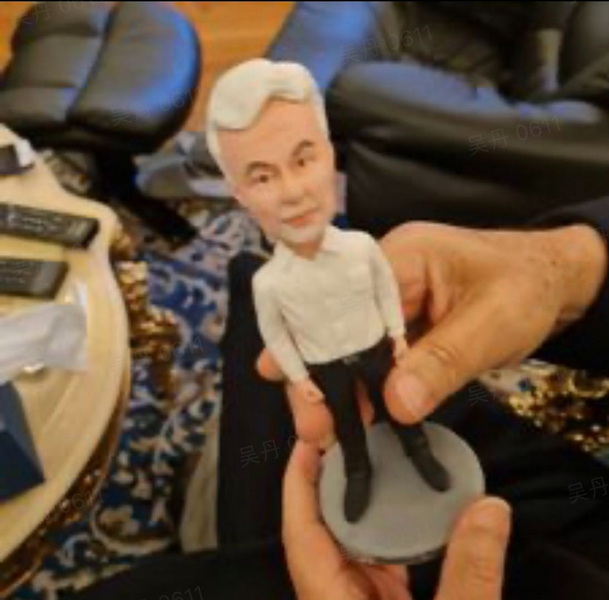
The Bobblehead body and base are molded in a similar way, but the mold configuration depends on the pose and complexity of the design.
For dynamic Bobblehead poses with outstretched arms or accessories, a twopart body mold is usually built with a seam along the sides of the body and legs. For simpler, flatter bodies, an openback mold can be used where resin is poured from the back.
The neck area in the Bobblehead body mold must include a seat or socket for the spring or pivot mechanism. This ensures that when the Bobblehead head is attached, it moves freely and maintains proper alignment.
Once you have complete Bobblehead molds for the head and body, you can begin casting in resin or other suitable materials.
The general process is:
1. Prepare the Bobblehead mold
Clean the mold cavity, apply a light release (if needed), and close the mold halves with rubber bands or clamps.
2. Mix the casting resin
Measure resin components according to the manufacturer's ratio and mix thoroughly but gently to reduce air bubbles.
3. Pour or inject resin
Pour resin into the Bobblehead mold through the pour spout. Tap or lightly vibrate the mold to help air escape from small features and avoid voids on the Bobblehead surface.
4. Cure and demold
Allow the resin to fully harden before opening the Bobblehead mold and removing the casting. Premature demolding can deform small details.
5. Repeat for the body
Cast the Bobblehead body in the same way, ensuring a strong, clean neck connection surface for assembly.
After demolding, each Bobblehead head and Bobblehead body will typically show parting lines, vent marks, and small imperfections.
Finishing involves:
- Trimming excess resin and flash with a sharp knife or cutters
- Sanding seam lines and rough areas with progressively finer abrasive papers
- Smoothing the Bobblehead surface so primer and paint adhere uniformly
High quality abrasives are especially important around detailed Bobblehead areas like facial features and logos, where aggressive sanding might remove detail. Proper finishing gives the Bobblehead a professional look and prepares it for priming, painting, and clear coating.
Creating a professional Bobblehead mold is a step by step process that starts with a detailed Bobblehead master and ends with a durable, flexible silicone mold capable of repeated casting. By planning parting lines carefully, mixing and pouring silicone correctly, and using the right abrasives to finish resin Bobblehead castings, you can build a mold system that produces clean, consistent Bobbleheads for collections, gifts, and global promotional campaigns.
Contact us to get more information!
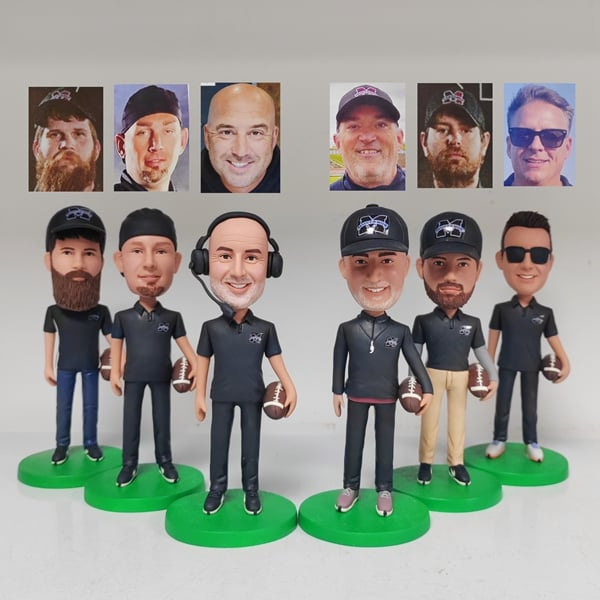
A welldesigned silicone Bobblehead mold can often produce dozens of castings and, with careful handling and proper release agents, sometimes well over a hundred before noticeable wear appears. The actual lifespan depends on silicone hardness, casting temperature, and how aggressively the Bobblehead is demolded.
Yes, separate molds for the Bobblehead head and Bobblehead body are standard in professional Bobblehead production. This simplifies casting, makes it easier to install the spring or joint, and allows you to reuse body molds with many different Bobblehead heads.
Vacuum degassing is not strictly required, but it greatly improves the quality of Bobblehead molds by removing bubbles from the silicone before pouring. For detailed Bobblehead faces or large production runs, degassing can significantly reduce defects, rework, and rejects.
Yes, many modern Bobblehead manufacturers use 3D printed masters to create molds. The print is usually cleaned, lightly sanded, and sometimes sealed before silicone is poured, ensuring the Bobblehead mold captures all the sharp details without printing artifacts.
The most effective Bobblehead mold videos show realtime processes such as sculpting, building mold boxes, pouring silicone, cutting molds, casting resin, and assembling finished Bobbleheads. Step by step tutorials, narrated timelapses, and series playlists help viewers understand each stage and keep them engaged on your Bobblehead content page.


