
Content Menu
● Before You Start Any Bobblehead Repair
>> Gather Essential Tools and Materials
>> Inspect the Damage on the Bobblehead Carefully
● How To Fix a Detached or Broken Bobblehead Head
>> Step 1: Clean the Broken Bobblehead Surfaces
>> Step 2: Align the Bobblehead Head and Spring
>> Step 3: Apply Glue and Reattach the Bobblehead Head
>> Step 4: Check Bobblehead Motion After Curing
● How To Repair or Replace a Bobblehead Spring
>> Step 1: Remove the Bobblehead Head and Access the Spring
>> Step 2: Straighten or Tighten the Bobblehead Spring
>> Step 3: Reinstall or Replace the Bobblehead Spring
● How To Fix a Broken Bobblehead Base or Body
>> Step 1: Clean and Test-Fit the Bobblehead Pieces
>> Step 2: Glue the Bobblehead Base or Body
>> Step 3: Fill Gaps and Smooth the Bobblehead Surface
● How To Repair Chipped or Scratched Bobblehead Paint
>> Step 1: Prepare the Bobblehead Surface
>> Step 2: Match the Bobblehead Paint Color
>> Step 3: Apply Thin Paint Layers to the Bobblehead
● Restoring the Bobble Motion of a Stiff Bobblehead
>> Step 1: Remove the Bobblehead Head
>> Step 2: Clear Blockages and Adjust the Bobblehead Mechanism
● When To Choose DIY vs. Professional Bobblehead Repair
>> When DIY Bobblehead Repair Makes Sense
>> When To Call a Bobblehead Restoration Professional
● Extra Tips for Protecting a Repaired Bobblehead
>> Let the Bobblehead Cure Completely
>> Improve the Display Environment for the Bobblehead
>> Handle the Repaired Bobblehead Gently
● Useful Bobblehead Repair Videos
● FAQ
>> 1. What glue is best for repairing a Bobblehead?
>> 2. Can I replace a Bobblehead spring myself?
>> 3. How do I fix a chipped Bobblehead nose or small detail?
>> 4. Is it safe to repaint large areas of a Bobblehead?
>> 5. What should I do after repairing a Bobblehead?
A damaged Bobblehead can be painful to see, especially when it is a limited-edition or custom Bobblehead with special meaning. A cracked Bobblehead head, loose Bobblehead spring, broken Bobblehead base, or chipped Bobblehead paint does not automatically mean the figure is ruined. With the right tools, careful preparation, and some patience, you can repair a Bobblehead at home and restore both its appearance and its bobbling motion.
In this guide, you will learn how to fix the most common Bobblehead problems step by step: reattaching a Bobblehead head, tightening or replacing a Bobblehead spring, repairing a broken Bobblehead base, and repainting chipped Bobblehead areas. You will also see how to decide when DIY Bobblehead repair is safe and when a professional restorer is a better choice. By the end, you will have a complete Bobblehead repair workflow you can use again and again for your collection.

Repairing a Bobblehead is easier and safer if you prepare properly. Rushing into a Bobblehead repair without planning can lead to extra cracks, misaligned Bobblehead parts, or glue stains that are hard to remove.
For most Bobblehead repair projects, the following tools and supplies are helpful:
- Super glue (cyanoacrylate) or two-part epoxy suitable for resin or plastic Bobblehead figures
- Tweezers or needle-nose pliers for gripping small Bobblehead parts and springs
- Cotton swabs and toothpicks for cleaning and applying glue precisely
- Rubbing alcohol or acetone to remove old Bobblehead glue and surface oils
- Fine grit sandpaper (around 500–1000) to smooth repaired Bobblehead areas
- Small paintbrushes and acrylic paints to touch up Bobblehead colors
- Epoxy putty or modeling clay for filling gaps and rebuilding missing Bobblehead pieces
- Soft cloth or microfiber towel to protect the Bobblehead surface while you work
Always work in a clean, well-lit area with a flat table so your Bobblehead cannot roll or fall. It is also smart to place a soft towel under the Bobblehead to cushion any accidental drops and to keep small Bobblehead parts from bouncing away.
Before adding any glue, take time to study the broken Bobblehead from all angles. Check whether the Bobblehead spring is stretched or detached, whether the Bobblehead head has cracks, and whether any small pieces are missing. Lightly test the movement of the Bobblehead head and base to identify all weak points without forcing anything.
If possible, take photos of the Bobblehead damage before you begin. These photos help you remember the original Bobblehead position and alignment, and they can also be useful for insurance or resale records later. You can also lay out the broken Bobblehead parts on a white sheet of paper so you do not lose track of any fragment.
A detached Bobblehead head is one of the most common repair situations. Sometimes the Bobblehead spring has pulled out of the head or body; other times the neck stem or inner cavity has cracked.
Use a cotton swab dipped lightly in rubbing alcohol or acetone to wipe old glue, dust, and oils from the broken Bobblehead areas. Clean both the inside of the Bobblehead head cavity and the neck or connector on the body. Allow all surfaces to dry completely before you continue, because moisture can weaken Bobblehead glue bonds and trap dirt inside the repair.
Dry-fit the Bobblehead head on the spring without glue first. Make sure the Bobblehead spring sits in the correct cavity and that the head is able to face forward naturally. Adjust the Bobblehead spring by gently twisting with pliers if it is bent or off-center. This dry test ensures that once you add glue, the Bobblehead head will be correctly positioned and will not lean awkwardly.
Apply a small amount of epoxy or super glue around the rim of the Bobblehead head cavity or on the connector where the Bobblehead spring attaches. Do not flood the area; a thin, even layer is stronger and less messy. Gently press the Bobblehead head back onto the spring and hold it steady in the correct orientation for several minutes until the glue begins to set.
If your glue instructions mention a full curing time (for example 12–24 hours), place the repaired Bobblehead in a safe position where it will not be touched or bumped during that period. Patience here is critical for a durable Bobblehead repair. You can use a support, such as a small box or foam block, to hold the Bobblehead head at exactly the right angle while the glue cures.
After the glue has fully cured, test the Bobblehead gently with a light tap to confirm that the head bobbles freely. If the Bobblehead head feels stuck or too stiff, there may be excess glue blocking the spring or cavity. In that case, carefully remove the Bobblehead head again, scrape away the extra glue with a toothpick, and re-glue sparingly. If the head leans to one side, you can slightly twist the spring inside the head to fine-tune alignment.
A loose, stretched, or broken Bobblehead spring will cause sloppy movement, tilting, or complete failure of the bobbling action. Fortunately, a Bobblehead spring repair is often possible with basic tools.
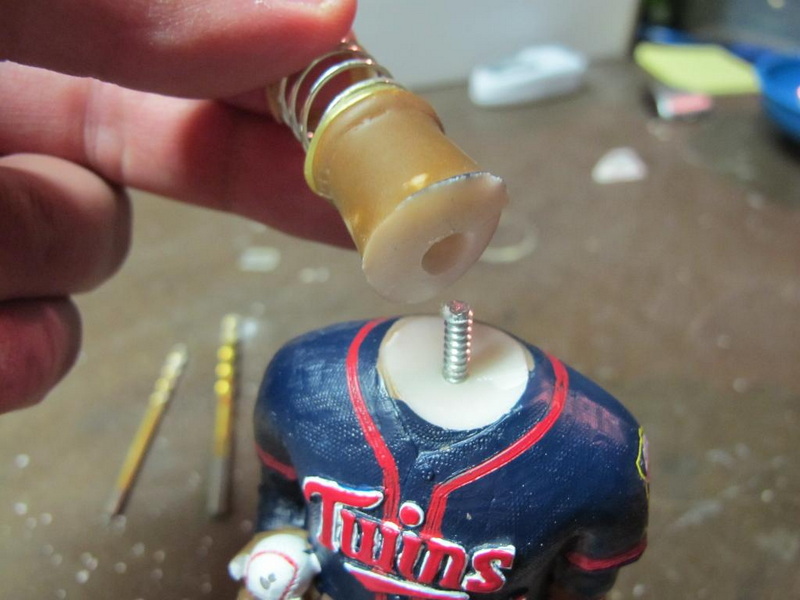
Gently unscrew or pull the Bobblehead head from the spring, depending on the design. Some Bobblehead models have the spring twisted into the head cavity; others have a glued or pegged connection. Use needle-nose pliers to grip the spring if it is hard to reach with your fingers, but avoid squeezing too hard and deforming the coils.
Take care not to bend the Bobblehead spring more than necessary while removing it. If the spring is badly tangled or kinked, you may decide to replace it instead of trying to straighten it. Keep the original Bobblehead spring as a reference for length and thickness.
If the Bobblehead spring is only slightly bent, examine it from different angles and identify where the coil is uneven. With small pliers, pinch the problem coil and gently bend it in the opposite direction until the Bobblehead spring looks straight again. For a stretched spring, you can carefully compress the coils closer together to restore some tension.
Do not overwork the Bobblehead spring; metal fatigue can cause the spring to snap if you repeatedly bend it back and forth. If the spring feels weak, brittle, or cracked, replacing it is safer than risking a sudden break later.
To reinstall, twist the narrower end of the Bobblehead spring onto the neck peg or into the body cavity first. Then twist the other end into the Bobblehead head cavity. When twisting into place, keep the Bobblehead head aligned straight and do not overtighten. The goal is a natural gap between the Bobblehead head and body that allows good movement without hitting the shoulders.
If you are installing a new Bobblehead spring, choose one with similar length and thickness to the original. Attach one end to the Bobblehead body with epoxy, let it cure, then attach the Bobblehead head. Test the bobbling motion and adjust by slightly rotating the spring inside the head if alignment is off. A small adjustment can make a big difference in how the Bobblehead behaves.
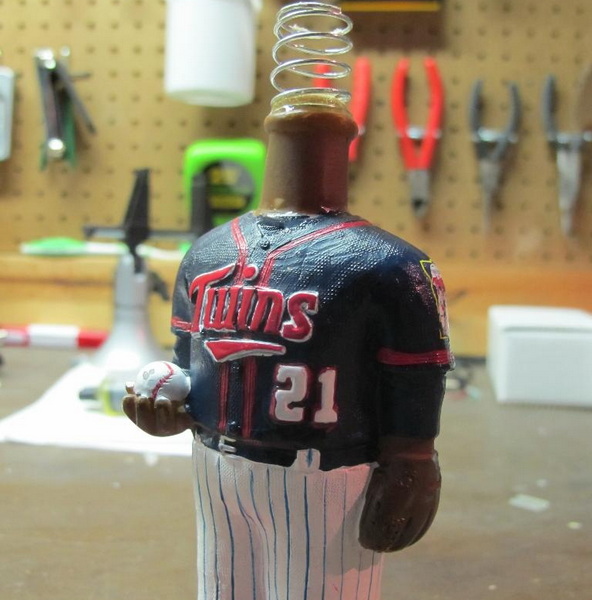
A broken Bobblehead base or cracked Bobblehead body can make the figure unstable and unattractive. Depending on the material (resin, plastic, or ceramic), you will use strong adhesive and sometimes reinforcement.
Gather all broken Bobblehead fragments from the base or body and dry-fit them together like a puzzle. This helps you understand the original shape and check if any parts of the Bobblehead are missing. Clean the edges of each Bobblehead piece with a soft cloth and a bit of alcohol to remove dust, dirt, and any loose paint.
If there are tiny crumbs that cannot be reattached, you can compensate later by filling gaps with epoxy putty. The main goal at this stage is to know how the Bobblehead parts fit together and which break lines carry the most weight.
Apply a thin line of epoxy or suitable glue along one broken edge of the Bobblehead and press the corresponding piece into place. Hold the Bobblehead pieces firmly together for the time recommended by the glue manufacturer. It is usually best to repair the Bobblehead in stages, attaching a few pieces at a time instead of trying to glue all fragments at once.
If a joint on the Bobblehead needs extra strength, you can drill tiny holes and insert small pins (for example, trimmed paperclips) across the break before gluing. This pinning technique gives the Bobblehead repair more internal support, especially for weight-bearing areas like ankles, legs, or the base.
After the glue is fully dry, inspect the Bobblehead base or body for small gaps or uneven areas. Mix a small amount of epoxy putty and press it into gaps, shaping it with a sculpting tool or toothpick to follow the original Bobblehead contours. Once the putty cures, sand the repaired Bobblehead area with fine sandpaper until it is smooth and level with the surrounding surface.
This preparation makes later Bobblehead repainting easier and hides the repair line. On a detailed Bobblehead with textures like clothing folds or hair, take extra time to sculpt those details into the putty before it hardens.
Even if a Bobblehead remains structurally sound, chips and scratches in the paint can ruin its appearance. Careful repainting can bring back the original Bobblehead look and protect exposed material.
Clean the chipped or scratched Bobblehead area with a cotton swab and alcohol to remove grease and dust. If there are loose flakes of paint, gently remove them with a soft brush or toothpick. For deeper Bobblehead chips, you may need to fill the area with a tiny amount of epoxy putty and sand it smooth once cured so the surface is level.
Use high-quality acrylic paints and mix small amounts until you match the surrounding Bobblehead color as closely as possible. Test the color on a piece of white plastic or paper and compare it next to the Bobblehead in natural light. It is better to mix several test colors than to rush and end up with a visible patch on the Bobblehead.
For complex Bobblehead designs, you may need to mix more than one shade and layer them to replicate shadows, highlights, or skin tones. Keep a written note of your paint ratios in case you need to touch up the Bobblehead again later.
Using a fine brush, apply very thin coats of paint to the damaged Bobblehead area. Allow each coat to dry before applying the next. This gradual method avoids thick, raised paint spots and blends more smoothly with the original Bobblehead surface. For lines and logos on a Bobblehead, you may use an ultra-fine brush or even a paint pen for crisp edges.
Once you are satisfied, consider sealing the repainted Bobblehead area with a clear matte or gloss varnish to protect the repair and unify the finish. Choose a varnish that matches the original Bobblehead sheen so the repaired spot does not stand out.
Sometimes a Bobblehead looks fine but does not bobble properly because glue, dust, or misalignment is blocking the spring.
Carefully remove the Bobblehead head from the spring. Look inside the head cavity and around the neck joint for dried glue lumps, dust, or plastic fragments. These can restrict Bobblehead movement and keep the spring from flexing easily. Also check whether the Bobblehead head is rubbing against the shoulders or collar.
Use a toothpick or small tool to scrape away any hardened glue or debris inside the Bobblehead cavity. Blow out loose particles and wipe gently with a cotton swab. If the Bobblehead spring is metal and free of paint, you can add a tiny drop of silicone lubricant or sewing machine oil to the joint to improve motion, but avoid getting oil on painted Bobblehead surfaces.
Reattach the Bobblehead head and test the movement with gentle taps. Adjust the spring position slightly until the Bobblehead movement feels smooth and natural. If the head still seems restricted, you may need to carefully sand a small area inside the cavity to create more clearance.
Not every damaged Bobblehead should be repaired at home. Some Bobblehead figures are so rare or valuable that professional restoration is safer and more economical long term.
DIY Bobblehead repair is usually suitable when:
- The Bobblehead damage is small or moderate (minor cracks, loose spring, small chips).
- The Bobblehead is common or easily replaceable, so the risk is lower.
- You have basic tools and are comfortable working slowly with small parts.
In these cases, a careful DIY Bobblehead repair can save money, teach you useful skills, and let you enjoy fixing your own Bobblehead collection.
Consider contacting a professional restorer when:
- The Bobblehead is rare, limited-edition, or signed by a celebrity or athlete.
- The Bobblehead has severe breaks, missing large sections, or complex paintwork.
- You feel unsure about working with epoxy, drilling, or detailed painting.
A professional Bobblehead restorer can often make repairs almost invisible and preserve long-term value, especially for serious collectors. For very expensive Bobblehead figures, professional work may be cheaper than losing value through an obvious amateur repair.
Once you finish repairing a Bobblehead, how you display and handle it will decide how long the repair lasts. A well-repaired Bobblehead can still fail if it is treated like a toy afterward.
After using glue, epoxy, or paint, always respect the full curing time. Even if a Bobblehead feels dry on the surface after one or two hours, the inner material may still be soft. Moving or bobbing the Bobblehead too soon can create micro-cracks in the repair or knock parts out of alignment. Waiting a full day is usually a good rule for most Bobblehead repairs.
Place the repaired Bobblehead in a stable display location with minimal vibration. Avoid narrow edges or unstable shelves that increase the risk of falls. If the Bobblehead suffered a serious break in the past, consider putting it inside a display case or behind glass to limit dust, handling, and accidental knocks.
Even a strong repair will never be as perfect as an unbroken original Bobblehead. Always pick up your Bobblehead by the base, not by the head, and avoid aggressive shaking. Treat the repaired Bobblehead as a delicate collectible and you will greatly extend the life of your repair work.
Videos are extremely helpful when repairing a Bobblehead for the first time. Watching someone fix a Bobblehead spring or repaint a cracked Bobblehead head gives you a clear idea of how much pressure and glue to use.
Helpful video topics to search for include:
- How to repair a Bobblehead head and neck connection
- How to straighten and reinstall a Bobblehead spring
- How to sand and repaint a damaged Bobblehead area
- How to add or replace a Bobblehead spring on a custom figure
- How to rebuild and paint missing details on a Bobblehead
You can watch these Bobblehead videos alongside this written guide and pause at each step to follow carefully at your own pace.
Repairing a Bobblehead is a careful process, but it is absolutely possible to bring a damaged Bobblehead back to life. By cleaning surfaces, using the right glue, adjusting the Bobblehead spring, and repainting chips with patience, you can restore both the look and the motion of your favorite Bobblehead figures. Whether you are fixing a simple giveaway Bobblehead or a custom Bobblehead with deep sentimental value, the key is to work slowly, test often, and avoid using too much force or glue.
Once repaired, treat your Bobblehead like a collectible: display it safely, avoid direct sunlight and rough handling, and keep it clean. Good protection combined with solid repair skills will let your Bobblehead collection stay attractive and enjoyable for many years. Over time, your Bobblehead repair experience will grow, and you will feel confident tackling more complex Bobblehead projects and helping other collectors keep their figures in great condition.
Contact us to get more information!
For most Bobblehead repairs, two-part epoxy or high-quality super glue (cyanoacrylate) designed for resin or plastic works best. Epoxy is stronger and more forgiving on larger Bobblehead breaks, while super glue is good for small Bobblehead cracks and quick fixes. Always use thin layers, avoid smearing glue on visible Bobblehead areas, and follow the curing times recommended by the manufacturer.
Yes, you can replace a Bobblehead spring yourself if you can access the head and body cavities safely. Choose a spring with similar size and stiffness to the original Bobblehead spring, attach one end to the body and the other to the head, and secure with a small amount of epoxy if needed. Work gently and test the Bobblehead motion before the glue fully cures so you can correct alignment if necessary.
For small Bobblehead chips, use epoxy putty to rebuild the missing part, shaping it carefully while it is soft. Once cured, sand the Bobblehead repair smooth and repaint it with matching acrylic colors, using thin layers for a natural look. Finish with a clear sealant so the new Bobblehead surface blends with the original finish and stays protected against future wear.
It is possible to repaint large sections of a Bobblehead, but it requires skill and patience to match factory colors and finishes. If the Bobblehead is highly valuable, consider hiring a professional painter or restorer. For regular Bobblehead figures, test your paints on a hidden spot first, use several thin coats, and seal the entire repainted Bobblehead area to achieve an even sheen.
After repairing a Bobblehead, let all glue and paint cure fully before handling or displaying it, usually at least 24 hours. Then place the Bobblehead in a safe, stable location away from direct sunlight, extreme temperatures, and heavy vibration. Regular gentle dusting, careful handling, and a protective display setup will help the repaired Bobblehead stay in good condition for many years.
1. https://www.wowcustombobbleheads.com/how-to-fix-a-bobblehead.html
2. https://funkofunatic.com/viewtopic.php?t=58586
3. https://www.reddit.com/r/funkopop/comments/ah56fc/help_bobblehead_spring_fix/
4. https://www.reddit.com/r/howto/comments/1f9zfmy/fix_my_bobblehead/
5. https://www.ennasgifts.com/a-news-how-to-repair-chipped-resin-statue.html
6. https://www.youtube.com/watch?v=j7ne6DrKlko
7. https://www.youtube.com/watch?v=x8Jt8TQzOZo
8. https://www.youtube.com/watch?v=ZrBR1oRwWCM
9. https://www.youtube.com/watch?v=b_FrrllTHqs


