
Views: 222 Author: Mia Publish Time: 2025-12-05 Origin: Site
Content Menu
● The Structure Of A Bobblehead
● Two Main Ways To Make Your Own Bobblehead
>> Custom Bobblehead From A Professional Service
● Choosing Materials For A DIY Bobblehead
>> Common Head And Body Materials
>> Springs, Glue, And Hardware
● StepByStep DIY Bobblehead Process
>> Step 2: Sculpt Or Build The Head
>> Step 3: Sculpt Or Build The Body And Base
>> Step 4: Cure, Harden, And Refine
>> Step 6: Assemble The Bobble Mechanism
● Using 3D Printing To Make Your Own Bobblehead
>> Scanning And Digital Sculpting
>> Printing, PostProcessing, And Assembly
● How Professional Bobblehead Makers Work
>> Molding, Casting, Painting, And Quality Control
● When To Choose DIY Bobblehead vs Professional Custom Service
● Safety, Durability, And Practical Tips
● Business And Branding Uses Of Bobbleheads
● FAQ
>> 1. How long does it take to make a DIY Bobblehead?
>> 2. What is the best material for a homemade Bobblehead?
>> 3. Do I need special tools to create a Bobblehead?
>> 4. Can I make a Bobblehead that looks exactly like me?
>> 5. Is it better to make my own Bobblehead or order from a professional?
Bobblehead figures are fun, eyecatching collectibles, and many people now wonder whether they can design and create a custom Bobblehead themselves instead of only buying massproduced characters. In practice, you can make your own Bobblehead at home or by working with a specialist manufacturer, and both routes can give you a unique result that reflects your personality or brand. A successful Bobblehead project depends on understanding the basic structure, choosing the right materials, and deciding how much time, budget, and skill you want to invest.

A Bobblehead is a small figurine with an oversized head connected to the body by a flexible attachment such as a spring so that the head wobbles when touched. The charm of a Bobblehead comes from the combination of caricaturestyle proportions, a playful “bobbing” motion, and personalized details such as clothing, accessories, and themed bases. Today, Bobblehead designs range from celebrity replicas and sports mascots to fully customized Bobblehead portraits based on family members, pets, or even company logos.
Although designs vary, most Bobblehead figures share a similar internal structure that affects both appearance and durability. The head is usually oversized and hollow or partially hollow to reduce weight so the Bobblehead can move freely when tapped. The body, legs, and base form a stable support that keeps the Bobblehead upright while the neck area houses the connection point for the spring or flexible joint.
For a typical Bobblehead, the spring is glued or otherwise fixed into a cavity inside the head and a corresponding seat in the body. If the spring is too short, the Bobblehead head cannot move enough; if it is too long or too weak, the head may wobble too violently or sit at an unnatural angle. That is why careful alignment and proportion are essential when planning your own Bobblehead, whether you are sculpting by hand or assembling from premade parts.
When people ask “Can you make your own Bobblehead?”, they usually have one of two options in mind: a true DIY Bobblehead built at home or a custom Bobblehead ordered from a professional maker. Both options produce a personalized Bobblehead, but the experience and results differ.
A DIY Bobblehead is created by you from raw materials such as clay, resin, wood, or 3Dprinted parts. You decide the pose, style, and level of detail, then sculpt, paint, and assemble the Bobblehead with your own hands. This path is ideal for hobbyists, artists, and creative giftgivers who enjoy the process as much as the finished Bobblehead itself.
A professional custom Bobblehead service lets you “make your own Bobblehead” without doing the physical sculpting and painting. You usually provide clear photos, a description of clothing or themes, and any special requests for the base or accessories. The company's designers then produce a Bobblehead that looks like you or your subject, offering review photos and revisions before final production in resin or plastic.
If you decide to make a Bobblehead yourself, material selection is your first important decision. The wrong material can crack, warp, or be too heavy, causing poor movement or breakage, while the right material helps your Bobblehead last for years.
Many DIY makers choose polymer clay for the head and body because it is easy to sculpt, comes in many colors, and cures in a regular home oven. Airdry clay is another option, but it can be more fragile and may need sealing to resist moisture. More advanced Bobblehead builders may use twopart resin poured into silicone molds or carve bodies and heads from wood blocks, especially for stylized or minimalist designs.
The “bobble” mechanism relies on a spring that is neither too stiff nor too loose. A small metal spring with a diameter suited to the scale of the head is typically used, and the ends are embedded into the head and body with strong adhesive. You will also need sandpaper for smoothing, acrylic paints and brushes for details, and a clear varnish or sealer to protect the finished Bobblehead surface. Simple tools and the right hardware can make the difference between a wobbling, expressive Bobblehead and a stiff or unstable figure.
The basic process for creating a homemade Bobblehead is similar whether you use clay, wood, or 3Dprinted parts. Breaking the project into clear steps makes the work manageable and increases the chance of a satisfying Bobblehead result.
Start by deciding who or what your Bobblehead will represent. A Bobblehead based on a person should capture signature features like hairstyle, glasses, facial hair, or a favorite outfit. Sketch front and side views of the Bobblehead, including the pose and base. Planning the proportions beforehand helps you keep the Bobblehead head suitably large while still balanced over the body.
Next, sculpt the head as a separate piece. When working with polymer clay, you can build up the Bobblehead head over a small armature such as a ball of foil to reduce weight and material usage. Focus on exaggerating the main facial elements so that the Bobblehead is recognizable even when viewed from a distance. Remember to leave an opening or cavity at the bottom of the head where the spring will be attached later.
The body of a Bobblehead can be simple or detailed. A basic standing pose with arms at the sides is easier, but you can also create dynamic poses such as a Bobblehead athlete midswing or a musician holding an instrument. The base is your opportunity to add text, logos, or objects that reinforce the Bobblehead theme, such as a company name, team colors, or a hobby item. Make sure the neck area on the body is flat and strong enough to hold the head and spring.
Once you are satisfied with the shapes, cure or dry the parts according to the material instructions. Polymer clay Bobblehead parts usually require baking at a specified temperature and time, while resin and airdry materials need a full cure period. After hardening, sand the surfaces gently to remove fingerprints, seams, or rough patches, especially on the face where the finish will be most visible. This refining step gives your Bobblehead a more professional look.
Painting brings your Bobblehead to life. Acrylic paints are preferred because they dry quickly, adhere well, and can be layered easily. Start with base colors for skin, clothing, and hair, then add shadows, highlights, and small details like eyes, buttons, and logos. Subtle shading helps a Bobblehead look more threedimensional and expressive. When the paint is fully dry, spray or brush on a clear sealer to protect the finish from handling and dust.
Finally, attach the head to the body using the spring. Test the fit by placing the spring between the two cavities and adjusting length as needed so the Bobblehead head sits at a natural height above the shoulders. Use a strong adhesive inside the cavities and allow adequate curing time before testing the movement. Once assembled correctly, your Bobblehead should wobble freely without hitting the body or leaning permanently to one side.
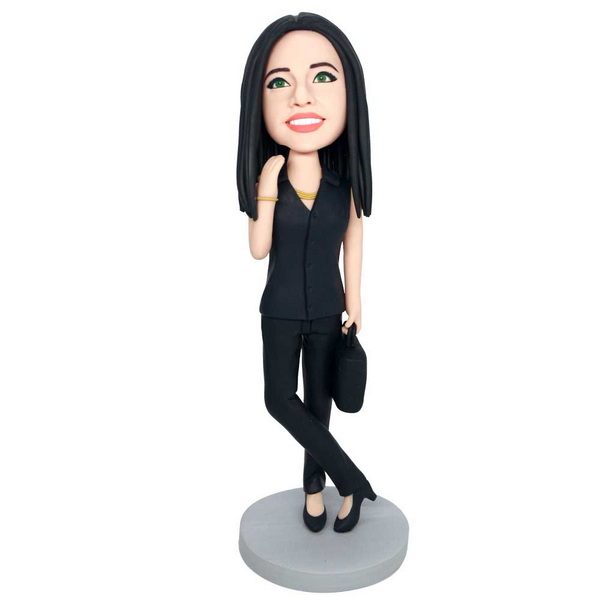
For creators who are comfortable with digital tools, 3D printing opens a different path to making a Bobblehead. Instead of handsculpting, you design or scan the Bobblehead in software and print the parts layer by layer.
Some makers use photogrammetry or 3D scanning apps to capture a detailed model of a person's head. This digital head can then be edited in a 3D modeling program to exaggerate features and adapt the proportions for a Bobblehead style. Alternatively, you can digitally sculpt the head from scratch using reference photos, treating the software as virtual clay. In both cases, you need to design a cavity inside the head for the spring and ensure the model is watertight and printable.
After preparing the files, print the Bobblehead head and body in suitable plastics, choosing a resolution that preserves facial details. Once printed, remove supports, sand the surfaces, and prime them for painting. The painting and assembly process is similar to a handmade Bobblehead: you add color, seal the finish, and connect the head with a spring. A 3Dprinted Bobblehead often captures more precise likenesses, especially for faces and small details, making this method popular for highend custom Bobblehead projects.
Ordering from a professional custom Bobblehead manufacturer is the easiest way to get a highly polished result, especially if you need multiple identical Bobblehead pieces for events, teams, or branding.
The standard process begins with you submitting photos, design notes, and any special instructions for the Bobblehead pose, base, and colors. Artists then create a sculpted head—traditionally by hand or now sometimes digitally—that captures your likeness in Bobblehead style. You may receive preview images and have a chance to request changes to the face or clothing before the design is finalized.
Once the master Bobblehead model is approved, the manufacturer creates molds so that the same design can be reproduced many times in resin or plastic. After casting, workers clean each Bobblehead part, assemble the pieces, and paint them by hand according to the approved scheme. The final step is attaching the springs, checking the movement, and packaging the Bobblehead securely for shipment. For businesses, bulk production can lower the perunit cost and provide consistent Bobblehead quality.
Both DIY Bobblehead making and professional custom Bobblehead services can deliver a special, personalized figure, but they suit different goals.
DIY Bobblehead creation is best when you value creativity, learning, and the fun of craft projects. It makes sense for unique gifts, art experiments, or oneoff Bobblehead ideas where you do not need perfect polish or multiples. On the other hand, a professional custom Bobblehead service is more practical when you want guaranteed likeness, tight deadlines, or a large number of Bobblehead units for promotions, events, or resale.
Bobblehead making involves tools, heat, and chemicals, so some basic precautions are important. Always work in a wellventilated area when using solventbased products or casting resins, wear gloves where appropriate, and keep sharp tools away from children. When curing or baking clay parts for your Bobblehead, follow the product guidelines closely to avoid burning or weakening the material.
Durability depends on both material and construction. Resin and wellcured polymer clays tend to be tougher than soft airdry clays, and a sturdy base prevents your Bobblehead from tipping over. Using a properly sized spring and strong adhesive will reduce the risk of the Bobblehead head detaching after repeated use. With care, a custom Bobblehead can remain in good condition for many years on a desk, shelf, or display case.
Beyond personal gifts, Bobblehead figures are also effective marketing tools. Companies, sports teams, and event organizers often commission custom Bobblehead runs that feature mascots, founders, or product characters. A distinctive Bobblehead can reinforce brand identity and become a collectible item that fans and customers keep for a long time, providing repeated visibility.
If you run a brand or factory, you can integrate Bobblehead designs into promotional campaigns, loyalty gifts, or limited edition series. Working with a specialist manufacturer allows you to customize not only the Bobblehead figure itself but also the packaging, base printing, and accessories so that each Bobblehead reflects your corporate image and message.
So, can you make your own Bobblehead? Yes, you certainly can—either by building a DIY Bobblehead from materials such as clay, resin, wood, and 3Dprinted parts, or by collaborating with professional custom Bobblehead makers who transform your photos into detailed figures. The DIY route offers handson creativity and a deeply personal connection to the finished Bobblehead, while professional services provide consistent quality, highend finishing, and the ability to produce many identical Bobblehead units for gifts or branding. By understanding Bobblehead structure, choosing suitable materials, and matching your approach to your goals, you can enjoy a unique, customized Bobblehead that wobbles with character and meaning.
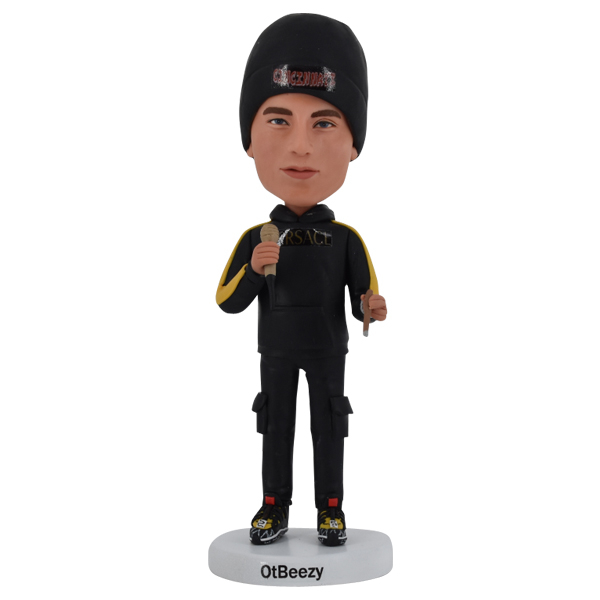
The time required to make a DIY Bobblehead depends on the complexity of the design and the materials used, but most projects take several days from planning to final assembly. You need time for sculpting, curing or baking, sanding, painting, and then allowing the glue and sealers to dry before you can safely display or handle the Bobblehead.
For most beginners, polymer clay is one of the best choices for making a Bobblehead because it is easy to shape and cures in a home oven to a durable state. More advanced makers may combine polymer clay with resin casting or even carved wood to achieve specific artistic styles or to make multiple Bobblehead copies.
You do not need highly specialized tools to create a basic Bobblehead, but some simple equipment makes the work easier and safer. Sculpting tools, sandpaper, a hobby knife, a small drill or pin for making cavities, a suitable spring, strong glue, paints, and a clear sealer are usually enough to complete a homemade Bobblehead project.
It is possible to get very close to your real appearance by carefully studying photos and emphasizing key features when sculpting the Bobblehead head. For even higher accuracy, you can use 3D scanning and digital sculpting or order a custom Bobblehead from a professional service that specializes in portrait likenesses and offers proofing before final production.
The better choice depends on what you value most. If you enjoy crafting and want a oneofakind experience, making your own Bobblehead can be rewarding and costeffective in materials. If you prioritize realism, polished finishing, or need multiple identical Bobblehead figures for events or branding, ordering from a professional custom Bobblehead manufacturer is usually the more efficient and reliable option.


