
Content Menu
● What Makes a Bobblehead “Bobble”?
● Choosing Your DIY Bobblehead Style
● Basic Tools and Materials for a DIY Bobblehead
● DIY Clay Bobblehead: Step-by-Step
>> Shaping the Bobblehead Base and Body
>> Creating the Bobblehead Bobble Mechanism with Wire or Spring
>> Drying, Painting, and Finishing the Clay Bobblehead
● Using Molds and Casting for a DIY Bobblehead
● 3D Printed Bobblehead DIY Overview
● Designing and Printing a Bobblehead Head and Body
● Assembling a 3D Printed or Mixed-Media DIY Bobblehead
● Decorating and Personalizing Your DIY Bobblehead
● Simple Paper or Cardboard Bobblehead Crafts
● Safety Tips for DIY Bobblehead Projects
● FAQ
>> 1. What is the easiest way to make a Bobblehead DIY for beginners?
>> 2. Can I make a Bobblehead DIY without any special tools or 3D printer?
>> 3. How long does it take to finish a DIY Bobblehead?
>> 4. Do I need a metal spring, or can wire work for a DIY Bobblehead?
>> 5. How can I make my DIY Bobblehead look more like a real person?
Making a Bobblehead DIY at home is a fun way to turn a simple figure into a moving, nodding character that reflects your personality, your pet, or your favorite mascot. With basic materials like clay, wire or springs, simple tools, and optional 3D printing, a DIY Bobblehead project can be completed in steps that are easy to follow, even for beginners.[1][2][3][4]

A Bobblehead works because the head is mounted on a flexible connector—usually a spring or bent wire—so it can wobble independently of the body when tapped. For a DIY Bobblehead, you simply need a lightweight head, a stable body, and a secure but flexible connection between them.[3][4][5]
- Many DIY Bobblehead tutorials use a hollow clay pinch-pot for the head and a solid cone or cylinder as the body.[4][6]
- Other Bobblehead projects reuse existing figurine bodies and just create a new custom head that attaches to a spring.[2][7]
Before you start, decide what kind of DIY Bobblehead you want to make and what materials you prefer.[1][4]
- Clay Bobblehead: Uses air-dry or ceramic clay for both head and body, plus a wire or metal spring for the bobble mechanism.[6][4][1]
- 3D Printed Bobblehead DIY: Uses a 3D printed head and body combined with a spring, often reusing or adapting existing Bobblehead designs.[8][9][3]
- Paper or Cardboard Bobblehead: Uses printed or hand-drawn faces on lightweight card with simple joints for bobbling.[5]
The exact list depends on your chosen style, but most DIY Bobblehead projects share some common needs.[4][1]
- For clay Bobbleheads: Clay, a paper clip or metal wire, simple sculpting tools, glue, and optional paint and brushes.[6][4]
- For 3D printed Bobbleheads: Access to a 3D printer, filament or resin, modeling or slicing software, a metal or 3D printed spring, glue, and paint.[8][3]
Clay is one of the most accessible ways to make a Bobblehead DIY because it is forgiving, cheap, and easy to shape.[4][6]
The body of a clay Bobblehead needs to be stable to support the bouncing head.[6][4]
- Classroom Bobblehead lessons often start with a cone-shaped body made from a ball of clay stretched and pinched into a stable base.[4][6]
- Keeping the bottom of the Bobblehead body flat and slightly wider than the top helps prevent tipping when the head wiggles.[6][4]
The head of a clay Bobblehead is usually formed as a hollow pinch pot.[4][6]
- Tutorials suggest starting with a ball of clay, separating about one-third for the body, and then gently pinching a hollow “bowl” that becomes the Bobblehead head.[4]
- Leaving enough thickness around the top and sides of the pinch pot gives the Bobblehead head strength without making it too heavy to bobble.[6][4]
To make the clay Bobblehead actually wobble, you must embed a connector into both head and body.[6][4]
- A simple method is to bend a paper clip into a spring-like shape and insert one end into the body and the other into the head, using holes made with a pencil or needle tool.[4][6]
- Some tutorials add a small clay support inside the pinch-pot head to hold the wire or spring, then secure it further with glue once the Bobblehead is dry.[4]
After forming the Bobblehead head and body, allow the clay to dry and then decorate.[1][4]
- DIY Bobblehead videos often recommend letting clay pieces dry completely before painting, especially if you are using air-dry clay or low-fire clay.[1][4]
- Acrylic paints work well on clay Bobblehead surfaces, and a clear sealer can protect colors and details.[1]
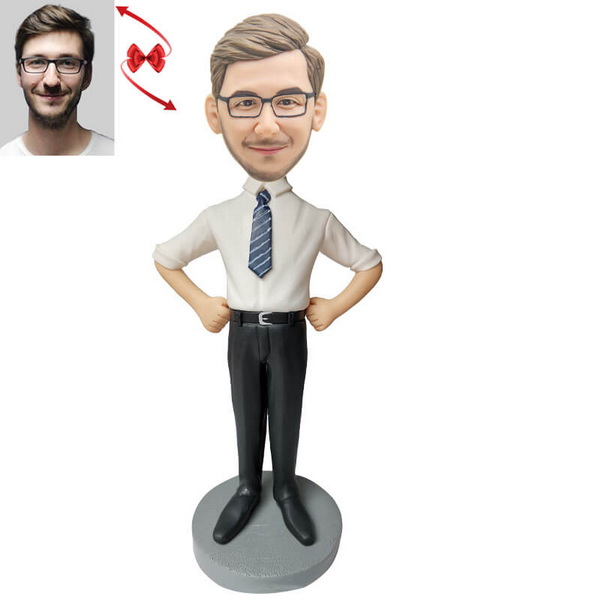
If you want multiple copies of the same Bobblehead, you can create a master figure and cast it.[11][2]
- A comprehensive Bobblehead tutorial series shows sculpting the original head and body, then pouring silicone molds around them to cast new parts in resin.[2][11]
- Once the Bobblehead molds are cured and opened, you can pour casting material, demold, trim sprues, sand, and paint each new Bobblehead.[2]
3D printing takes DIY Bobblehead making to the digital level by turning 3D models into physical Bobblehead parts.[3][8]
- Instructables and maker guides explain how to design a Bobblehead head and body in a tool like Tinkercad, then print the parts and add a spring.[3]
- Other projects scan a person's head using photography or mobile apps, then clean the model and cut a cavity for a spring attachment before printing.[7][9]
The design process for a 3D printed Bobblehead is similar to clay sculpting but done digitally.[8][3]
- To make the head, guides show how to combine basic shapes, then hollow the interior and cut a cylindrical cavity for a spring, leaving enough wall thickness.[3]
- For the body, simple boxes and cylinders are merged to create the torso, arms, and legs, with a flat neck region ready to receive a spring hole or post for the Bobblehead head.[3]
After modeling, you slice the Bobblehead parts with appropriate print settings.
- Tutorials note that moderate infill and adequate wall thickness help Bobblehead parts stay strong while keeping weight manageable.[8][3]
- Spring pieces or spring holes in the Bobblehead often require precise sizing to account for tolerances so the spring fits snugly.[14][3]
Whether you use clay, 3D prints, or cast parts, the final step is to assemble the Bobblehead.[7][3]
- A common approach is to glue one end of a metal spring into the head cavity, then compress and glue the other end into a matching cavity in the body.[7][3]
- For lighter Bobblehead projects, a bent paper clip or wire can act as the connector, glued securely into both head and body.[6][4]
When the glue is fully dry, test the Bobblehead.
- Makers often tap the Bobblehead gently and adjust spring length or position until the head bounces freely without scraping the shoulders.[3][4]
Decoration is where a DIY Bobblehead becomes truly personal.[10][1]
- Clay and resin Bobbleheads can be painted to resemble a real person, a cartoon character, or a pet, with details like hair, clothing, and accessories.[10][1]
- Some DIYers turn family photos into Bobblehead faces by sculpting from reference or printing faces on paper and attaching them to simple jointed bodies.[16][5]
You can also add thematic elements.
- Seasonal Bobbleheads—for example, Halloween witches or holiday-themed figures—use hats, capes, or props sculpted or glued onto the Bobblehead body.[17][10]
For quick, low-cost DIY Bobblehead fun, paper and cardboard are ideal.[5]
- Family craft tutorials show how to draw or print faces, trace them onto cardboard, cut torsos and arms, and attach them using brads or small fasteners so the head can wobble.[5]
- These lightweight Bobblehead crafts are perfect for kids and can be customized for entire “Bobblehead families” on a single display board.[5]
Because DIY Bobblehead projects often involve sharp tools, glue, and small parts, basic safety steps are important.[1][4]
- Clay Bobblehead classes tell students to handle needles, loop tools, and knives carefully, and to keep clay tools away from mouths and eyes.[6][4]
- When using glues or casting resins for Bobbleheads, work in a well-ventilated area and follow manufacturer instructions and curing times.[2]
Making a Bobblehead DIY at home can be as simple or as advanced as you like, from basic clay pinch-pot figures with wire connectors to sophisticated 3D printed Bobblehead projects with custom springs. By choosing materials that match your skill level, planning a stable body and lightweight head, and carefully assembling a reliable bobble mechanism, you can create a Bobblehead that nods, shakes, and entertains for a long time. With thoughtful decoration, personalization, and a little care in display and storage, your DIY Bobblehead becomes a unique gift, classroom project, or personal collectible that shows both creativity and craftsmanship.[10][1][3][4]
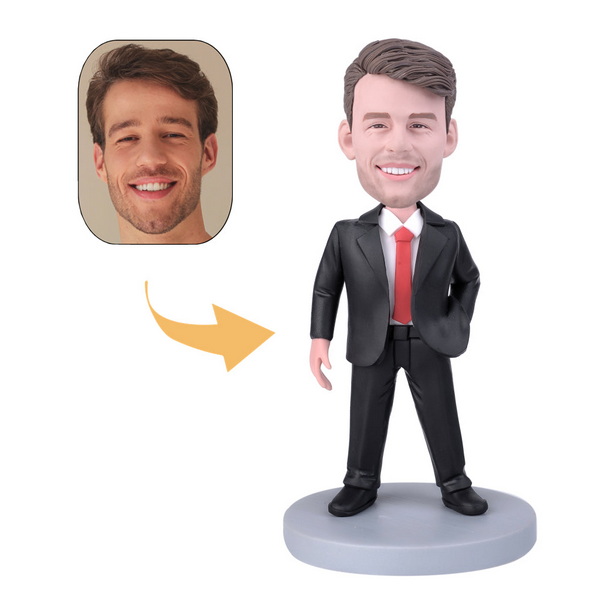
For beginners, the easiest way to make a Bobblehead DIY is to use air-dry clay or classroom clay to form a cone-shaped body and a hollow pinch-pot head, then connect them with a bent paper clip or small spring. This simple Bobblehead method uses basic tools and dries without a kiln, so it works well at home or in schools.[1][6][4]
Yes, you can make a Bobblehead DIY using only clay, household tools like pencils and paper clips, and basic craft glue and paints. Even a cardboard or paper Bobblehead with a hinged, wobbly head can be built using scissors, card, and drawing supplies, making Bobblehead crafts accessible to almost anyone.[5][6][4]
The time depends on the materials and complexity: simple clay Bobblehead projects can be sculpted in an hour and then need drying time before painting, while 3D printed Bobblehead builds can take one to two days including printing, painting, and assembly. Mold-and-cast Bobblehead projects with silicone and resin require additional curing time but allow multiple Bobbleheads to be made from one original.[9][11][2][4]
A metal spring gives the most traditional Bobblehead motion, but many beginner projects successfully use bent paper clips or thicker wire as a spring substitute. For heavier Bobblehead heads or 3D printed parts, proper metal springs sized to fit the head and body cavities usually provide better, more durable bobbling.[14][6][3][4]
To make a DIY Bobblehead resemble a real person, use clear reference photos and focus on distinctive features like hairstyle, glasses, facial hair, and clothing style when sculpting or painting. Advanced makers sometimes scan a face in 3D or carefully sculpt from photos before printing or molding the Bobblehead head, which creates a more accurate likeness.[16][7][10][1]
[1](https://www.youtube.com/watch?v=N63VUoJHuwY)
[2](https://www.youtube.com/watch?v=RN9QVyJWMaE)
[3](https://www.instructables.com/3D-Printed-Bobblehead/)
[4](https://www.youtube.com/watch?v=RTf6WU_Ko_E)
[5](https://www.foragecreatelove.com/posts/make-your-own-bobble-head-family/)
[6](https://www.youtube.com/watch?v=_ihNAnxYQoI)
[7](https://www.instructables.com/3D-Printing-your-own-full-color-bobblehead-using-1/)
[8](https://all3dp.com/2/3d-print-bobblehead-3d-printer-all-you-need-to-know/)
[9](https://www.instructables.com/3D-Printed-Bobblehead-High-Resolution-Full-Body-Sc/)
[10](https://www.youtube.com/watch?v=JICW3fAkZ8U)
[11](https://www.youtube.com/playlist?list=PLPraAgzzTrYZmf92_1JQcVyWB_TUR35Ge)
[12](https://www.youtube.com/watch?v=ctRtwxuY7WA)
[13](https://www.youtube.com/watch?v=H6k35Ujheuw)
[14](https://www.printables.com/model/282561-parametric-bobblehead-springs)
[15](https://www.youtube.com/watch?v=mZKA3nQ9KCc)
[16](https://www.reddit.com/r/crafts/comments/1klp6c2/from_photo_to_clay_bobblehead_all_handmade/)
[17](https://www.facebook.com/groups/238838587280047/posts/1272283053935590/)
[18](https://www.tiktok.com/@nickpainting/video/7449153678721682718)


