
Views: 206 Author: Mia Publish Time: 2026-11-28 Origin: Site
Content Menu
● Why Photos Decide a Damaged-item Claim
● The Core Photos Every Claim Needs
● What the Major Carriers Ask For
>> UPS
>> FedEx
>> USPS
● How to Photograph Damage Step by Step
● Concealed Damage: When the Box Looks Fine
>> Extra Photos for Concealed Damage
● What Fragile-Gift Claims Need
● Documents to Send With Your Photos
● Common Mistakes That Lead to Denial
● Sample Photo Shot List for a Wholesale Order
● How We Help Buyers Reduce Damage Claims
>> 1. How many photos do I need for a damaged-item claim?
>> 2. Do I need photos if the box looks undamaged?
>> 3. Should I keep the damaged item and box?
>> 4. What file formats are accepted?
>> 5. What if I missed the notice deadline?
For a damaged-item claim, you need photos of the outer box, the inner packing, the damaged item and the shipping label. Take extra close-ups of the damage and, where relevant, serial numbers. This guide explains each photo, why carriers ask for it, and how to avoid a denied claim. It uses examples from fragile polyresin and polymer clay bobbleheads.
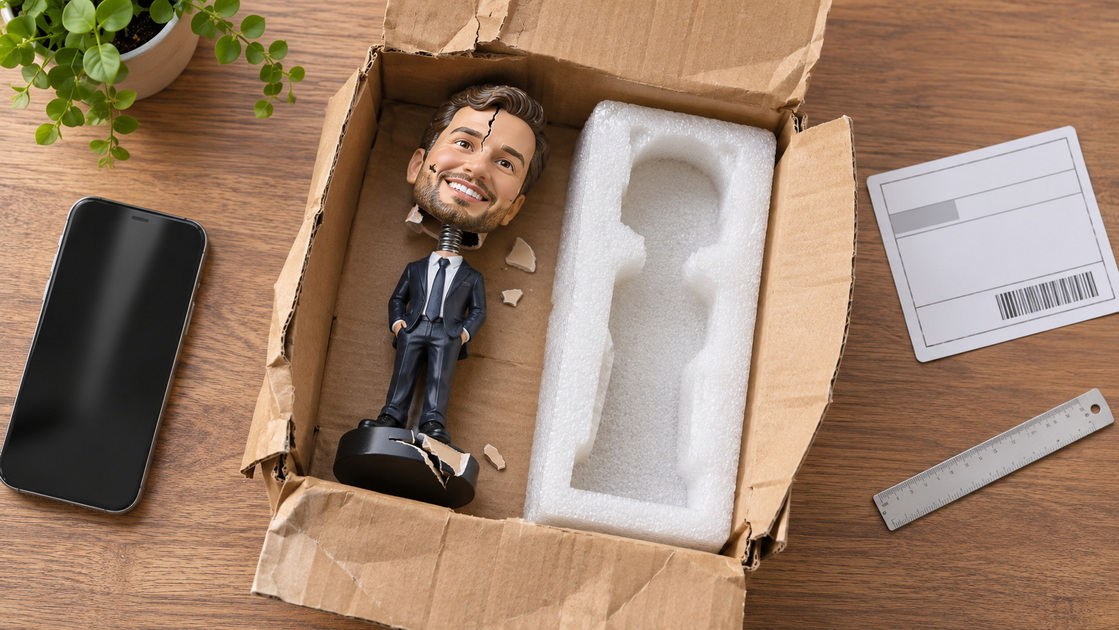
A carrier cannot see your parcel. It sees only your evidence. Clear photos show where the damage happened and whether the packing was adequate.
Weak documentation is the usual reason claims fail. One freight claims guide reports that incomplete documentation accounts for 35 to 40% of freight claim denials, with photos often the weakest link . That figure is for freight, but the lesson applies to parcels too.
From our export experience, fragile gifts such as bobbleheads show three typical damage patterns. These are cracked necks, snapped springs and chipped paint. Each needs a specific photo to prove it.
Carriers ask for a consistent set of images. Prepare these four first.
1. The outer box. Show every damaged side, with crushed corners, punctures, water stains or torn tape.
2. The inner packing. Show the item as packed, with cushioning still in place.
3. The damaged item. Take close-ups and a wider shot from several angles.
4. The shipping label. Make the tracking number and address readable.
Retail guidance lists the same four images. It explains that the outer box shows whether the parcel took an impact, while the inner packing shows whether cushioning was adequate .
| Photo | What it should show | What it proves |
|---|---|---|
| Outer box, all damaged sides | Crush, tears, punctures, wet marks | Rough handling in transit |
| Box opened, item in place | Item inside with padding as received | Whether packing was adequate |
| Damaged item, close-up | Cracks, chips, breaks, loose parts | Type and extent of damage |
| Damaged item, wide view | Full item with context | Overall condition |
| Shipping label | Tracking barcode and address | Links damage to the shipment |
| Serial or batch code | Number on item or tag | Identifies the exact goods |
Requirements are similar but not identical. Always check the current rules on the carrier's own site before filing.
UPS asks for three photos: the damaged item and how it was packaged inside the box, a close-up of the label with the tracking number, and the outside of the package. You also need the box's length, width and height . A physical inspection may follow .
FedEx asks for photos of the package and the damaged contents, plus serial numbers where relevant. It may request an inspection report with images of the packaging and contents. You should keep the original packaging and contents until the claim is resolved .
Under the USPS rules summarised by one claims guide, the addressee must keep the container, interior packing and all contents for possible inspection. Failing to do so can lead to denial .
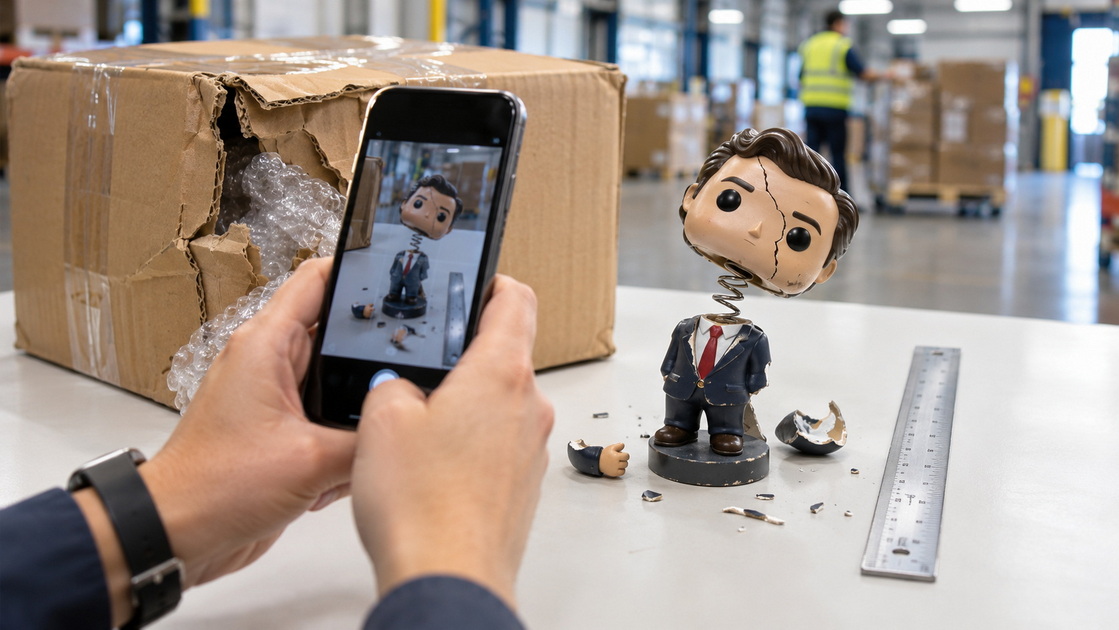
Follow this order. It builds a clear story for the claims reviewer.
1. Stop and keep everything. Do not throw away the box, padding or broken pieces .
2. Photograph before unpacking further. Capture the outside first, then the open box with the item in place .
3. Shoot all four sides. One freight guide asks for four exterior shots, a damage close-up, a legible label, the product inside the packaging and one wide context shot, eight in total .
4. Use light and focus. A modern smartphone camera is enough . Avoid shadows over the crack.
5. Add scale. Place a coin or ruler beside small chips.
6. Include a date. Photos should carry a timestamp. This can be phone metadata or a handwritten date card in the frame .
7. Upload together. Submit the photos with the complete claim package, not as a late follow-up .
Sometimes the carton arrives intact but the goods inside are broken. This is concealed damage. One logistics guide defines it as damage found inside intact packaging after delivery, even if the delivery receipt was signed without exceptions .
- Full shipment view, as received.
- Exterior packaging, all sides.
- Interior damage, close-ups from several angles.
- Every label and carrier marking.
- Serial or lot numbers.
These are the views one guide recommends . Photograph the damaged items inside the packaging in place, before removing them .
Timing matters as much as photos. Reporting windows vary by carrier and mode:
| Situation | Typical notice window |
|---|---|
| Many freight carriers (LTL) | Written notice within 5 business days |
| International air cargo (Montreal Convention) | 14 days from receipt |
| International road carriage (CMR) | 7 days for damage not apparent, excluding Sundays and public holidays |
| Sea carriage (Hague-Visby Rules) | 3 days for non-apparent damage |
| UPS and FedEx inspection requests | Within 21 days of delivery |
Notifying the carrier is not the same as filing a formal claim. A short "damage found" message may not include the required materials . Send the notice first, then the full claim.
This section reflects our manufacturing and export experience, not a published standard.
Bobbleheads fail in predictable places. The neck joint, spring and fine painted features take the stress. Your photos should target these points.
Add these shots for polyresin and polymer clay figures:
- The break line, photographed in raking light so the crack edge is visible.
- The spring and base, to show a bent or detached mechanism.
- The inner foam or carton, to show if the item shifted.
- All fragments, laid on a plain surface with a ruler.
Do not glue, repair or re-pack the item before the claim closes. Claim guidance consistently warns that goods must not be repaired or handled until an assessment is made .
Photos work best with paperwork. Claims reviewers also ask for:
- Proof of value. This means an invoice, order confirmation with payment, or receipt .
- Tracking number and delivery date.
- Packing list, to show what was in the shipment .
- A written description of the damage and the amount claimed .
- Repair estimate or replacement quote, where relevant .
International shipments may also need the bill of lading or air waybill, plus the commercial invoice .
1. Discarding the packaging. Carriers may deny claims when they cannot inspect it .
2. Sending only a close-up of the broken item. Reviewers also need the box and the label.
3. Missing the notice window. Miss it, and the claim may be denied outright .
4. Blurry or undated photos. Evidence must be clear and verifiable.
5. Weak packing. Carriers check whether the cushioning met standards. Photos of thin padding can support a denial.
6. Filing without proof of value. Every carrier needs it .
Large exporters can make claims easier by setting a standard for receiving staff. A simple rule works well.
1. Photograph each pallet or master carton before opening.
2. Photograph the delivery receipt and any exception notes.
3. Open one carton at a time and photograph inner boxes in place.
4. Photograph each damaged unit with its carton number written on a card.
5. Log the quantity of damaged and undamaged pieces.
Taking photos at the dock also helps the supplier. We use these images to trace the damage cause and improve packaging.
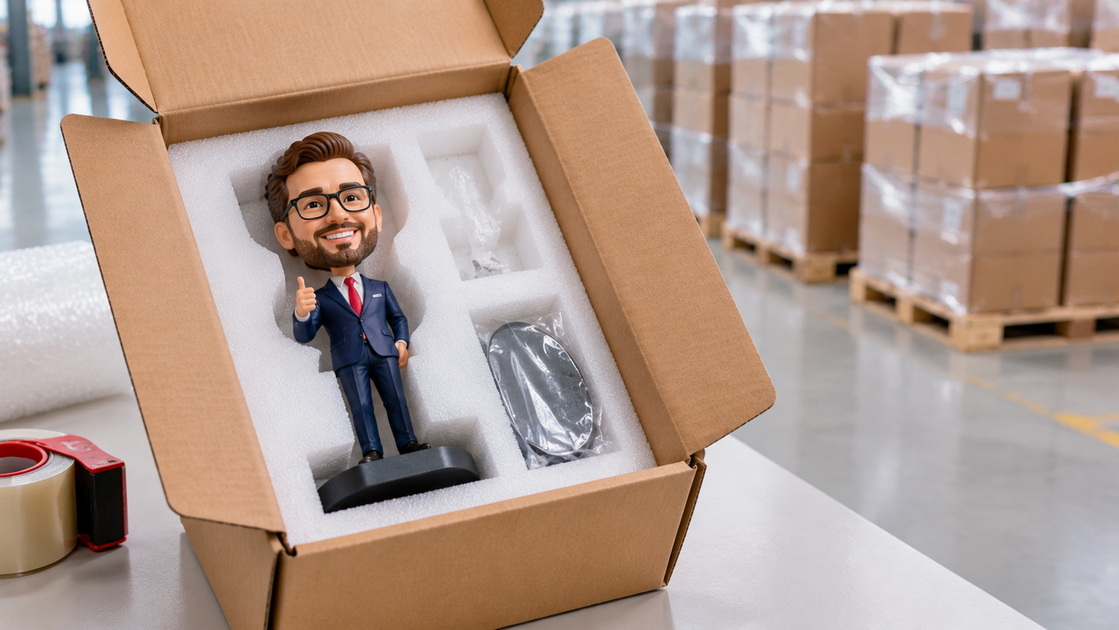
Top Arts & Crafts Co., Ltd. produces custom bobbleheads in polyresin and polymer clay for wholesale and OEM buyers.
We will propose a packaging plan built to reduce transit damage and speed up any claim.
At least four: outer box, inner packing with the item, damaged item, and shipping label. For freight, one guide recommends eight .
Yes. For concealed damage, photograph the box, label, inner packing and each damaged item, and report it quickly .
Yes. UPS, FedEx and USPS all advise keeping the packaging and contents until the claim is resolved .
Formats vary by carrier. One comparison lists JPG, PNG, TIFF, BMP and PDF for UPS, and standard image and PDF uploads for FedEx and USPS . Check the carrier portal before uploading.
File anyway and explain the discovery date. Late claims are often denied, so notify the carrier as soon as damage is found .
1. [FreightClaims.com, How to Photograph Freight Damage]
2. [Shop-WIL, What Photo Evidence to Request on Damaged Package Claims]
3. [UPS, Supporting Documents for Claims]
4. [FedEx, File a Claim]
5. [ShippingLabel.co, Damaged Package Claim: USPS, UPS and FedEx Deadlines]
6. [Pallasmark, FedEx Damage Claim Photos and Requirements]
7. [CorePiper, The Concealed Damage Claim 15-Day Survival Guide]
8. [Redwood Logistics, Concealed Damage Claims Explained]
9. [Cargo Pioneer, Concealed Damage Claims: What to Do]
10. [CargoInsureOnline, Concealed Cargo Damage Notification Deadlines by Freight Mode]
11. [Packlink, Presenting Photos in Case of Damage or Missing Content]
12. [Luxe Bloomia, What Documentation Is Required for a Damage Claim]


